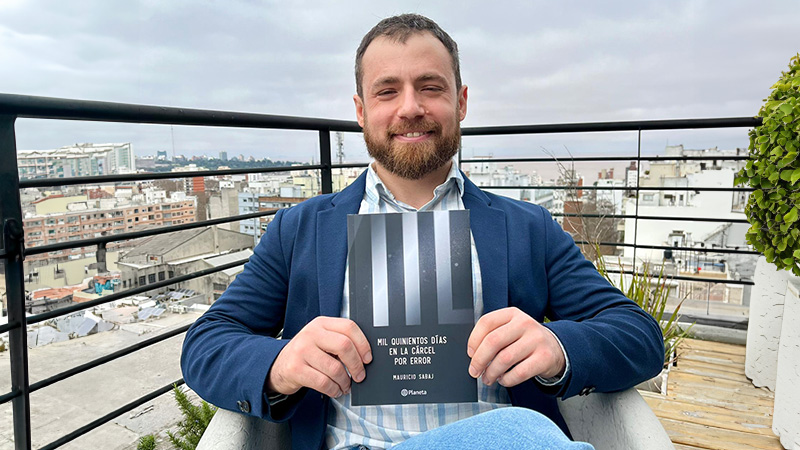
About Mauricio Sabaj
Heholds a bachelor's degree in Journalism. He is the author of three books. His career includes working as a reporter for the newspaper El País and contributing to El Observador and Lento magazine.
In addition, he was responsible for content on the websites of the School of Administration and Social Sciences and the Graduate School of Business at Universidad ORT Uruguay.
He currently works as Tsoftware as a software tester at Talking Points.
Previous publications
Sabaj made his debut as an author with *The Twilight of a System*, a book that explores the lives of juvenile offenders through the story of Tatán, a teenager in trouble with the law.
His second book, *Alejandro Atchugarry: The Unlikely Hero*, focuses on Atchugarry’s life and political career, highlighting his role during the 2002 economic crisis, the reasons for his resignation, and his withdrawal from public life.
This work received an honorable mention in the 2023 Literature Award from the Ministry of Education and Culture (MEC).
- You might be interested in: Graduate Honored by Alejandro Atchugarry: The Unlikely Hero
New Book: 1,500 Days in Prison by Mistake
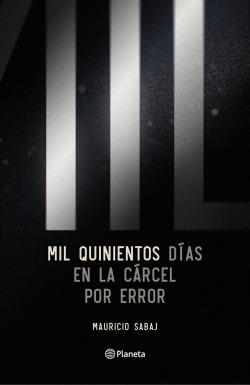
His third book, *1,500 Days in Prison by Mistake*, tells the shocking true story of a young man who spent more than four years in prison unjustly.
When asked who his latest book is aimed at, Mauricio replied: “People who enjoy reading and journalism, and above all, those who are curious about how an innocent person can end up in prison; those who want to know what life is like in prison; and those who want to learn how some young men who had lost their parents were left to fend for themselves without anyone doing anything.”
Curiosity has been Mauricio Sabaj's driving force. In 2013, while looking for a topic for his final thesis project, he came across a news story that caught his attention.
A young man had spent more than four years in prison at Comcar before being released after his innocence was proven.
"At that moment, he asked himself: How could this have happened? How can the justice system make such serious mistakes?" Sabaj recounts.
These questions led him to delve deeper into prison lifeand uncover various aspects of it: violence, survival, and the challenge of reintegrating into society after years of incarceration.
What happens in Uruguay when an innocent person is sent to prison by mistake? In this video, I talk about my new book. Enjoy! pic.twitter.com/yrCcMn2yHy
— Mauricio Sabaj (@MauricioSabajM) September 3, 2024
Through a contact with the journalist who broke the story, Sabaj got in touch with the lawyer representing Jonathan, the young man at the center of his investigation.
While writing the book, Mauricio visited Comcar and interviewed both Jonathan and his family, as well as the victims of the crimes for which he was wrongfully imprisoned.
"I didn't want to do my final project just to pass. I wanted to create an excellent piece of work and turn it into a book, so I approached the entire project with that goal in mind," he says.
Differences between their books
Interestingly, Mauricio began writing his third book before that the second.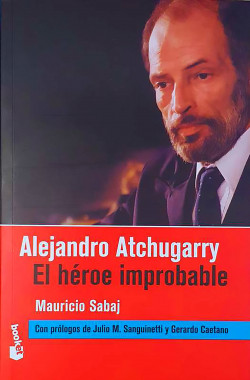
His first drafts were written earlier, although *1,500 Days in Prison by Mistake* was published later.
Sabaj's books share certain similarities in their portrayal of the country from different perspectives: one from the upper echelons of power and the other from the slums.
Over the years, the project has evolved and changed significantly from its initial version, which was presented in 2015 as a final thesis project.
Another lesson the author emphasizes is the importance of patience—not rushing to publish.
After publishing the book on Atchugarry, “I realized that I was no longer the same writer who had written the previous version.”
I found that I had more tools at my disposal for storytelling, and that in the process I developed a deeper understanding of the events and a stronger personal voice.
Challenges of Writing
One of the main challenges for the author was to convey the gravity of losing more than four years of one's life in prison.
Mauricio made an effort to describe life at Comcar and the judicial failures without sensationalizing the story, while showing respect for everyone involved.
I wanted the book to be just the right length, to hold the reader's attention from start to finish.
Relation to your college major
Mauricio Sabaj attributes much of his work to the education he received at the School of Communication at Universidad ORT Uruguay.
I earned a bachelor's degree in Journalism, so this type of book is closely related to my field of study.
"The program gave me a solid foundation in writing. I read books that had a profound influence on me, such as *Operation Massacre* by Rodolfo Walsh, and works of American New Journalism by authors like Gay Talese and Truman Capote," he says.
He also credits the influence of professors such as Andrés Alsina (his thesis advisor), Leonardo Haberkorn (the book’s editor), and Marcelo Jelen, who instilled in him the fundamental principles of journalistic writing.
 Advice for aspiring journalists
"Read as much as you can, stay curious, and choose topics that inspire you. Take your time working on and editing your writing. Books written in a hurry rarely turn out well," Mauricio advises those who wish to pursue a career in journalism.
Current Situation and Next Steps
Mauricio Sabaj highlights the similarities between the rigor of a writer's work and that of a software tester , such as attention to detail and clear communication.
Although he has published two books in the last three years, he now plans to take a break to devote himself to reading, convinced that reading is the best way to improve as a writer.