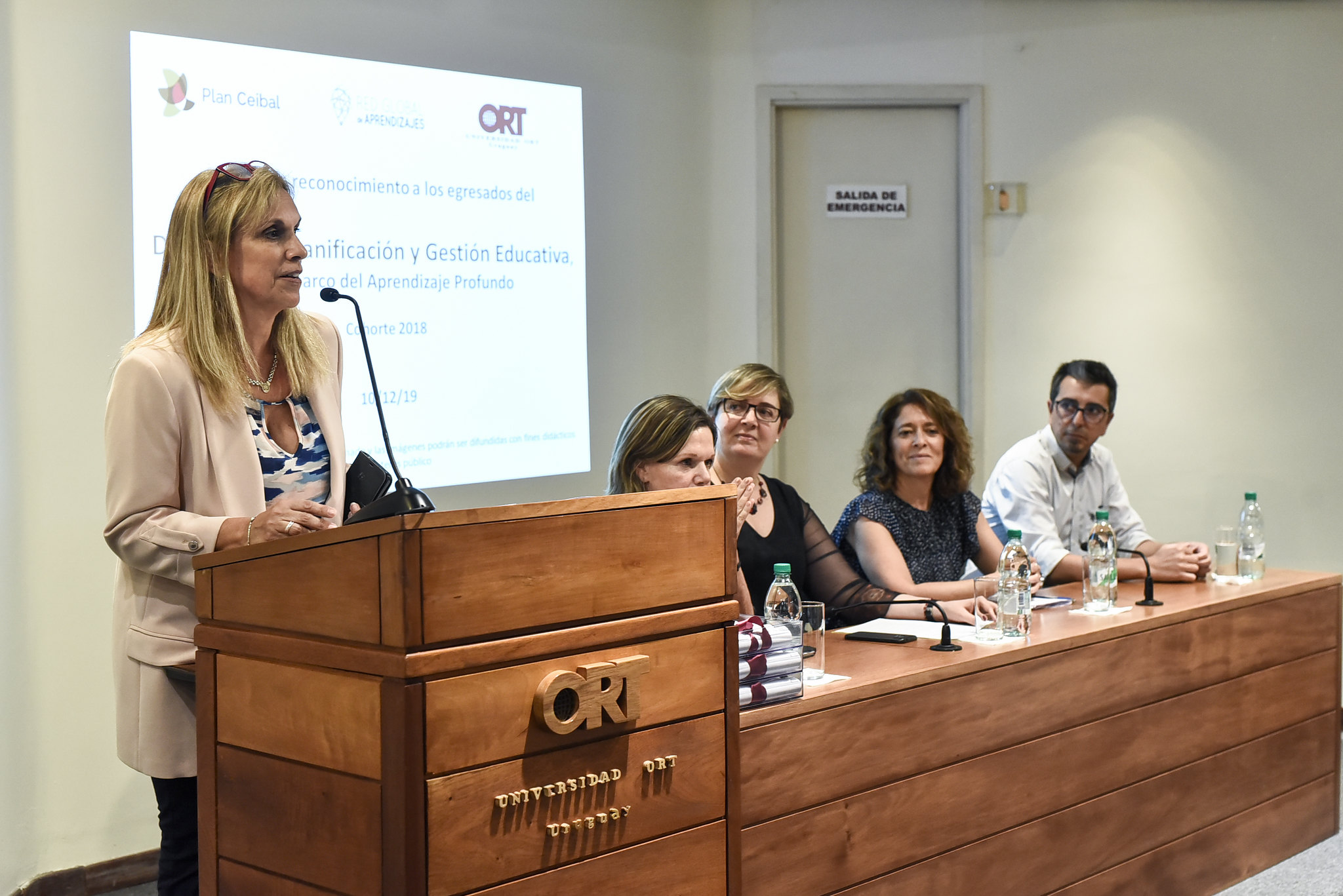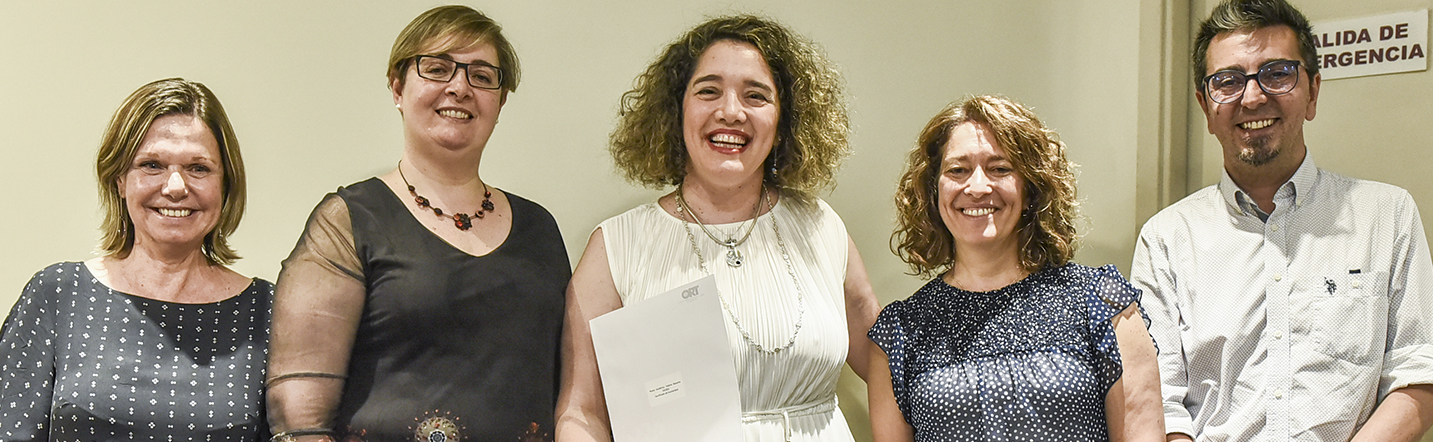
“We have a group of brave individuals here,” said Andrea Tejera, academic coordinator of the Diploma in Educational Planning and Management within the framework of Deep Learning.
Courage and a love for what they do, he said, are the common traits shared by all 41 graduates: “There is a great deal of courage in these directors, who, with dedication and enthusiasm, completed the diploma program while continuing to fulfill their professional and family responsibilities.”
In May 2018, the Institute of Education won a bid from the Ceibal Plan to develop the graduate program, in collaboration with and with the support of the Global Learning Network.
On Tuesday, December 10, 2019, a ceremony was held in the auditorium of Universidad ORT Uruguay Downtown Campus to honor the first graduating class—composed of school principals from across the country, representing the four subsystems of the National Public Education Administration (ANEP).
The Diploma in Educational Planning and Management within the Framework of Deep Learning is a one-year blended learning program that prepares graduates to design, propose, and implement assessments and organizational improvement plans.
Leadership for Educational Improvement
“This is an event to celebrate a phase that is coming to an end, but one that also continues within a network that has been a major undertaking for Ceibal and the country,” said Dr. Denise Vaillant, academic secretary of the Institute of Education.
In her view, this is a “well-deserved” certification for all graduates, marking a milestone in the ability of students and teachers to share and exchange knowledge, experiences, and best practices. As she noted, it has been an enriching process for everyone—especially for the institutions and teachers involved.
Knowing that one’s work and research have had an impact on classroom practice is both a challenge and an incentive for every researcher and university professor.
Vaillant also noted that it is essential to contribute to the “educational leadership of principals” and, consequently, that institutions provide support through various material and symbolic incentives.
“That is undoubtedly one of the ways to improve learning and help shape the better citizens of tomorrow,” he concluded.
A field undergoing transformation
However, according to Tejera, it wasn't just the graduate students who showed courage. Everyone involved did as well.
On the one hand, the teaching and administrative staff, who embarked on “a journey of teaching, but also of learning in many ways.” On the other hand, the institutions involved in the project, which sought to ensure that the initiative brought out the best in each of them, always in the service of deep learning.
We view management as the search for better ways to influence what happens in schools—and what does not happen but we believe should.
According to the program coordinator, education is “a field in need of transformation,” in which the role of administrative teams, as educational leaders, is key: “The search for new and better solutions is driven by innovation, with the aim of moving toward forms of schooling that are inclusive, high-quality, and democratizing.”
In that regard, he emphasized that the diploma program focuses on collective reflection, on designing strategies to address both new and old challenges, as well as on reviving and revitalizing approaches to engagement within educational institutions.
In closing, he thanked everyone involved “for their dedication, for their kindness, for their concern, for their acts of care and encouragement, for the quality of their work, and for the enthusiasm with which they took on the challenge.”
Directors as protagonists
“A very special group.” That’s how Claudia Brovetto, Ph.D., manager of the Global Learning Network, described the diploma program graduates. Not only because they were the first cohort, but also because they took on the challenge of pursuing a graduate-level program despite all the responsibilities they had as directors.
In fact, he congratulated the graduates and emphasized just how demanding and challenging pursuing a graduate degree can be. As he put it, it is an experience that puts individuals to the test and takes them “to that vulnerable, yet deeply rewarding place of learning.”
At the same time, he reflected on the state of education in Uruguay. “We have a more progressive, up-to-date, and innovative approach to education that, at times, coexists with very traditional practices,” he explained.
It is the principals who prioritize professional development who can help bridge the gap between what we know works and what the evidence and research tell us.
Although he noted that building bridges to the field “is very difficult,” he called on the directors to take the lead: “I invite you to innovate—not out of recklessness or mere bravado, but based on evidence and reason, always through a commitment to dialogue and persuasion.”
An education that leaves a lasting impression
“We know the effort it takes, day in and day out, to earn a degree at a university—the demands, the deadlines,” said Martín Rebour, Director of Education at Plan Ceibal.
The recognition ceremony reminded Rebour of the pride and joy his family felt when he earned his master’s degree. “I was experiencing something similar myself; when I saw their faces, I felt proud and elated,” he told the graduates.
Getting to this point isn't easy; it requires a lot of effort, organization, hard work, and time.
“I hope this certificate has provided you with many tools and concepts to help you understand the issues and begin to take action,” he said. But he stressed the importance of reaching out to the community and ensuring that the network they have built among colleagues in different educational subsystems is not “lost.”
“When our education leaves a mark on us, it moves us,” he declared. “If it moves us, it’s because it angered us at some point, because it inspired us at another, because an author moved us, because we met colleagues, and because we disagreed with others,” he concluded.
The director as a student
What do the 41 graduates of the Diploma in Educational Planning and Management under the Deep Learning framework have in common? According to Valeria Rosso, one of the students in the first cohort, it’s a degree.
However, what does that mean? “A diploma is an object, a specific form of education, a process with great symbolic power that holds infinite value. And, in this case, it has one very significant feature: the student is a director,” he explained.
The 21st-century leader must continue to learn throughout life. And remain mindful of the ongoing process of learning.
“Academic training is essential,” emphasized Rosso, who said she was certain that the graduates would put to use all the knowledge they had gained from the various graduate-level courses, likening it to “a vast mental library for management”: “It has been an excellent education, extremely valuable for each and every one of us.”
For that reason, on behalf of the 2018 class of the Diploma in Educational Planning and Management within the framework of Deep Learning, he expressed his “deepest gratitude to all those who made the ANEP postgraduate program for school principals possible.”
“We all remember and relive the experience of learning how to learn. On this journey we’ve taken as students, we’ve discovered two great treasures: enthusiasm and the determination to become the best versions of ourselves,” he concluded.
Photo gallery of the event: