
According to what was shared during the presentation held on November 27 at the university, the product originated as a final-year project, as the team had set out from the very beginning to develop something that would have a real impact on people’s lives.
From that initial stage, they made numerous changes that improved and refined the product for commercialization. After being incubated at the university’s Center for Innovation and Entrepreneurship (CIE), they secured funding from the National Agency for Innovation and Research (ANII) and approval from the Ministry of Public Health.
Although this topic remains a taboo in society, the fieldwork conducted by Pérez and Tub—based on surveys and interviews—showed that between 50% and 80% of women experience at least one episode of a urinary or vaginal infection during their lifetime, and that 30% experience recurrences, which amounts to more than two episodes every six months.
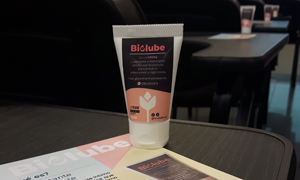 That is how they developed Biolube, a water-based feminine intimate moisturizer that helps prevent urinary and vaginal infections and contains bioactive ingredients such as lactic acid, prebiotics, cranberry extract, and aloe vera. It is also free of glycerin and parabens.
“Prebiotics are sugars or complex carbohydrates, commonly known as fiber, that strengthen the vaginal flora,” explains Pérez, adding that the other compounds were selected for their role in combating this type of infection.
“For example, we use cranberry extract because it plays a key role in combating E . coli, and aloe vera for its moisturizing properties.”
During the presentation, they emphasized that Biolube avoids the use of antibiotics. This is a point the entrepreneurs are particularly focused on, as the overuse of these drugs is a concerning issue that has sparked global alarm.
“Uruguay is the second-highest consumer of antibiotics per capita in Latin America,” says Pérez. This information is based on a survey conducted in Argentina by the consulting firm DAlessio Irol in 2017 and published in the newspaper Clarín.
Furthermore, their misuse has raised concerns at the World Health Organization (WHO), which has warned that resistance to these drugs is one of the greatest threats to global health. “It is estimated that 700,000 people worldwide die each year from antibiotic-resistant infections,” says Pérez.
At the end of the presentation, the entrepreneurs said they hope the product will soon be available in pharmacies, and that they also plan to form partnerships with gynecologists to help promote the product.