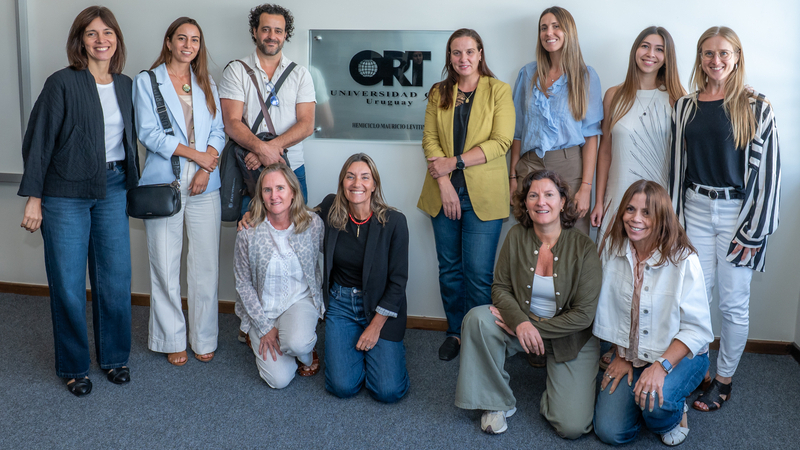
Conceived as an open forum for exchange, reflection, and the presentation of landscape design projects, the event brought together faculty, graduates, and students from the Landscape Design Technician program to share their work, design processes, design decisions, and insights gained from their academic and professional experience in the discipline.
More than just a series of presentations, the event served as a concrete demonstration of how landscape architecture is taught, learned, and practiced at a professional level in Uruguay on various scales: from residential gardens and terraces to public spaces, green roofs, farms, wetlands, and projects related to urban heritage.
For those who are already part of the program's community and for those who are just beginning to consider landscape architecture as a career option, this event offered a broad overview of tools, approaches, and fields of practice. This article reviews the key concepts from the event and includes its audiovisual recording.
Celebrate, share, and showcase how landscape architecture works
The opening ceremony was led by Architect and Psychologist Paula Rial, the program’s academic coordinator, along with Prof. Cecilia Sgarbi, a professor in the same program and 2025 Teaching Excellence Award.
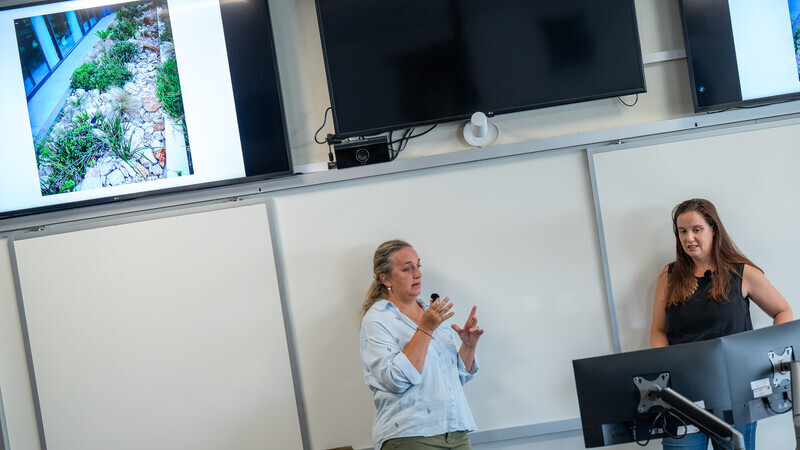 From the outset, the tone of the gathering was clear: in addition to celebrating the anniversary, the aim was to create a space of their own to see what some of the different generations of Uruguayan landscape architects are doing, how the lessons learned during the program are translated into concrete projects, and what kind of community was built over the five-year period.
In this regard, Rial described academic training as “a well-established field,” with graduates, diverse career paths, and a professional field that continues to grow. He also emphasized the importance of future students be able to see “what has been accomplished in recent years and how we work,” in a session designed as a series of brief presentations, open to dialogue and exchange.
- You might also be interested in reading: “What does a landscape architect do?”
In that vein, the opening presentation, titled “From Words to Action,” served as an initial summary of the very spirit of the event. Rial and Sgarbi shared experiences of working together in which design and execution constantly intersect: from interventions for a film shoot to the redesign of a terrace facing the promenade where drainage issues forced them to rethink the design and led to the incorporation of seven tons of limestone as part of the solution. The block also sparked an idea that ran through the entire day:
“Landscaping is not limited to design.”
It requires flexibility, negotiation skills, technical judgment, adaptability, and a sustained focus on what happens after the project is completed. As Sgarbi noted at the beginning of the meeting, in this field, “it’s not just what you learn that matters,” but also “the group that forms,” the synergies between generations, and the opportunity to continue building projects based on those connections.
Learn about the Landscape Technician program
From the Classroom to Professional Practice: Landscape Architecture Projects
Through landscaping projects on various scales—from gardens and terraces to wetlands, green roofs, public spaces, and proposals related to urban heritage—the event demonstrated how the Landscape Technician program integrates site analysis, technical expertise, and professional practice.
Serena Paparcone: From the Edible Garden to the Urban Scale
The Serena Paparcone, Engineer and Psychologist, a graduate of the first class of the program, presented a journey that combined education, professional practice, and scaling up.
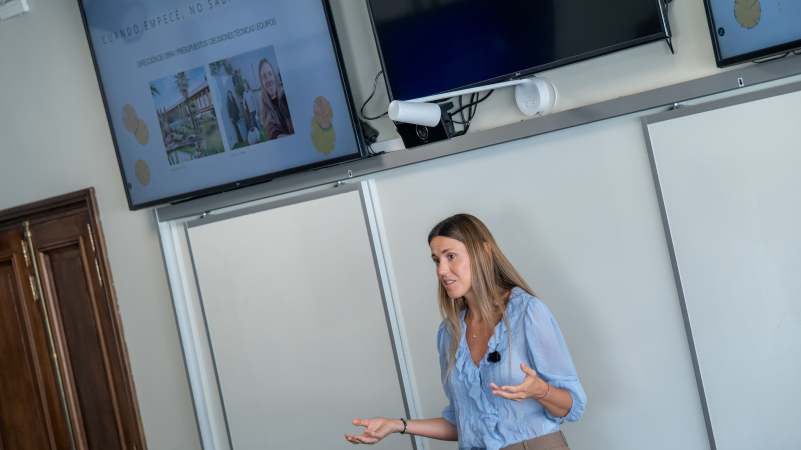 Drawing on her experience as an agricultural engineer, a landscape technician, and a master’s student in Madrid, she demonstrated how landscaping can be applied in a wide variety of settings without compromising on precision or design sensitivity.
The exhibition featured residential gardens in Salto, featuring fruit and aromatic plants; a logistics center developed in collaboration with Adriana Álvarez; and a banquet hall where vegetation was conceived as a common language linking different spaces; and academic projects from his master’s program that broadened the perspective to the urban and regional scale, such as the transformation of Segovia Street or the proposal for Jacinto Benavente Square.
- You might also be interested in reading: “Urban landscaping and gardening: the art of restoring nature’s beauty”
One of the most insightful aspects of his presentation was the redefinition of the very profession of landscape architect. In this regard, Serena said that when she started out, she didn’t know that landscape architecture was “more than just planting pretty plants,” and she explained that it also involves leading teams, working with budgets, making technical decisions, and solving specific problems on-site.
That wide range of tasks came up time and again in the examples he gave: from listening to a client’s requests for a functional garden to figuring out how to access a terrace with trees via an elevator or how to design a public green space from a street dominated by vehicles.
- You might also find it helpful to read: “Why Study Landscape Architecture?”
LIVAUT: Team, Project Management, and Knowledge Sharing
Presentation of the study LIVAUT, led by Psychologist María Gomensoro, Psychologist Joaquín González and Psychologist Valentina Valin expanded on that same idea from another angle: that of building a professional team that emerged, to a large extent, from the connections cultivated during their studies.
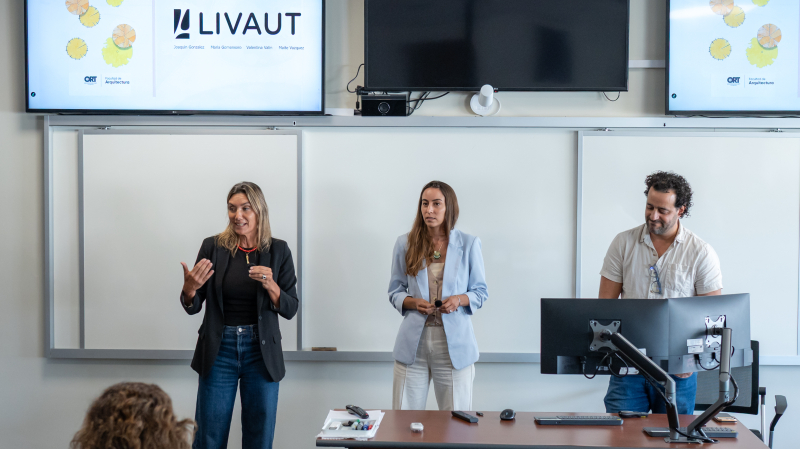 In their presentation, they described themselves as a firm specializing in design, construction management, and implementation of landscaping projects, and they demonstrated how this combination of different skill sets enabled them to take on increasingly complex projects.
Among the cases presented was the farm Walk the Linein Juanicó, designed for a family seeking a garden filled with sentimental references, host plants, and spaces capable of attracting butterflies; the project in Pueblo Mío, where the landscape had to coexist with the local fauna and the environmental logic of a lakeside property; and Montañeses, a green roof over a parking garage in Buenos Aires that required solving issues related to weight, waterproofing, safety, budget, logistics, and remote construction management.
One of the most valuable contributions of this session was its emphasis on documentation as a working tool. “Documentation supports your ideas,” they noted in reference to the need to plan accurately, anticipate conflicts, and defend decisions before clients, companies, and on-site teams.
They also emphasized that the garden should not be thought of as a belated addition, but rather as part of the project from the very beginning, so that greenery can be integrated into the site layout, the levels, the drainage, and the experience of the space.
- You might also be interested in reading: “Landscape and Garden Design: A Conversation with Architect Paula Rial”
ECOESPACIOS: Academic Projects Turned into Real-World Initiatives
The study ECOESPACIOS, composed of Architect and Psychologist María Graciela Antognazza and Psychologist Jacqueline Rodríguez, presented another possible career path: transforming academic exercises, tools, and methodologies into professional criteria for tackling real-world projects.
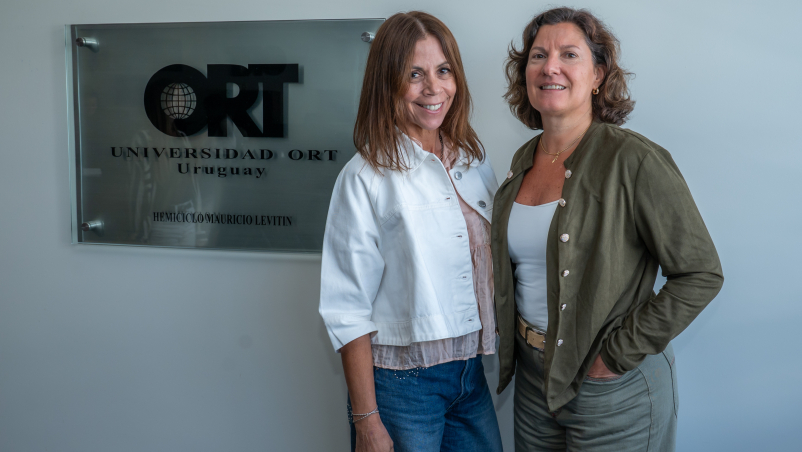 His presentation began with coursework, including the inclusive project Trails, in Laguna Garzón, developed based on a macro- and micro-level analysis of the territory, and a Workshop 2 Assignment related to a parklet in Carrasco.
In both cases, the focus was less on the final image than on the process: understanding the site, working with zoning, planning routes, translating conflicts into constructive decisions and recognizing that landscape design requires a method.
From there, the speakers demonstrated how this approach was applied to specific projects. They presented an old house in San José, where the project eventually expanded from the outdoor courtyard to the rooftop and an interior courtyard defined by water; the structure “Alas de Dieste”, created for Montevideo Shopping as part of the Mini Patio en el Shopping 2025 landscaping competition (organized by the program, in partnership with Montevideo Shopping); and projects in rural settings, including a ranch in Raigón, San José, designed with native species, consideration of the horizon, wind protection, and an explicit aim to build “a truly Uruguayan ranch.”
It was also particularly interesting to hear how they explained the transition from the classroom to the study. In their account, the Marketing course in the Landscape Design Technician programdid not appear as something peripheral, but rather as a real tool for thinking about one’s professional career.
““We formed Ecospacio,” they said, recalling how an academic exercise began to serve as the foundation for a concrete working practice. Added to that was another powerful idea:
“Before designing, you have to ‘listen’ to the site, read the landscape, and understand what each context demands.”
- You might also be interested in reading: “Teachers Rial and O'Neill Win the Grand Gold Award at the Shenzhen Greater Bay Area Flower Show (China)”
Naturalistic landscaping and native species at Laguna del Sauce
The Psychologist Melissa Yáñez and Psychologist Cecilia Fornero presented their final integrative project, developed on a five-hectare site in the Laguna del Sauce.
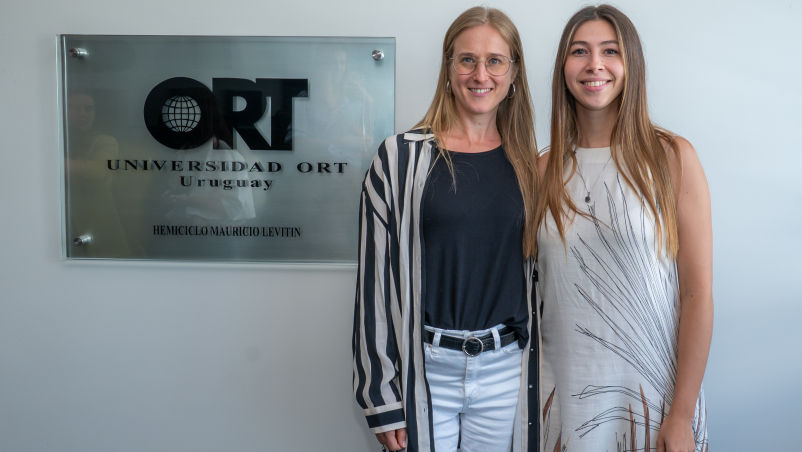
Conceptually, it was one of the most intensive modules of the program and one that best demonstrated how the Landscape Design Technician program integrates ecological analysis, design, and technical decision-making.
- You might also be interested in reading: “Latin American Landscape Architecture Seminar: Introspective Perspectives from Mexico, Chile, and Uruguay”
The presenters explained that, before beginning the design process, they conducted a literature review on the watershed, its ecological significance, current regulations, and current water issues linked to eutrophication processes.
Building on that foundation, they put forward a central idea:
“Every landscape project has an environmental impact, so projects must include measures that contribute to sustainability rather than undermine it.”
That approach was then applied to the site analysis. The team studied topography, contour lines, runoff, visual basins, soil, and existing vegetation, and used tools such as a Dutch drill to understand drainage conditions.
From there, they organized a nature-based initiative centered on woodland, grasslands and wetland, with trails inspired by the waterways of the terrain, butterfly gardens, lookouts, shelters, and a tajamar as a spot for contemplation.
One of the project's most significant contributions was its work with native species and the decision to establish forest patches that would later allow for expansion through ecological succession.
- You might also find it helpful to read: “Amalia Robredo’s vision of naturalistic landscaping in an interview with Intercountries Life”
In addition, a wetland was incorporated as a biological filter so that runoff water could enter and exit the system in better condition.
Rather than merely an ornamental concept, the project was presented as a way of designing based on the watershed, biodiversity, the site’s layout, and its ecological sensitivity.
Learn about the Landscape Technician program
Heritage, Public Space, and Learning at MUMI
In the final stretch of the day, the Agricultural Engineer Florencia Ferrari and Architect Micaela Pita, senior students in the program, presented their final project for Workshop 2, focused on a proposal for an intervention at the Museum of Migration (MUMI) and the Muralla Abierta Cultural Complex, in Montevideo’s Old City.
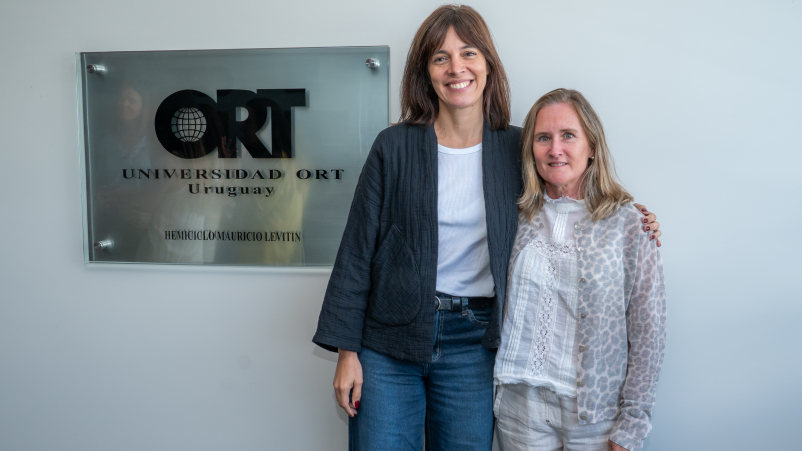
Their work began with the selection of a section of the site that they identified as a “completely barren” space, with few amenities, heavy sun exposure, and great potential for incorporating a green space in a densely populated area of the city. Based on this assessment, they proposed a project capable of complementing the activities of the museum and the cultural complex, not only as a venue for specific events but also as a place for lingering, gathering, and everyday use.
One of the main focuses of the proposal was the site’s heritage and archaeological value. The presenters noted that the property preserves 60 meters of remains of Montevideo’s historic wall, as well as physical traces of later uses, such as metal structures linked to its industrial era. This material and historical depth served as the starting point for the design.
On that basis, Ferrari and Pita developed a proposal aimed at enhance the interpretation of the site, make the relationship with the wall more understandable, and, at the same time, incorporate conditions of universal accessibility, social coexistence, and cultural diversity, in line with the museum’s mission.
- You might also find it helpful to read: “Hostile Architecture: Challenges and Alternatives for Inclusive Urban Design”
The project included a sensory forest, play equipment designed with inclusion in mind, walking paths with information about the city wall, and a multi-purpose deck, rest areas, and a section dedicated to drumming.
From a technical standpoint, one of the major factors was the presence of bedrock throughout much of the site, which made it impossible to work with deep substrates in the conventional manner. To address this, they proposed trees in large pots, the use of backfilled areas, and a plant selection based on native species and others chosen for their hardiness and low maintenance requirements.
The presentation broadened the scope of the workshop by demonstrating how, even in the early stages of the program, the program allows students to tackle projects that integrate landscape, heritage, accessibility, public use, and a historical interpretation of the site.
In that regard, Ferrari and Pita’s work reinforced one of the central themes that ran throughout the event:Landscape architecture is not limited to garden design, but also provides tools for intervening in complex urban spaces, spaces steeped in history, with diverse uses, and layered materials.
- You might also be interested in reading: “Uruguayan Landscape Architecture in Focus: An Interview with Amalia Robredo in The Select Experience”
Learning to read, envision, and transform the landscape
The event Landscape Projects Roundtable clearly revealed the diversity of scales, approaches, and professional opportunities currently shaping professional landscape architecture in Uruguay.
View this post on Instagram
Five years after its inception, the Landscape Design Technician program has fostered a community where academic training is in constant dialogue with practice: in the garden, on the job site, in public spaces, in the studio, in the field, and through connections that remain active beyond the classroom.
It also made it clear that the value of the program is not limited to imparting technical knowledge or design criteria. Time and again, the presentations highlighted teamwork, a careful reading of the site, the importance of documentation, the need to negotiate and defend ideas on-site, and the possibility of translating what has been learned into projects, studies, collaborations, and concrete professional paths.
In that sense, the tour served as a celebration, but also as an affirmation of a particular approach to landscape architecture: a practice that combines spatial sensitivity, technical expertise, an ecological perspective, and the ability to transform real-world problems into design solutions.
- You might also be interested in reading: “Landscaping in Uruguay is flourishing: an interview with Paula Rial in Forbes”
Watch the full conference:
https://www.youtube.com/watch?v=43j22Eqxp6E