https://youtu.be/yXJsqD9swJ8?si=5p_y7tJPkPAktH8L
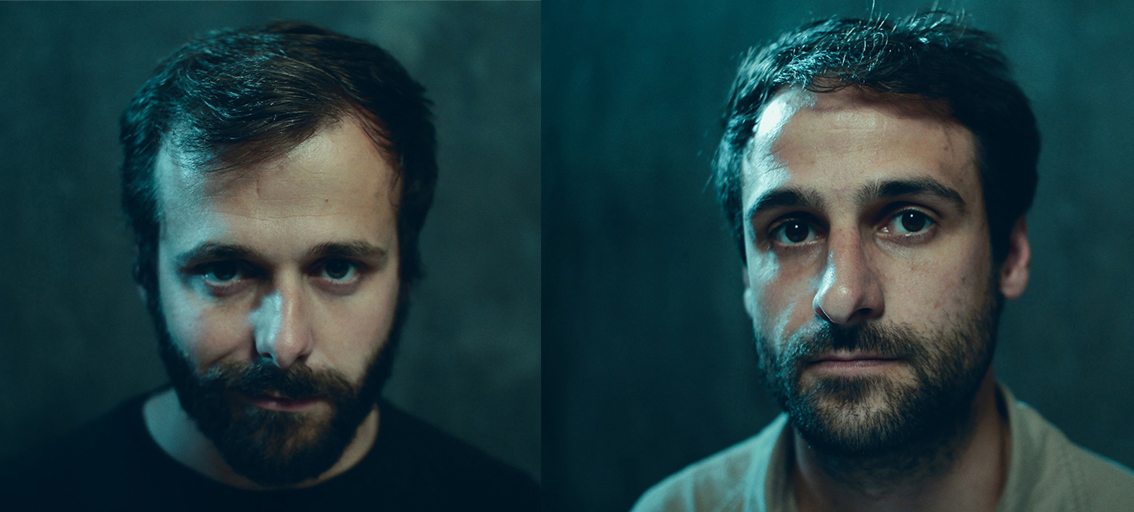
They are brothers, share the same passion, and are currently touring film festivals across Europe with their latest projects. Rafael and Bernardo Antonaccio—currently a student and a graduate, respectively, of the Bachelor’s program in Audiovisual Communication at the School of Communication and Design at Universidad ORT Uruguay—were selected to participate in the Ibermedia program (Spain) and to present their work at the 20th edition of the Filmar Festival in Latin America (Geneva).
The Antonaccios, who have already made a name for themselves in Uruguay, are now looking to expand their horizons. They served as co-directors and co-screenwriters for what was considered the best music video in Uruguayan music at the 2017 Graffiti Awards, with Revólveres y Rosas for the band SOCIO. They have also ventured into television drama, writing and directing a short film starring Patricia Wolf for the new season of Voces Anónimas, among other projects.
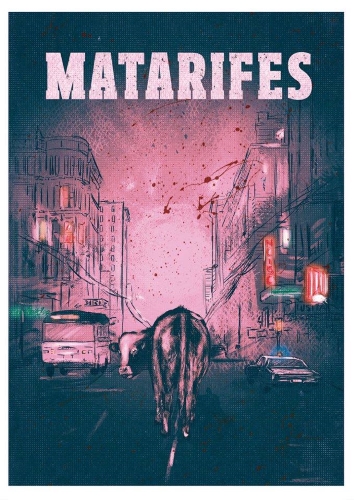
Now, with *Matarifes* in Spain and *En el pozo* in Geneva—the latter starring actress and influencer Paula Silva—the Antonaccio brothers have crossed the Atlantic to represent Uruguay in the international audiovisual industry.
“Compared to the rest of the region, we’re just getting started,” reflects Bernardo Antonaccio. “Argentina and Brazil have a long and diverse cinematic tradition, but in recent years Uruguay has managed to carve out a place for itself at international festivals and markets,” he continues.
And the venue is becoming increasingly important. Bernardo and Rafael were selected to participate in Ibermedia’s Film Project Development Course with their screenplay for *Matarifes* (produced by Valentina Baracco and Eugenia Olascuaga), for which they also received support from the Carolina Foundation.
Ibermedia is a program that promotes the co-production of feature films and documentaries in the Ibero-American community, which comprises more than twenty countries, including Uruguay. Since its inception in 1998, the program has supported 636 co-production projects and invested $85 million in Ibero-American cinema.
Participating in this program allowed the Antonaccio brothers to receive a series of mentoring sessions with world-renowned producers, screenwriters, and directors, which they described as a “great experience.”
Among his mentors are Alejo Flah and Fernando Castets, renowned directors who are also noted for their work as screenwriters for Argentine filmmaker Juan José Campanella, winner of the 2010 Oscar for Best Foreign Language Film for *The Secret in Their Eyes*.
“Both have a wealth of experience and have directed films that most film lovers in the Río de la Plata region have seen,” note the Antonaccio brothers.
“For the first three weeks, we worked with Alejo Flah, who had just finished his latest film with Warner Bros. Spain, and we focused on the script’s structure. During the last three weeks, with Fernando Castets, we fine-tuned the details and focused on bringing the dialogue and scene descriptions to life,” say Rafael and Bernardo.
Following that experience, the brothers also traveled to Geneva to present their latest film, *En el pozo*, which was one of eight films in the debut feature category at the Filmar Festival in Latin America—the only festival in Switzerland dedicated to Latin American cinema for the past twenty years.
"In the Pit " is a dramatic thriller "with a suspenseful atmosphere from start to finish," according to its creators. It tells the story of a group of friends spending a hot summer day in an abandoned quarry.
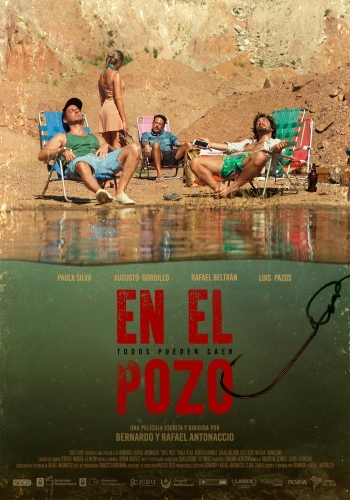
"A summer afternoon, an abandoned quarry, four friends. A thought-provoking thriller about gender-based violence," the synopsis teases.
The film, which is set to hit Uruguayan theaters in 2019, has comedic elements but ultimately addresses the issue of gender-based violence.
“For our project, [the screening in Geneva] is very rewarding given the very nature of *En el pozo*. We believe that Uruguayan films generally tend to make the rounds at major festivals, although competition is growing, which makes every festival appearance all the more valuable,” say the filmmakers.
To give you an idea, in the Ibermedia program, Uruguay was the country with the most projects selected, tied only with the host country (Spain), with three projects each.
According to the filmmakers, the industry’s current success is due to growing support from various institutions. “This would be unthinkable without the funding sources created to bolster the sector, such as the National Institute of Cinema and Audiovisual Arts of Uruguay (ICAU), MVD Socio Audiovisual, and the Fund for the Promotion and Development of National Audiovisual Production (FONA), among others,” they explain.
According to those interviewed, one of the main challenges in Uruguay today is allocating resources for project implementation. “The biggest challenge in our country is adapting to the resources we have and moving projects forward with what we have at our disposal,” they explain.
When it comes to their education, the brothers say that the Bachelor’s degree in Audiovisual Communication from the School of Communication and Design at Universidad ORT Uruguay gave Universidad ORT Uruguay the tools and knowledge they needed to break into the audiovisual industry. “The practical experiences, such as our undergraduate and graduate films, were very beneficial,” recall these young filmmakers, who are now traveling throughout Europe with their films.
At the same time, the interviewees recognize that personal effort plays a very significant role. “It’s up to each individual to keep digging deeper. It takes a lot of practice and a lot of trial and error,” they explain.