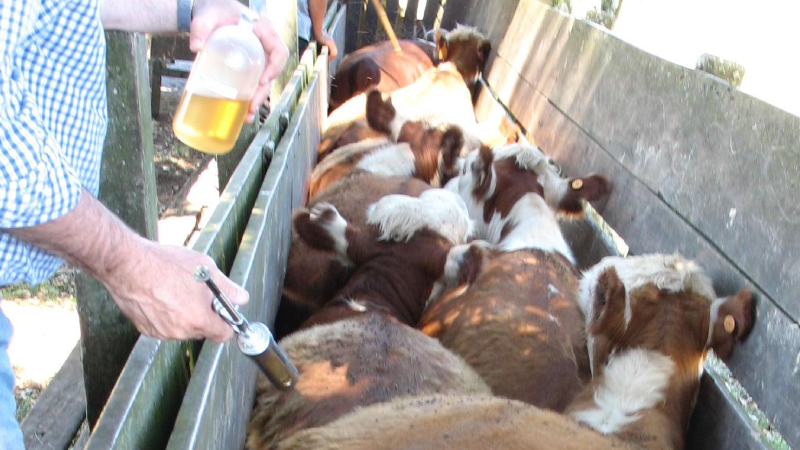
It has emerged as a safe alternative to the chemicals currently in use, which have adverse effects not only on the environment but also on the animals themselves—thereby affecting the quality of the meat and milk.
Ticks are gaining ground in the Uruguayan countryside in ever-greater numbers. Faced with the need to halt the parasite’s steady advance, the La Buena Estrella veterinary laboratory approached Universidad ORT Uruguay in 2017 to find a partner to join them in the search for a tool that is safe (for animals and the environment) and effective in the fight against ticks in livestock.
At that time, the Center for Biotechnology Research and Innovation (CBI+I) had just been established at the university and was taking its first steps, but Carlos Sanguinetti and Lorena Betancor (who headed the center and ORT’s Department of Biotechnology) immediately set themselves the challenge of finding a solution to the problem posed by La Buena Estrella: developing a biological control tool against ticks in the agricultural sector.
Until now, the only options available were chemical products capable of combating the parasite; however, according to Paola Bianchi, the company’s general manager, these had several limitations: over time, ticks develop resistance to these chemicals. "On the other hand, international trends are moving toward organic end products (meat and milk), so there is a strong emphasis on safety," the manager notes.
https://www.youtube.com/watch?v=gq1xtKfl67Y
A Uruguayan solution to a Uruguayan problem
In Uruguay, there is a history of using biological control tools—namely vaccines—to combat ticks in agricultural settings. However, according to Bianchi, they never achieved the minimum levels of effectiveness required to be considered effective for controlling the parasite. According to Sanguinetti, academic coordinator of the Biotechnology programs at ORT and director of CBI+I, those vaccines achieved effectiveness rates of between 30% and 40%.
What explains these low efficacy rates? The answer lies in the tick’s DNA, according to the researcher. Those vaccines are developed based on the genetics of the parasites found in the countries that produce them, so while they might be very effective in other parts of the world, the same was not true in Uruguay because it has a different tick strain, which reacts differently to the compound intended to combat it.
That is why ORT and CBI+I, with support from La Buena Estrella and funding from the National Agency for Research and Innovation (ANII), set out to study the genome of the Uruguayan tick in order to develop an effective vaccine. "We developed the antigens based on that genetic information. That’s why they’re effective in Uruguay, because they target native ticks," says Sanguinetti.
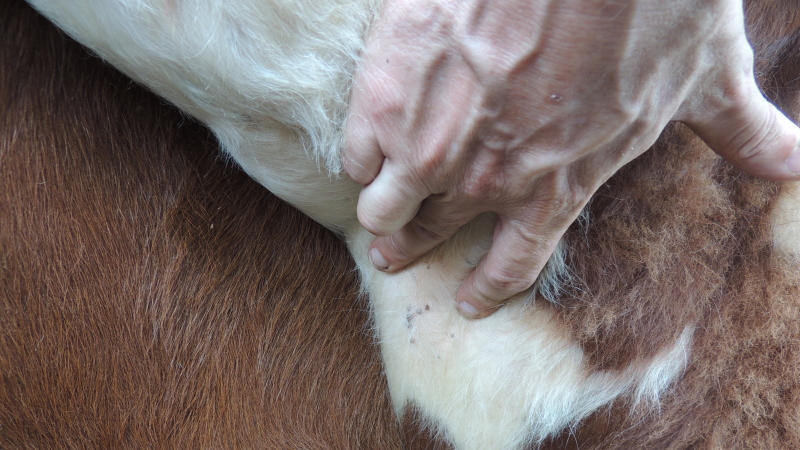
An innovative and safe biotechnological alternative
The research led to the development of a recombinant antiparasitic vaccine. "We are combining a fragment of the tick's genome with the genome of E. coli, a bacterium that grows very quickly and in large quantities," explains the researcher. "What we do is insert genetic information from the tick into that bacterium, and then we purify the parasite proteins found in the bacterial proteins so that, using the tick proteins, we can generate the antigens that go into the vaccine formulation," he adds. In short, the bacterium functions as a factory for tick proteins, which are what enable the creation of the antigens.
According to Sanguinetti, the field trials that have been conducted, with the endorsement of the Ministry of Livestock, Agriculture, and Fisheries (MGAP), have shown an efficacy rate of around 70%. "It's very promising, not only for the company, but also for us, and even for the ministry, for whom it had become a source of concern. It’s a product they want to see on the market quickly,” he says.
In addition to its excellent results, the new vaccine also represents an innovation and a solution to the environmental and animal-related side effects caused by chemical products.
Academia and industry: a necessary and encouraging synergy
When asked what he believes has been the main contribution of both the university and the center to this project, Sanguinetti states that it is precisely what they were trained to do: "to generate new knowledge that can be applied to solving a problem." Sanguinetti and Betancor, as well as Erienne Jackson and Sebastián Rodríguez—who are also part of ORT and CBI+I and are behind this project—have put their knowledge and experience to work on this project. But so have many other students in the university’s biotechnology programs who wrote their final theses on different stages of this development.
"All models should be structured this way: academia solving market problems, with support from industry and the government," says Sanguinetti. "That said, there are other models that are absolutely essential—ones that involve generating knowledge driven by curiosity," he adds.
The general manager of La Buena Estrella also states that partnerships between businesses and academia are essential for the country’s progress, as the challenges we face are becoming increasingly complex. “Although we don’t speak the same language, we’ve managed to find a way to communicate that allows for extremely smooth, successful, and very promising coordination, given the results we’re already seeing,” says Bianchi.

With an eye on 2023
What happens next? Sanguinetti explains that the next step is the production and registration of the vaccine. In Uruguay, there are few facilities that adhere to good manufacturing practices for recombinant proteins, so negotiations are underway with a facility that would be capable of producing the vaccine batches.
Next comes the registration process, which is being handled in collaboration with the MGAP. “It would be the first recombinant vaccine to be registered with the ministry, and therefore there is no written standard procedure,” he explains. For this reason, it is expected that the final clinical trial will begin in early 2023, with the aim of launching the vaccine on the market next year.
La Buena Estrella, meanwhile, aims first and foremost to raise awareness of the potential of this new tool, so that various market players can incorporate it into their integrated pest management plans. "We want it to establish itself as a complementary alternative that, together with currently available treatments and livestock management decisions, will lead to greater tick control. It would undoubtedly be of great importance to producers in their farming and commercial operations, but also on a broader level for the country as a whole," concludes Bianchi.