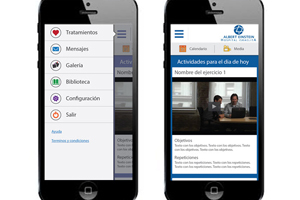
Ignacio Oliveri, who holds a degree in Computer Science, designed a web-based telehealth education platform called ViperMed, which allows patients to learn about their health issues from the comfort of their own homes in a simple and interactive way.
The project came about after Oliveri suffered a broken leg that required six months of rehabilitation. That experience sparked his curiosity about the world of healthcare and the steps patients must take to aid their recovery.
What is ViperMed?
It is a tool designed to provide health education to people with health issues. We create medical content that is understandable to the “average person.” Ninety percent of people search for information about their illness or condition online, but only 10% understand what they read, so the information ends up being counterproductive. We, on the other hand, provide reliable information presented in a simple and easy-to-understand way.
How do people access this service?
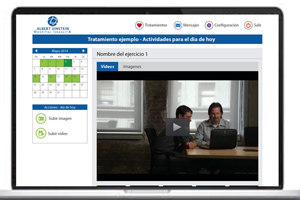
We provide this service to hospitals, clinics, and insurance companies; they tell us who they want to reach. We then contact those individuals and provide them with the technology they need to access the platform—such as a smartphone—where they have a calendar that outlines, day by day, the knowledge they need to acquire. The information is always presented in an engaging way to encourage them to read and absorb it.
We also work with private practitioners. Doctors often don’t have time to explain everything a patient needs or wants to know, so they may suggest that the patient visit the website. ViperMed already has ,000 educational resources.
Do you work with social organizations?
Yes, we have two lines of business: one is the private sector, which includes clients such as hospitals, clinics, and government agencies looking to reduce costs. For example, if a person has diabetes and doesn’t know how to manage their condition, they’ll go in for checkups at the slightest concern; in Chile, $5.5 billion is spent annually (in both the public and private sectors) on people with diabetes. With this system, we prevent unnecessary visits, and educating people leads to improvements and economic benefits.
 We also work with nonprofit organizations whose goal is to improve people’s quality of life. In these cases, we donate our technology and our time, and help them secure funding. We are currently working on a breast cancer project in Chile. This disease affects 10,000 women per year in that country alone, and since the organization lacks funding, we are negotiating with a mining company to finance the project.
What was the process of selling the project in Uruguay like?
Uruguay served as a testing ground, allowing us to learn about the industry. Our first client was Teletón, and they helped us determine how we could make an impact in the market; today, they are practically a partner in producing medical content.
You also have a presence in other countries, such as Chile.
Yes, Chile is a great place for ViperMed. For one thing, it has excellent government programs for foreign companies; they provide work visas, and you have all the same rights as anyone else. It also has a highly developed healthcare system, is close by, and Uruguayans are highly regarded both professionally and socially.
What is the scope of this platform?
We estimate that there are about 100,000 people in Uruguay and Chile combined. However, we recently partnered with a company in Chile that has 600,000 members, so we expect to gradually reach one million people by 2015.
You were named by MIT Technology Review as one of the most outstanding young entrepreneurs under 35 in 2013. What did that recognition mean to you?
Winning that award fills me with pride; although it was given to me, I believe it’s a recognition of the team’s efforts. It also helps raise our profile, boost our visibility, and enhance our reputation.
 You were also selected by the Inter-American Development Bank (IDB) as part of the “Ideas for Better Lives” initiative.
Yes, I'm one of the 16 companies selected from among 200 applicants from 22 countries. We're going to Washington to present the project; it's a great honor and a wonderful opportunity, and it could serve as a platform for securing funding.
What would you say to young people who want to start their own business?
First of all, it requires a lot of sacrifice—it’s not easy. People often think that starting a business is a waste of time, but that’s not the case. You have to put in a lot of effort; it’s a life-changing decision. But no matter what happens—whether it works out or not—it’s always a positive experience. It takes time, and you have to be willing to give up the steady income of a regular job, but I’d tell you not to think twice about it—you just have to do it.