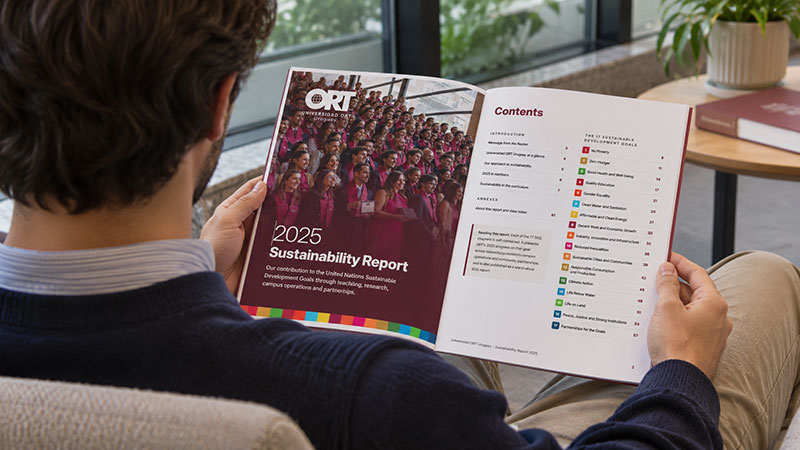
The document provides insight into how this issue is addressed in coursework, scientific projects, and campus operations. Among the initiatives outlined are research projects aimed at utilizing agroindustrial byproducts, teacher training grants, and the recovery of materials through ORT Recicla.
Organized into chapters corresponding to the 17 Sustainable Development Goals (SDGs), it combines institutional indicators with specific examples. These goals were adopted by the United Nations in 2015 to address social, economic, and environmental challenges by 2030.
Sustainability in the Classroom
The curriculum survey included in the report identified 138 different courses with substantive content on sustainability. The topics cover environmental impact, natural resources, social responsibility, governance, and sustainable business models.
His work spans various disciplines, covering topics such as renewable energy, bioremediation, eco-design, business management, and communication. The registry distinguishes between standalone courses and his participation in various programmes: by counting them once for each program in which they are taught, the total reaches 155.
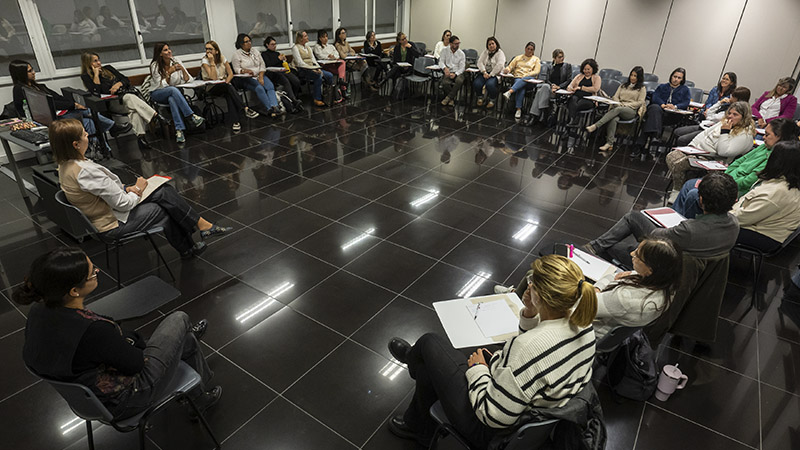
The training also reached teachers and administrators at schools serving vulnerable communities. In collaboration with the ReachingU Foundation, the Institute of Education offered 40 full scholarships for a course on transformational leadership, which was completed by 36 participants.
In addition to these initiatives, there were open-access educational materials and training activities aimed at people outside the university.
Applied research
In the field of biotechnology, teams from the School of Engineering worked on projects aimed at utilizing agroindustrial byproducts.
One of these projects, led by Dr. Cecilia Ortiz, associate professor of Protein Technology, and funded by the National Agency for Research and Innovation (ANII), aims to produce a value-added compound from soybean meal using modified bacteria.
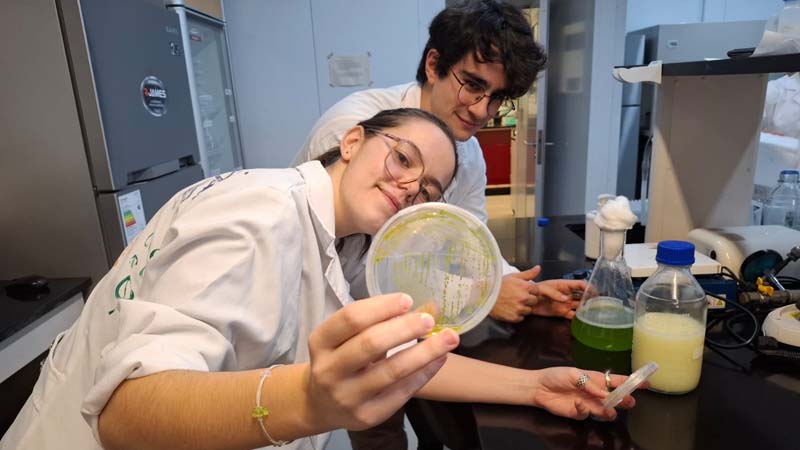
Another project, led by Dr. Mariana Umpiérrez, deputy coordinator of ORT’s Biotechnology Laboratory, in collaboration with the company Mushlove and with funding from ANII, is developing formulations using mushroom extracts for food and cosmetic applications. It is also studying the use of waste from oil production as a source of lecithin.
The connection between science and the community was also reflected in a proposal by biotechnology engineering students that was selected for Projects for Peace 2025. At the Adventist Institute of Uruguay, they conducted classes, laboratory exercises, and field activities on dairy production waste, the circular economy, water quality, and microalgae cultivation. The teaching materials and laboratory equipment were left at the school.
Startups and the Green Economy
The Center for Innovation and Entrepreneurship (CIE) developed training programs related to the green economy and innovation, with support from the National Institute for Employment and Vocational Training (INEFOP).
The report also presents indicators of the center’s overall entrepreneurial activity. In 2025, it received 476 business ideas, compared with 306 the previous year. In addition, 25 incubated startups received public funding, and 18 companies were established with support from the CIE.
These data are supplemented by training and support programs aimed at small businesses, women entrepreneurs, and migrants.
Recycling and Reuse
In campus management, the ORT Recicla program recorded 14.2 metric tons of recycled waste in 2025, a 10.1% increase over 2024. The proportion of waste recovered relative to the total generated rose from 17.1% to 18.3%.
Total waste generation also increased, reaching 77.6 metric tons—a 2.9% increase over the previous year. The indicators thus show an improvement in the recycling rate alongside an increase in the volume of waste generated.
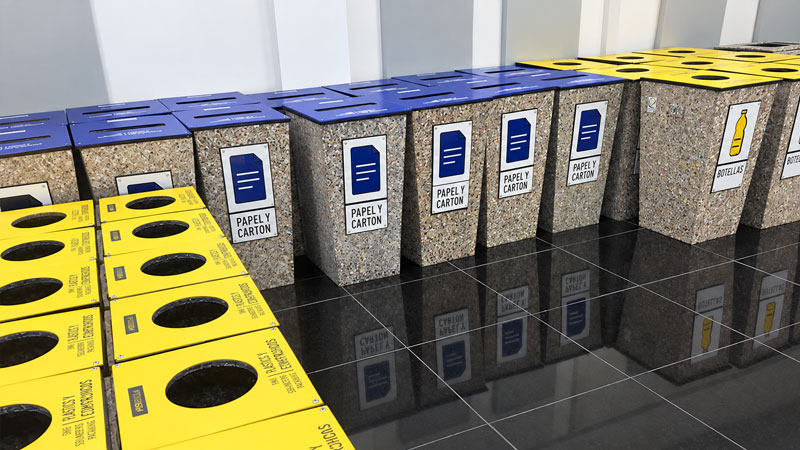
Among the recovered materials are 10.7 metric tons of paper and cardboard destined for Repapel, an organization that runs programmes , an environmental education program in public schools.
The university also donated 479 pieces of computer equipment to the Antel Integra project: 233 monitors and 246 CPUs. The program refurbishes equipment to distribute it to people in vulnerable situations, linking the reuse of technology with digital inclusion.
Coordination and Partnerships
In September 2025, the University of the Andes ( Universidad ORT Uruguay ) established the Sustainability Committee to coordinate initiatives, monitor progress, and promote the integration of this perspective into teaching, research, community outreach, and institutional management.
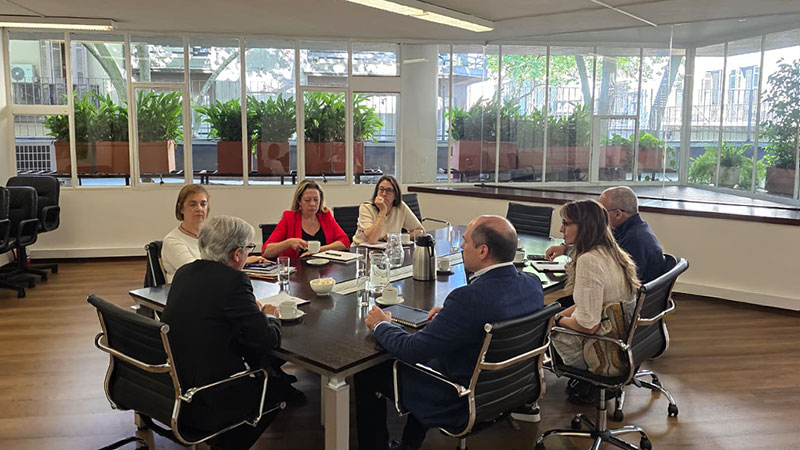
In December, it joined the Network of Universities for Sustainability (UNIS) as a founding member, along with five other Uruguayan universities, to work on sustainability and the circular economy in higher education.
The 2025 Sustainability Report compiles these initiatives based on institutional yearbooks, ORT Recicla records, and news published by the university. Each chapter provides an overview of initiatives related to a specific SDG and the sources that document them.
Click here to access the 2025 Sustainability Report