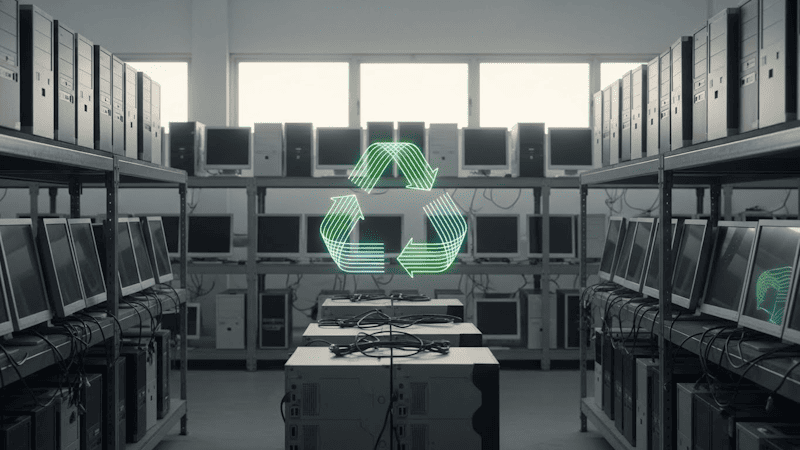
In 2025, Universidad ORT Uruguay 479 computer systems to the Antel Integra Project, which refurbishes computers and distributes them to communities across the country, thereby reducing the digital divide and electronic waste.
Circular Equipment Management
In Universidad ORT Uruguay comprehensive waste management program, one of the key principles is to minimize waste generation and extend the useful life of materials, products, and devices. This approach applies to computer equipment as well.
When computers and monitors no longer meet the university’s needs, the university prioritizes reusing them through donation rather than disposing of them.
As part of this initiative, unused equipment is channeled through the Antel Integra project, an initiative aimed at bridging the digital divide, promoting sustainability, and fostering access to technology in communities across the country.
What is Antel Integra?
Antel Integra receives donated computer equipment, refurbishes it at its recycling center, installs open-source software, and distributes it to people in vulnerable communities, with the aim of democratizing access to technology and knowledge.
https://youtu.be/LVsKfHRxXVY?si=uNwooSWlacCyFpxs
In addition to its social impact, the program has a key environmental goal: to reduce electronic waste by extending the useful life of devices.
In 2025, the Antel Integra project received the Uruguay Circular Award in the large companies category.
2025 Results
In 2025, Universidad ORT Uruguay to the Antel Integra project:
- 233 instructors
- 246 towers (CPU)
In total, 479 devices were given a new lease on life and are now being used in new educational, community, and social settings, rather than ending up as electronic waste.
This initiative is part of the university's waste management and sustainability program, which includes initiatives such as ORT Recicla, aimed at sorting, recycling, and reducing waste on its campuses.
Electronic waste on the rise
Waste electrical and electronic equipment is one of the fastest-growing waste streams globally and can contain hazardous substances if not managed properly.
According to international reports on electronic waste, the annual volume of electronic waste is increasing by several million tons each year and could reach tens of millions of tons by 2030.
In this context, reusing rather than discarding is a strategy that reduces the need to manufacture new equipment, eases the strain on natural resources, and prevents valuable and potentially hazardous materials from falling outside formal management channels.
Contribution to the Sustainable Development Goals
This initiative is directly linked to two Sustainable Development Goals (SDGs) adopted by the United Nations in 2015 as a global call to action to end poverty, protect the planet, and ensure prosperity by 2030:
- SDG 10: Reduced inequalities, by helping to bridge the digital divide through access to technology for vulnerable institutions and communities.
- SDG 12: Responsible consumption and production, by promoting the extension of equipment lifespans, reuse, and responsible management of electronic waste.
At Universidad ORT Uruguay, these types of initiatives are part of a broader approach to waste management that takes into account the entire product lifecycle, prioritizing prevention, reduction, and recycling whenever possible.
In the case of electronic waste, extending the useful life of devices is a concrete way to turn the end of a product’s useful life into a new opportunity for digital inclusion and sustainability.