 The Clutch platform named Ameba Creative Studio as one of the leading agencies in UX in the United States in 2018. In the term UX (user experience) combines usability, accessibility, and comfort resulting from interaction with a product or service—in other words, a better user experience.
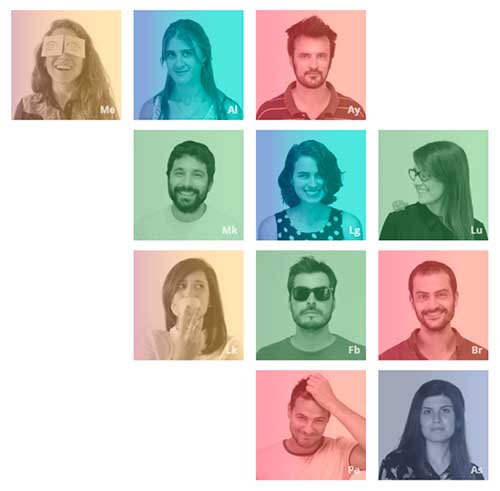
Ameba was founded nearly 10 years ago and is now made up of several college graduates:
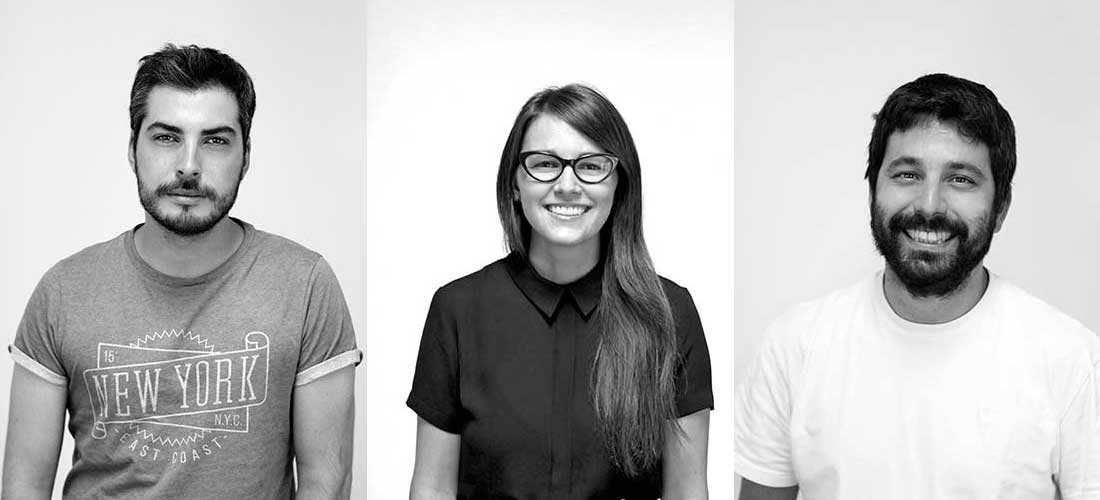
- Lucia Martinez, founding partner and co-director
- Fabricio D’Agata, founding partner and co-director
- Miguel Vallvé, founding partner and co-director
- Andrés Bolani, project manager, graphic and web designer
- María Elena De Paula, graphic designer
- Ligia Mazzilli, project manager and graphic designer
- Alejandra Laxalde, project manager and graphic designer
In this interview, the agency’s directors discussed the challenges they’ve faced in starting the business and establishing themselves as a leading agency, the complexities of working with international clients, and how they’ve adapted their training as designers to also run a company.
What does it mean that Ameba has been recognized by Clutch as one of the leading UX agencies?
Each month, Clutch recognizes the top-performing B2B companies by industry and location. To be considered for recognition, companies must demonstrate their ability to deliver high-quality work for their clients.
Clutch brings together both potential clients and strategic partners, and having a presence on its platform helps us reach our target audience. The most immediate result of our recognition has been an increase in qualified traffic from potential clients.
How significant is Clutch in the market?
We compete in a global market where users look for reviews, opinions, and ratings during their purchasing process. This happens at every level: from people buying a book on Amazon, booking a hotel on Booking.com, or hiring professional services for their business.
However, reviews carry as much weight as the reputation of the person posting them. Clutch has earned the respect of businesses through a reliable review system in which users must undergo a personalized interview before they can rate a company.
There’s no doubt that being featured in a showcase viewed by (potentially) 100,000 companies each month is crucial to our positioning as a firm on the international stage. In just six months, it became our primary source of referral traffic (40% of the total), and we were able to convert that into a dozen clients.
As with any business, there are many people who just stop by to browse, but the vast majority are companies looking for services like the ones we offer and are part of our target audience.
In Uruguay, Clutch isn't very popular, which is why our profile on the platform is geared toward international clients.
Was this an award you applied for, or did it come as a surprise?
Neither one nor the other. A few months before finalizing our profile, we had established a relationship with a Uruguayan software company that had received a similar award. We knew it was a possibility, but we didn't actively seek it out.
It’s been almost 10 years since you founded Ameba. What can you tell us about this journey, the company’s growth, and the professional challenges you’ve faced?
Ameba was founded by eight classmates from the Graphic Design program at Universidad ORT Uruguay pooled their portfolios under a single brand to gain a foothold in the job market as freelancers. Over time, our interests and life circumstances led to the group shrinking to just three partners: Fabricio D’Agata, Lucía Martínez, and Miguel Vallvé. All three are graduates, but with different backgrounds: Miguel and Lucía dropped out of the School of Engineering; Fabricio is a visual artist.
For the first two years, we each worked from home and would occasionally meet with clients at Miguel’s desk, where his grandmother would often interrupt our meetings with pastries and cookies. Eventually, we took the plunge and rented a shared office with La Ronda.
Running a business for 10 years without any formal business training has had more setbacks than successes, and the only reason we’ve been able to bounce back each time is thanks to the team that has been with us for years, many of whom are college graduates.
In a service company like ours, we have to adapt, evolve, and keep moving forward. That’s why Ameba.
What was it like to take the first step in reaching out to international customers?
At first, we worked for people we knew and people our acquaintances knew. Our first clients came through our website, since we understood from the very beginning the importance of organic search engine optimization, social media, and user experience.
One day in 2013, Miguel saw an ad like so many others we regularly applied to: “Marina was looking for a web designer to work at her company.” It wasn’t an ad from a company seeking to outsource services, but if we’ve learned anything over the years, it’s that opportunities don’t always come in the form we expect.
That’s how our relationship with Mercury, our first international client, began. It was a two-person agency: Joshua (the director) and his wife Marina (the designer). We started out working just over 30 hours on small projects, but within a few months we had increased those hours by 1,000%. Mercury’s largest client was TM Forum, with whom we continue to work to this day.
As Mercury’s clients recognized the quality of our work and our ability to advocate for and add value to projects, we gradually took on more responsibilities and more projects. By the end of 2013, we decided to expand our team, and that’s when we made our first hires.
We grew to a team of 17 full-time employees, plus several freelancers who helped us with specific projects. Mercury became our most important client, which was both a relief and a risk for us. It accounted for a large percentage of our revenue without any sales effort on our part.
Thanks to Mercury, we’ve been able to take on comprehensive, complex, multidisciplinary, and long-term projects. As the overall production managers, we’ve had to coordinate with other professionals across different time zones, attend large meetings, and incorporate new tools and methodologies into our workflow.
In mid-2016, Joshua decided to change the agency’s direction, and—with great regret and after more than a few disagreements—we parted ways with our main and largest client. This was the biggest blow we’ve ever faced, and it led us to rethink many aspects of the company; it even forced us to downsize our team.
After the chaos, we regrouped and began to explore our export opportunities. Our years of experience, established procedures, methodology, organizational structure, and team size had made us a globally competitive firm. The biggest challenge from 2016 to the present has been to generate more business opportunities abroad without neglecting the local market. This year is crucial in that regard.
Last year, we conducted an internationalization consultation to help the company focus on sales and production for the North American market, and since then, we have seen the results of our efforts through the addition of new international projects that fill us with pride.
How do they balance their roles as directors at Ameba without neglecting their work as designers?
Running a business is no easy task. It forced us to do our research and reinvent ourselves as professionals to meet the company's needs.
Fabricio is the one who most actively applies his design skills in his roles as art director and marketing director. Over the past 10 years, the types of projects and associated technologies have changed significantly. Today, he has to analyze data, map out interaction flows, and plan for the impact before he even begins designing.
In Lucía’s case, she focused her work on coordinating and organizing projects as director of operations. With over 10 years of experience, she is able to identify deviations and guide the team in finding the right balance between what the client wants and what they actually need.
Finally, Miguel has held the role of technical lead since the company’s inception, but today he must divide his time between serving as a UX/UI consultant, sales director, and innovation director.
That said, we all chip in on the design whenever we can.