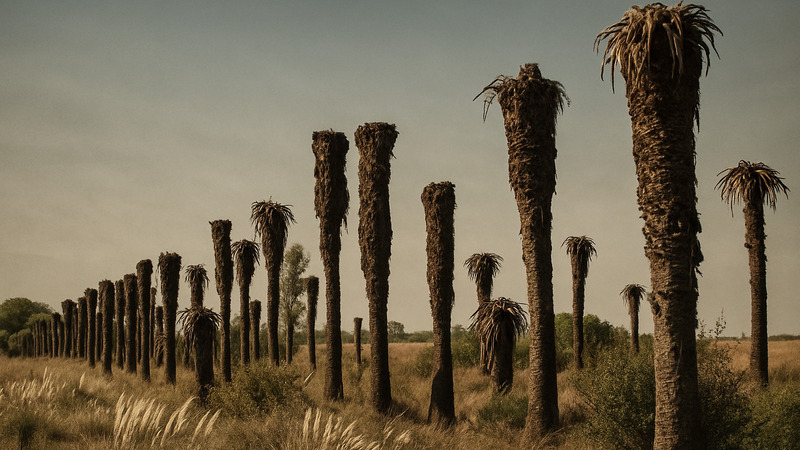
The red palm weevil (Rhynchophorus ferrugineus) is a beetle native to Southeast Asia that has been affecting palm trees in Uruguay for years. Declared an environmental emergency, this insect bores into the trunks and destroys internal tissues, causing the death of thousands of trees and altering the urban and rural landscape.
In Montevideo and Canelones, the damage is becoming increasingly visible, with dried-up and fallen palm trees causing concern among experts and residents.
A technological solution with environmental implications
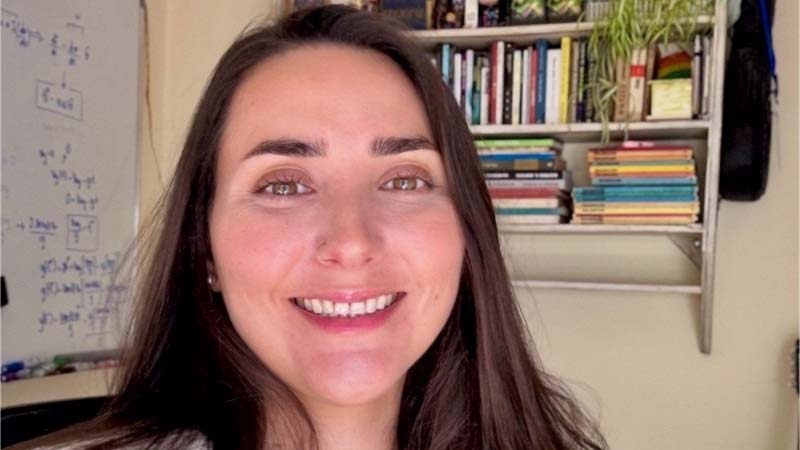
Concerned about the lack of centralized information on the pest, she decided to create a web application to track and report cases of the red palm weevil.
“The idea came to me because I saw palm trees in poor condition and couldn’t find a place where I could track the spread of the pest in real time. So I thought: if it doesn’t exist, why don’t I create it myself?” Emilia explains.
- You might also be interested in reading: "Uruguay vs. the red palm weevil: an environmental emergency we must stop this winter"
How the app works
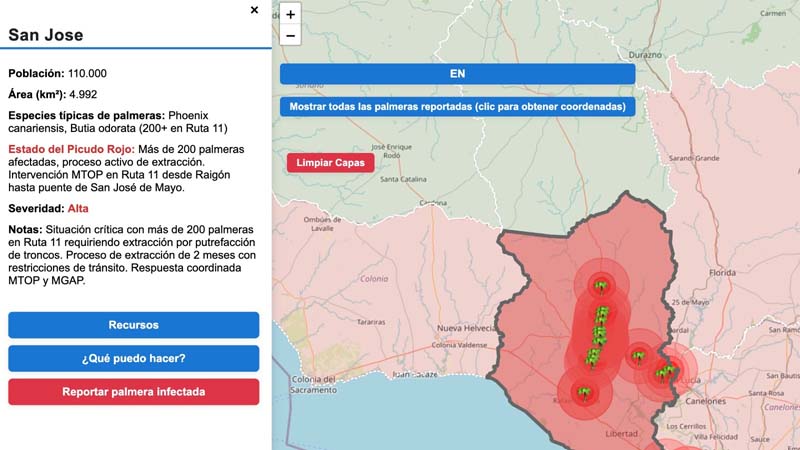
The app provides an interactive map of Uruguay with up-to-date information on the situation in each department, AI-generated summaries, and citizen reports on suspicious or infected palm trees.
“Anyone can contribute by marking the location of a palm tree in poor condition, whether with coordinates, a Google Maps link, or a description. It’s a way to empower people to take action, rather than just lamenting the problem,” he explains.
In addition, the platform includes links to official resources and guidelines, making it a key resource for the community.
A project completed in record time
Emilia developed the app in just one week, using technologies such as Node.js, mapping libraries, and artificial intelligence tools. “The biggest challenge was the lack of open data on affected palm trees. I started walking through the Prado and using Google Maps to manually mark the ones I saw that were in poor condition,” she recalls.
The post about the app on his LinkedIn profile quickly generated engagement. Users began sending in reports, and little by little, other collaborations emerged with companies working on pest detection.
Technology for the Environment
For Emilia, the project reflects her philosophy of using technology as a tool for social and environmental change. “I really hate just complaining. This is what I can contribute from my own perspective, even though I’m not an expert in biology. I hope it inspires others to use their knowledge to solve real problems,” she says.
She also highlights the role of new technologies in accelerating creative processes:
“Today, with artificial intelligence tools, we can greatly accelerate development and boost our creativity. Far from replacing engineers, it multiplies our creative possibilities.”
Outreach and collaborative work
Although the app is not an official source, Emilia hopes it can be supplemented with data from public agencies and private companies to create a more comprehensive map. She also hopes to use artificial intelligence to analyze satellite images and automatically detect affected palm trees.
A tip for future engineers
For those who want to develop projects with a social or environmental impact, Emilia has a message:
Don't let the idea of having to present something perfect paralyze you. It's better to launch a first version and keep refining it. Perfection can wait; action cannot.
Learn about the Systems Engineering program