“The specific objectives of a mission are to observe the conduct of the key players in the electoral process,” said Professor Agustín Espinosa, a professor of International Relations at Universidad ORT Uruguay.
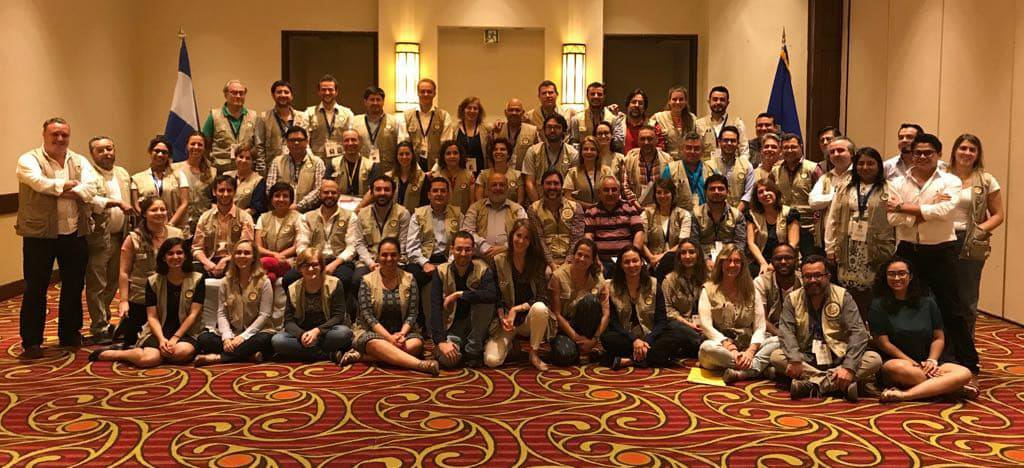
From November 2 to 8, 2017, Espinosa served as an observer for Nicaragua’s municipal elections at the invitation of the Organization of American States (OAS).
A Ph.D. in Diplomacy and former Uruguayan ambassador to Germany, Brazil, Egypt, Israel, and the United Kingdom, the professor explained what the international election observation process entails, what its objectives are, and what experience is required to serve as an observer.
What does the process of international election observation entail?
International election observation is a process whereby an organized group of individuals from outside the country where the elections are held carries out, on behalf of an international organization, a series of activities to directly monitor an electoral process.
Several international organizations carry out these activities, including the OAS, which has already conducted more than 250 election observation missions in its member countries.
An election observation mission must be guided by the principles of objectivity and neutrality, respect for the host country’s domestic laws, and must not in any way replace the actors involved in the electoral process.
What are the objectives of an international observation mission?
The specific objectives of a mission are to observe the conduct of the key players in the electoral process.
The purpose is to verify compliance with the country’s current electoral laws, analyze the conduct of the electoral process, document the findings, and report to the OAS Secretary General and the Permanent Council.
In addition, the mission may make recommendations aimed at helping to improve the electoral system.
In the diplomatic service, what experience and qualifications are required to be appointed as an observer?
There are no prerequisites for being invited by an international organization to serve as an observer. These organizations maintain registries where interested individuals can sign up as candidates for this role.
The members of a mission come from diverse backgrounds. Efforts are made to include men, women, young people, and adults of different races, with and without formal education, who fairly represent the various nationalities of the countries that make up the international organization sending them.
Obviously, experience with these procedures is valued more highly than other qualities when selecting personnel for a mission. There are diplomats in the missions, but that is not a requirement for joining them.
How did you get started as an election observer?
In my case, I believe I was invited because of my experience, specifically for having served as an election observer in Bolivia on behalf of the Ibero-American General Secretariat. I also served as an election observer on two occasions in Egypt.
What made this project unique in Nicaragua?
The elections we observed in Nicaragua were municipal elections. We observe all kinds of elections: national, parliamentary, municipal, and even judicial, as was the case in Bolivia a few weeks ago.