They have years of experience and a proven track record in education. They hold positions of responsibility within the Uruguayan education system. Each, in their own way, contributes to improving the management and quality of education.
They emphasize the importance of lifelong learning and view education as a lifelong process. They returned to the classroom, but this time not as teachers, but as students—to continue learning and to continue growing both professionally and personally.
What aspects will you be able to enhance in the workplace after completing the Master’s in Educational Management? What are the most important lessons you’ve taken away from your time at Universidad ORT Uruguay? What is the role of education in the 21st century?
Cecilia Graña, Edilia Pozzo, Solange De Lema, and Enrique Cederbaum—four recent graduates of the Master’s in Educational Management program—answered these questions and reflected on their experiences during the program.
Cecilia Graña: Returning to the Academic World
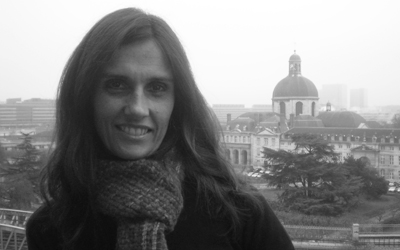 She has served as the Secondary Spanish Director at Saint Brendan’s School since 2017. She also teaches history to 9th graders.to be Grade at High School No. 12.
He graduated from the Artigas Teachers’ Institute (IPA) in 1993, but his career began in 1991, when he started teaching; he now has more than 25 years of experience in the field.
In 2003—the year Saint Brendan’s School was founded—she began working as a history teacher. Then, in 2011, she took on the role of coordinator of the school’s International Baccalaureate Middle Years Programme. This is a global initiative that, in Graña’s words, aims to “educate well-informed, caring, and open-minded young people.”
What was your experience like in the Master's in Educational Management? What do you feel you gained from it?
My experience was very positive and enriching. It gave me exactly what I was looking for: a theoretical foundation for my management and leadership practice. It introduced me to many authors, both domestic and international, who have researched a wide range of topics. Some have long careers and extensive publications; others are more recent and contemporary.
I was able to bring myself up to speed on new educational theories and paradigms and, above all, delve deeper into current research on educational quality.
I incorporated concepts that enable the analysis of educational organizations—such as the one I manage alongside a great team. For example, regarding the identification of organizational dimensions, the distinction between leadership and management, as well as the concept of learning communities as one of the keys to improvement.
In my case, the Master’s in Educational Management marked my return to the world of higher education. It also meant earning a graduate degree, which had been a personal goal of mine.
In your work, what areas do you think you’ll be able to improve or enhance as a result of completing the master’s program?
I firmly believe in the synergy between theory and practice. Concepts such as “strategic planning,” “management,” “distributed leadership,” “learning communities,” and “change and improvement” are just a few examples of the knowledge I gained that helped me improve my role and responsibilities in management.
In turn, the master’s program helped me view the organization where I work in a more professional light. It allowed me to gain a deeper understanding of it in all its various aspects. In particular, this pertained to the importance of communication for organizational improvement, which was the topic of my final thesis.
And vice versa? How did you use your work experience to get the most out of the master's program?
Without a doubt, what I experienced in my daily life was reflected in my master’s classes or in the reading materials. Learning takes place when it is connected to reality, when it occurs in the context of real life. This is true for both young people and adults.
My work experience served as my "prior knowledge," which was key to connecting with the new concepts covered in class and, in that way, achieving meaningful learning.
What motivated you to continue your studies and pursue a master’s degree in Educational Management? Why do you think it’s important to keep learning?
As an educator, I believe that learning is a lifelong process. Having always been passionate about lifelong learning, I studied at the IPA, took continuing education courses, took on increasingly challenging roles, and ultimately decided to pursue a master’s degree in Educational Administration.
We could say that motivation comes from within, but I must also acknowledge that I received tremendous support and recognition from Saint Brendan’s School.
What is the most important lesson you've learned?
Everything I learned was relevant. The first-year courses—such as Management of Educational Institutions and Strategic Planning in Educational Management—allowed me to incorporate new concepts and paradigms for analyzing organizations. Likewise, the course Cases and Methods in Educational Research provided me with a methodological foundation that, as an IPA student, I had not explored in sufficient depth.
Starting with second-year courses, such as Organizational Improvement, I had the opportunity to conduct my first field research at an educational institution. This allowed me to become familiar with qualitative research methodology and to develop my first case study. It also enabled me to connect theory with practice and to use interviews and surveys as research techniques.
Finally, I would like to highlight what I learned from my professors and classmates during my two years in the graduate program. I appreciated everyone’s high level of academic expertise and, in particular, their spirit of collaboration and mutual support. I learned a great deal from their diverse backgrounds and contributions.
Edilia Pozzo: Knowledge to Foster Innovation and Leadership
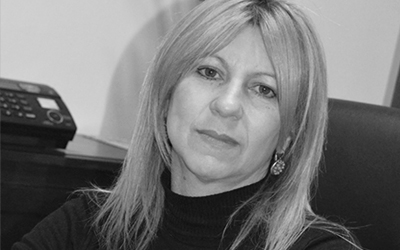 She graduated with a degree in education in 1990. She worked as a philosophy teacher in secondary education, as an adjunct instructor, and also as a professor at the Fray Bentos Teacher Training Institute. Her professional experience allowed her to “gain insight into and engage with all aspects of an educational organization.”
She is currently the director and a faculty member at the Mercedes Teacher Training Institute, an organization she has been a part of since 2014.
What was your experience like in the Master's program in Educational Management? What do you feel you gained from it?
The experience was very valuable both professionally and personally. First of all, because the master’s program provided me with essential tools for management and, in particular, for research.
Second, because I gained knowledge that enriched my cultural background and gave me a new perspective on the development of educational administration.
Furthermore, meeting other colleagues facing similar challenges in their professional development further strengthened my determination to achieve my goal.
In your work, what areas do you think you’ll be able to improve or enhance as a result of completing the master’s program?
I believe that in my work I will be able to strengthen the management practices I employ, from a collaborative perspective. At the same time, thanks to the Master’s in Educational Management, I will be able to contextualize my organization’s situation within the current reality and gain a greater awareness of all the elements involved in the management process.
And vice versa? How did you use your work experience to get the most out of the master's program?
My work experience gave me the opportunity to consider the various stakeholders, roles, and situations that make up an educational institution. It allowed me to understand the reality and context of the challenges facing education, as well as its strengths and weaknesses, so that I could then reflect, take action, and propose changes.
What motivated you to continue your studies and pursue a master’s degree in Educational Management? Why do you think it’s important to keep learning?
Motivation was a constant throughout the master’s program for a variety of reasons. Among them were the desire for lifelong learning and the aspiration to gain a deeper understanding of the real world in order to improve the quality of education. Other factors included the desire to develop research skills, as well as the goal of building greater capacity to promote innovation and leadership through management.
What is the most important lesson you've learned?
The most valuable lesson I took away was the application of methodology in the field of research and the process required to produce a high-quality final product. At the same time, I recognize the importance of evidence as a foundation and of the theoretical framework for grounding the work carried out.
Solange De Lema: An Opportunity to Consolidate What We've Learned
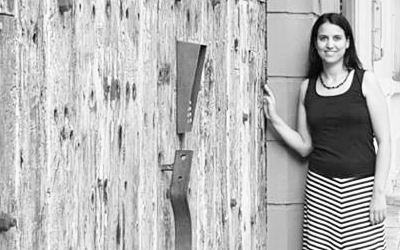 In 2008, she graduated from the teacher training program at the Centro Regional de Profesores del Centro (Florida), and for the past 10 years, she has held various positions that have allowed her to gain “new insights and experiences.”
He currently teaches at the Institute for Technical Teacher Education (INET), the Institute for Social Education Training (IFES), the blended-learning teacher training program offered by the Council for Education Training (CFE), and Liceo No. 56 in Montevideo.
What was your experience like in the Master's in Educational Management? What do you feel you gained from it?
The Master's in Educational Management was an experience that allowed me to build on what I had already learned, while gaining a number of new insights.
The master's program challenged me to conduct research. Specifically, I had to write a case study and a final thesis on an educational organization I was unfamiliar with. And thanks to that experience, I discovered aspects of the educational system that I hadn't explored before.
In your work, what areas do you think you’ll be able to improve or enhance as a result of completing the master’s program? How did you draw on your work experience to get the most out of the master’s program?
During my undergraduate studies in the teacher education program, I spent two years conducting research and completed a group research project. Additionally, while pursuing my Bachelor’s degree in Communication at the University of the Republic, I took several theoretical courses on design and quantitative and qualitative methodology.
The Master's in Educational Management was the first time I had to conduct a case study on my own, with guidance from faculty advisors. I believe it helped me grow by giving me a new opportunity to organize what I had learned.
What motivated you to continue your studies and pursue a master’s degree in Educational Management? Why do you think it’s important to keep learning?
I love being a teacher because I’m passionate about learning. Plus, this profession requires us to be constantly learning and evolving.
During my undergraduate studies, I hadn’t delved deeply into the field of educational administration, but I had explored it through my professional experience. First, as a staff member at the Secondary Education Council, and later as an educational guidance counselor at the Education Training Council. My time at Compromiso Educativo and the MEC Centers also allowed me to gain experience in other administrative roles, which had a more pedagogical than administrative focus.
My professional experience in planning and management led me to believe that it was a good time to explore the existing theories in this field. I believe it is very important to gain knowledge and skills so that we can make informed decisions and take context-appropriate actions in our work environments.
What is the most important lesson you've learned?
The experience of researching and examining organizations from the perspective of educational management.
Enrique Cederbaum: Professional and Personal Growth
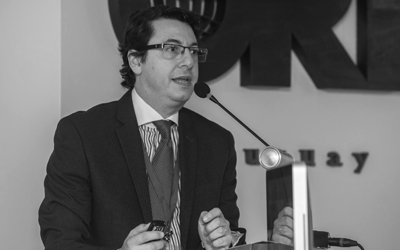 Coordinator of the Department of Visual Arts and Communication for Secondary Education at The British Schools since 2014.
He is an architect. He worked for 12 years at the Escuela Integral Hebrea, where he developed the course “Art in Judaism” and several educational projects, such as the implementation of 3D printing. For five years, he coordinated and managed the arts-focused high school program at Pocitos Day School to help establish it at the school. He has been teaching Art and Visual Communication in secondary education for over 30 years.
What was your experience like in the Master's in Educational Management? What do you feel you gained from it?
The Master's in Educational Management was a great opportunity for personal growth and enriched my education in many ways.
It was the perfect fit for me. I graduated with a degree in architecture from the University of the Republic. However, many of the courses in the master’s program were ones I had never taken during my undergraduate studies.
I learned a lot about management, research, and analysis, as well as everything involved in developing innovation and improvement projects.
In your work, what areas do you think you’ll be able to improve or enhance as a result of completing the master’s program?
I put what I've learned into practice on a daily basis. It has really helped me grow and continue to develop my professional career.
In addition to my specific role as coordinator of the Department of Arts and Visual Communication at The British Schools, I collaborate with other coordinators on various projects and am a member of a group focused on institutional safety.
In these forums, strategies are sought to develop unified policies at the institutional level. Issues related to learning and assessment are addressed, with management topics playing a central role.
And vice versa? How did you use your work experience to get the most out of the master's program?
I have drawn on many examples from my teaching experience, as well as several projects I have developed, which have proven very useful to me on numerous occasions.
What motivated you to continue your studies and pursue a master’s degree in Educational Management? Why do you think it’s important to keep learning?
It all started when I completed a graduate program in Art Education. That’s when I realized that continuing my education was the way to stay current and grow professionally.
In turn, The British Schools supported my professional development and encouraged me to pursue a master’s degree. After exploring my options and discussing them with the principal and the head of Human Resources, we concluded that the Master’s in Educational Management was the best fit, given my role and the contributions I could make. It would allow me to contribute to the institution by developing projects and working on management issues. I am very grateful to the school for encouraging me.
What is the most important lesson you've learned?
I found everything to be relevant. Each course provided me with the fundamental concepts for my management education. Perhaps the most intense part was the work we did in the Innovation Project and Organizational Improvement Plan courses—along with the final report—but that’s where all the knowledge I’d acquired over the two years of the graduate program was reflected and put into practice.
I am very grateful to Universidad ORT Uruguay accepting me into the program. Over the past two years, I have gained not only a solid education but also a deep affection for the people I have met, who have helped me make new friends.
The faculty members have been very warm and welcoming, as has the administrative staff. In particular, Luciana Ponzoni—former assistant course coordinator at the Institute of Education—and Andrea Tejera, M.A.—academic coordinator of the Master’s in Educational Management—.
I would like to extend a special thank you to my academic advisor, Miguel Álvarez, M.A. I was honored to have him as my advisor and mentor. I learned a great deal from him and through him. He supported me every step of the way, helping me see this very complex process through to the end. But above all, it was a deeply rewarding experience that helped me grow both as a professional and as a person.