The Art of Evaluation
What do a craftsman and a teacher whoevaluates studentshave in common? At first glance, not much. One works with wood, ceramics, or fabric; the other, with learning processes, student work, questions, progress, and challenges.
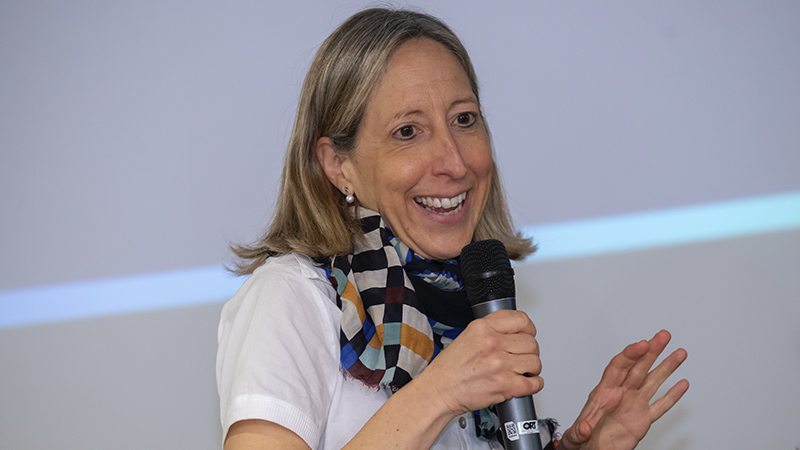
However, according to Dr. Anna Espasa, “assessment is a craft.” During the conference titled “AI and Learning Assessment: New Horizons in Education,” the professor at theOpen University of Catalonia(Spain) argued thatthe creation of a craft and assessment share “very similar” principles.
Why is that? Both teachers and artisans needtounderstand the materialsthey work withand the tools at their disposal, have a clear understanding of the process they are following, andhave criteria fordetermining when what they are creating is “correct and finished.”
But what happens whena new element entersthat process and alters the dynamics—such as artificial intelligence? “It’sjust another tool; it doesn’t change what the artisan does,” Espasa replied.
https://www.youtube.com/watch?v=DzpYaoP1s-0
The Challenges of Artificial Intelligence in Assessment
It is undeniable that artificial intelligence poses challenges for assessment. “We’re all more or less familiar with them by now, but what artificial intelligence does isreframe the situation and prioritize certain aspects over others,”he noted as he listed the most significant ones:
- Process-focused evaluations: Because artificial intelligence can generate “high-quality” outputs, processes become even more important.
- Formative feedback: Unlike simply correcting the final result, this involves supporting the student throughout the entire assessment process.
- Oral and dialogic assessments: creating opportunities to explore questions of identity and authorship.
- Explaining the use of artificial intelligence: Ask students to explain how, why, and when they used these tools.
- Assessment based on real-world problems: presenting real and meaningful situations that make it difficult for artificial intelligence to provide automatic responses.
- Assessing the quality of decisions: evaluating not only the final product, but also the criteria and choices that guided the process.
- Personalized learning: leveraging artificial intelligence to address each student's interests and learning needs.
Formative feedback
“We usually tend to focus on corrective feedback. We correct mistakes, but the part that really helps students learn—the improvement—isoften overlooked,”Espasa said.
Based on that observation, he outlinedfour key elements of formative feedback—although he clarified throughout his presentation that he was using the terms “feedback” and “retroalimentación” interchangeably.
First, he emphasized its importance and the need to view it asa process that unfolds throughout a course, rather than as a one-time action at the end of an activity.
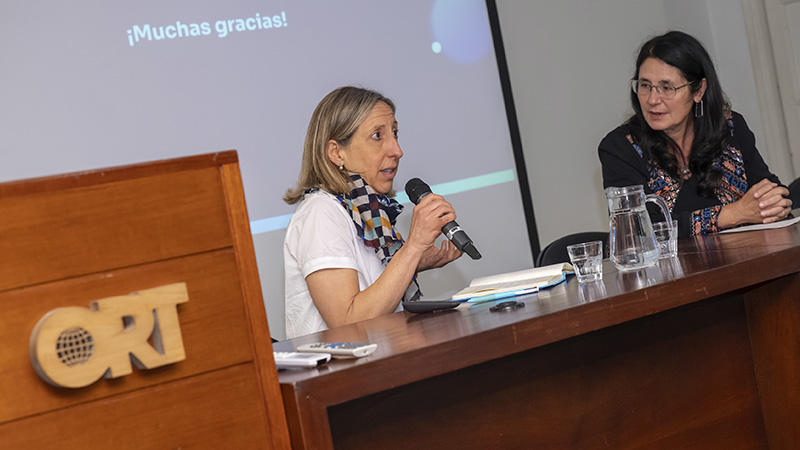
He also emphasized, secondly, that it is essentialto give students the space to make sense of that feedback: “I have to plan for the student to review, examine, and understand that feedback and then make a decision.”
Third, he noted that feedbackcan come from a variety of sources. Although people tend to think that teachers are the only ones responsible for providing it, nowadays it canalso beoffered by classmates and even by artificial intelligence.
Finally, the fourth key element of formative feedback isimprovement. “It sounds simple, and we probably all know it, butwhen it comes time to give feedback, we tend to forget it,”he said.
Feedback Strategies
During the conference, Espasa described feedback as a dialogical process, “spiral-shaped and cyclical,” consisting of four phases:
- Feedback, in the strictest sense, involves letting students know what they did well, what they did not do well, and what factors they need to consider in order to improve.
- Helping students process feedback so they can understand it, ask questions, and use that understanding to make decisions.
- Theimplementation of those decisions—that is, putting specific changes into practice based on what has been received.
- Theopportunityfor the student todemonstrate improvement through a new submission or revised assignment, to be re-evaluated by the instructor.
In Espasa's words, this final phase is often overlooked. “We don’t give students the opportunity to work on the feedback they’ve received, make the necessary improvements, and resubmit their work,” he said.
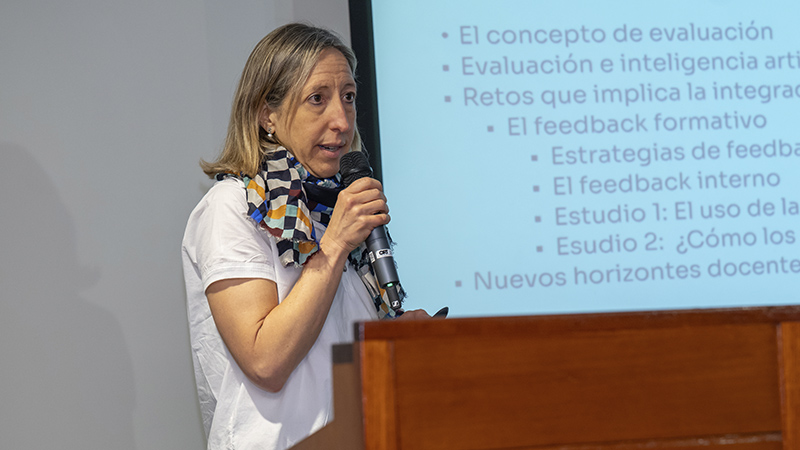
In addition, Espasa listed various strategies for giving feedback, which may be of interest to teachers and educators:
- Re-evaluation: a “very simple” strategy, though “somewhat costly to implement,” that involvesgiving students the opportunity to incorporate the feedback they receive and demonstrate improvement. There are different ways to do this, such as providing feedback throughout the process, rather than only at the end.
- Internal feedback: encouraging students to compare their current learning with an external benchmark. According to Espasa, this is a “very powerful”process of comparison.
- Literacy in the area of feedback: helping studentsunderstand the value of feedbackand become “aware of how important this feedback is to their learning.”
Internal feedback
“Internal feedback is not a new concept, ”Espasa noted, adding that there arevarious terms usedto refer to this process: self-feedback, student-generated feedback, self-assessment, and self-regulation, among others.
Questionnaires, interviews, and read-aloud protocols are some of thetools used to gather this internal feedback.
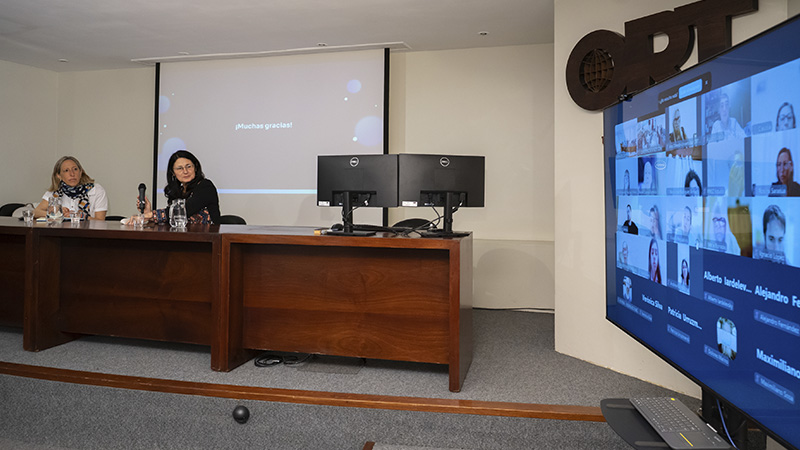
And, in that context, artificial intelligence can play an important role as an external benchmark or comparator, with the aim of “facilitating learning and self-regulation.” It is also capable of promote the development of evaluative judgment, by helping students develop “the ability to decide what to accept, what to reject, and what to review” based on specific quality criteria.
We view artificial intelligence precisely as a comparison tool, not merely as a generator of answers.
At the conference “AI and Learning Assessment: New Horizons in Education,” the professor from the Open University of Catalonia shared somepreliminary findings from researchshe is conducting in collaboration with the Feed2Learn research groupon artificial intelligence and internal feedback.
What are the initial findings of these studies? Thatartificial intelligence, when usedas a tool for generating internal feedback, “is powerful.” This is becauseit helps students identify areas for improvement andissues they had overlooked, as well as refine their knowledge.
New Horizons in Education
Among the new opportunities emerging in education, Espasa highlighted the incorporation ofinternal feedback strategies using artificial intelligence, calling it a “highly sustainable” alternative. As he explained, artificial intelligence “serves as a good benchmark for learning,” while the student generatespersonalized feedback. “With overcrowded classrooms, this is an interesting strategy,” he added.
However, the professor emphasized that it is importantto teach students to use artificial intelligence critically: “We need to help students develop the ability to distinguish between what is right and what is wrong.”
Reflecting on the role of the teacher, he returned to the metaphor of craftsmanship and argued thatartificial intelligence is “just another tool” to be incorporated. “We’re going to integrate it, but we have todecide when and how it makes sense to use itin our subject,” he said.
The new frontiers in education do not simply involve integrating artificial intelligence into assessment; rather, they involve rethinking assessment so that artificial intelligence becomes a tool with pedagogical value.
Espasa also noted that these tools can assist with tasks such as designing criteria for a rubric. But as he pointed out, at present,what sets teachers apart is their ability to provide guidance aimed at improvement, as well as to help students advance to a higher level of development.
“There is a red line when it comes to artificial intelligence that we will not cross:teacher feedback, which we will not hand over to artificial intelligence,”he asserted. While it can assist with many tasks, Espasa concluded by emphasizing thata final review by teachers is essential to fine-tune the tone and avoid bias.
Image Gallery

Espasa’s lecture was part of theproject“Strengthening Teachers’ Digital Skills in Secondary Education for Artificial Intelligence-Mediated Assessment,” which received funding from the Education Sector Fund under the “Digital Inclusion” category—a program promoted by theNational Agency for Research and Innovation(ANII) andthe Ceibal Foundation.
This project, developed by the Institute of Education at Universidad ORT Uruguay tostrengthen the digital skills ofsecondary schoolteachersat the María Espínola schools, particularly with regard totechnology- and artificial intelligence-supported assessment.