What is a flipped classroom?
Also known as the flipped classroom, this is a model that combines in-person instruction with out-of-class activities, typically facilitated by technology.
The key difference is that the instructional sequence is reversed. Unlike in a traditional classroom, where lower-order cognitive processes (such as acquiring and understanding content) take place during class, in this model, higher-order cognitive processes (such as applying knowledge, analyzing, or synthesizing) occur during class.
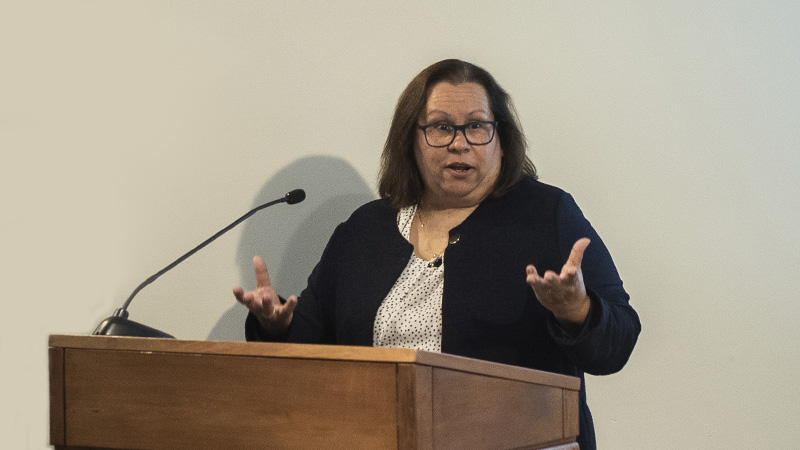
“As international research shows, class time is used to reinforce lessons, redirect discussions, manage students, and wrap up sessions,” explained Annalet Viera during the defense of her doctoral dissertation titled From Expectations to Experiences in the 21st-Century University: The Role of the Flipped Classroom.
That is one of the cornerstones of the methodology: the student’s commitment to self-directed learning. They must necessarily study outside the classroom—something that, in their words, “is not usually the norm”—and which, as a result, fosters “learning without limits.”
The flipped classroom fosters independent and meaningful learning. It promotes self-directed learning and opens up learning opportunities without boundaries for students, as they can learn anywhere, anytime, and in any setting.
Another key feature of the flipped classroom is that it puts the student at the center: it is a teaching strategy that takes into account all learning styles, paces, interests, and needs. It is based on content that the teacher presents in a deliberate manner, using progressive and engaging activities, in a completely flexible environment.
“It’s a classroom environment that fosters greater independence among students, as it facilitates self-directed learning. Classes are more hands-on and interactive, and they provide access to content tailored to students’ learning needs,” he summarized.
What does it take to implement it?
For Viera, having teachers who are trained, experienced, and committed to the educational process is essential. “It’s unthinkable that someone without expertise in their field and without proper training could be leading a class,” he said.
The PhD graduate in Education pointed out that, contrary to what is often suggested in the literature, it is not a matter of “reversing the order of activities”: “The key lies in the methodological and pedagogical approach: how instruction is planned, the teacher’s guidance, and the consistency that must exist between the educational program and the assessment methods.”
At the same time, based on his observations during his research, this methodology is well-suited for use with small groups. For this reason, it is also essential that educational institutions provide the necessary conditions for the effective implementation of the flipped classroom, such as small classrooms equipped with the required technology.
The fact is that the integration of digital tools is another issue to consider. “It is essential that students have basic technology skills, which is not the same as constantly using social media,” he pointed out.
The key feature of this methodology is the shift in focus proposed by the teacher, which enables students to engage in personalized learning and achieve their learning objectives.
What did the evidence show?
“I’ve always been deeply committed to incorporating different teaching methodologies that contribute to a well-rounded education for students,” Viera said. That is why he identified an educational institution that used the flipped classroom approach to conduct a unique case study, involving semi-structured interviews, classroom observations, and student surveys.
In particular, in her doctoral dissertation, she sought to understand the perceptions of instructors and students regarding the characteristics of the flipped classroom at the university level, as well as to identify the factors that influence its implementation.
However, why study a methodology that has been in use for so many years around the world?
“Most of the literature reviewed highlighted the benefits of the flipped classroom and compared student performance with that of traditional classrooms, but there was little evidence regarding its effectiveness or an understanding of what it actually means to flip a classroom, ”Viera explained.
In her research, the graduate found that the students were indeed engaged in their learning: they worked collaboratively, independently, and with enthusiasm. They interacted and exchanged ideas with their peers, always in a fluid and dynamic manner.
At the same time, he observed how digital tools were used as a supplement. Students had access to a variety of instructional materials in different formats, specially designed by the teacher.
However, the thesis showed that technology was not the key element of this methodology. “It’s important to point this out because, generally speaking, the literature focuses heavily on the flipped classroom and the use of technology as its foundation. And in this case, that wasn’t the case,” he stated.
But it wasn't all smooth sailing. It was the first time the students had been exposed to an active learning approach, and there were aspects they found difficult to grasp. For example, the fact that the teacher assessed learning rather than performance was viewed as a negative by some students.
At times, there was also chaos and uncertainty, according to Viera. Since they were working on projects, they set out to implement them and encountered the challenges inherent to the profession. They finished some classes feeling discouraged because they hadn’t achieved the expected results. However, everyone completed the course.
The students’ assessment of the teacher, however, was very positive. “His role was to create an environment conducive to both exchange and discussion. He always approached this with a playful touch: in addition to making the class enjoyable, he built trust with the students,” he explained, adding that the teacher’s role in the flipped classroom becomes essential.
Not only to help students acquire the necessary knowledge, but also to foster key skills in them, such as teamwork, critical thinking, and communication skills.
It’s not a formula, but it’s a versatile, flexible model that adapts to its surroundings: it’s a classroom that’s constantly in motion and engaged in conversation.
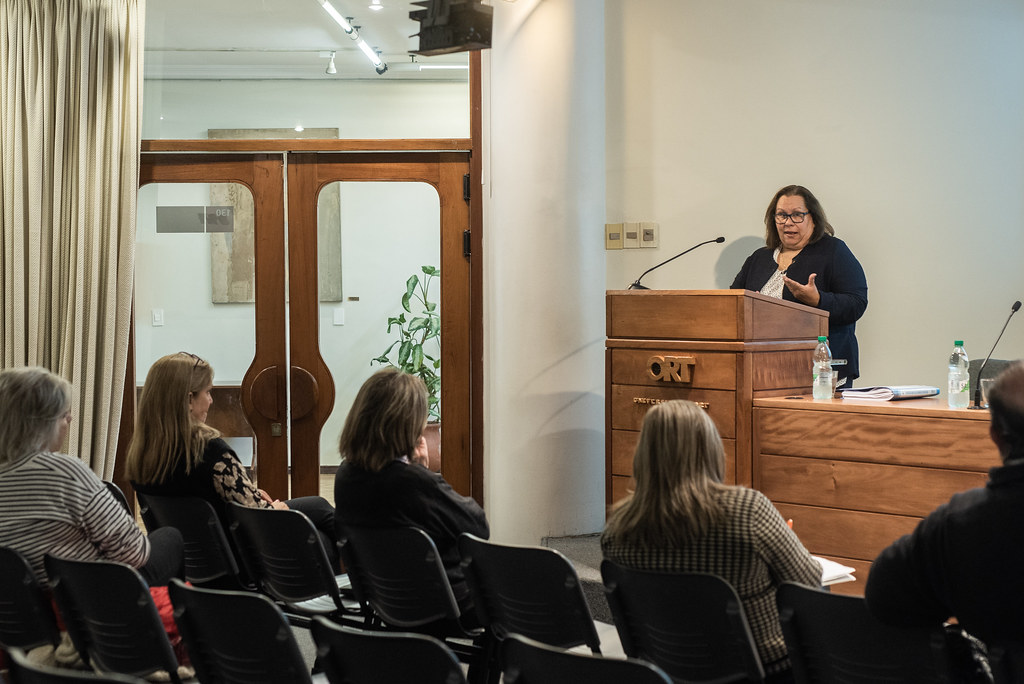
On Monday, May 29, 2023, Annalet Viera defended her doctoral dissertation titled *From Expectations to Experiences in the 21st-Century University: The Role of the Flipped Classroom*.
At that time, the court was composed of:
- Dr. Patricia Viera Duarte, director of the Rivera campus of the Northeast Regional University Center (Cenur) of the University of the Republic (Uruguay);
- Dr. Lourdes Cardozo Gaibisso, professor and researcher in TESOL and Educational Linguistics at Mississippi State University (United States);
- Dr. Gabriel Díaz Maggioli, academic coordinator of the Specialization Diploma in Teaching English as a Foreign Languageand the Advanced Certificate in Teaching English at Universidad ORT Uruguay.
Dr. Mariela Questa-Torterolo, associate academic coordinator of ORT’s Master’s in Educational Management and Master’s in Trainer Development programs, and Dr. Alejandro Armellini, professor and dean of digital and distributed learning at the University of Portsmouth (United Kingdom), served as Viera’s thesis advisors.