
As part of the First Architecture Week in Uruguay, this event invites us to look at the city with fresh eyes: to recognize its iconic landmarks, to think about those who designed them, and, above all, to reflect on what it means to be an architect today, in a context necessarily shaped by sustainability, artificial intelligence (AI) and technological changes that are redefining the profession, which is more international than ever.
From that perspective, ORT’s School of Architecture shares insights into how it is training new generations of architects: professionals capable of interpreting reality, designing with ethical standards, and leveraging AI and digital technologies to enhance, rather than replace, architectural thinking.
Architects' Day in Uruguay: City, Memory, and Future
Architect's Architects' Day in Uruguay is celebrated on November 27, in commemoration of the founding of the country’s first School of Architecture in 1915. This date is also linked to World Architecture Day, commemorated since 1985 by the International Union of Architects (UIA), and with World Habitat Day, established by the United Nations (UN) to promote sustainable cities and human settlements.

In this context, the architecture is recognized as a discipline with an enormous responsibility: to design spaces that guarantee people’s right to decent housing, to a more just city, and to a built environment that supports daily life.
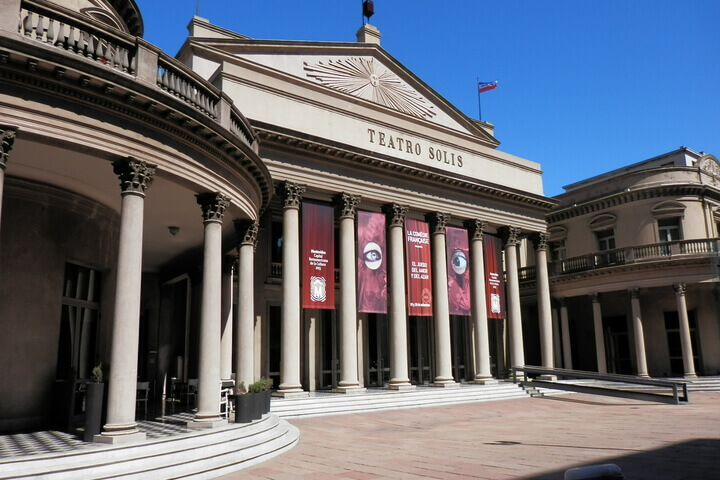 Uruguay offers numerous examples of this legacy throughout its territory. From the grandeur of the Legislative Palace, the Taranco Palace or the Salvo Palace, right down to the delicacy of the Vilamajó House, the Reborati House or the Church of Christ the Worker and Our Lady of Lourdes in Atlántida. All of this takes place through the pieces of the Art Deco and the Art Nouveau Montevideo or the modernism and contemporaneity of the Telecommunications Tower Complex, to name just a few buildings that have shaped the history of Uruguayan architecture.
In addition to this, among other notable built environments, there is the Old Town of Colonia del Sacramento, designated a UNESCO World Heritage Site in 1995, as a living synthesis of historical layers and architectural decisions accumulated over time; or the brand-new +Colonia, very close by, which will be the first smart city in Latin America.
Each of these works is much more than an isolated object: they express a way of understanding the city, society, and the future. Celebrating Architect’s Day is, in that sense, celebrating the ability of those who design spaces to articulate memory, identity, and change.
- You might also be interested in reading: “Sustainable Innovation: Architecture Students Visit +Colonia and Design Homes”
Studying Architecture Today
Alongside this tribute, Architect's Day is also an invitation to those who are considering where to study architecture and what kind of professionals they want to become.
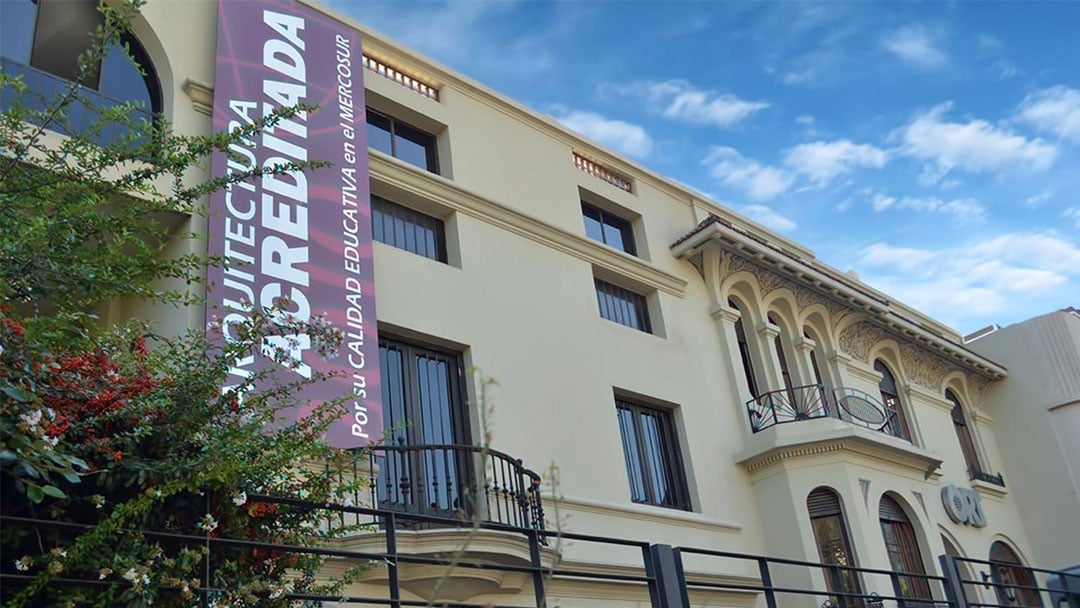
The Faculty of Architecture at Universidad ORT Uruguay offers a comprehensive program that combines design, theory, and technology, applied from the first semester in both theoretical classes and on-site practical work.
This partnership has been forged over a journey that began in 1999, has trained thousands of students and graduates in architecture, design, and construction.
Some of the program's unique features include:
- Small class sizes and uninterrupted instruction throughout the entire program, allowing for personalized attention and real-time feedback and critique of projects.
- Compact and flexible schedules, which make it easier to organize your day and balance study, work, and other activities.
- A 5-year degree program, which allows you to graduate early, gain professional experience early on, and move toward professional independence.
- Site visits starting in the first semester and internships with a social impact, where theory is put to the test through direct contact with materials, equipment, and real users.
- A professional faculty with a strong practical focus, made up of professionals who work in companies in the sector or run their own architecture and construction firms.
- Up-to-date, sustainable, and technology-driven curricula that incorporate the latest trends in design, planning, implementation, and technological innovation.
The ORT's Architecture program is also internationally accredited under the ARCU-SUR system, a distinction the school has earned three times, and is among the programmes a 96% employment rate among its graduates.
This combination of comprehensive training and very high employability is reinforced by a specialized job board and strong ties to architecture schools and firms.
- You might also be interested in reading: “Employment Month: Business & Architecture 2025”
View this post on Instagram
In addition to all this, there are international exchange programs with universities in Europe and the United States, which allow students to gain academic experience abroad, learn about other ways of living, and compare their projects with diverse urban realities.
On Architect’s Day, this set of attributes translates into a key question for prospective students:
If architecture is going to be a part of my life forever, in what kind of environment do I want to train so that I can respond creatively, ethically, and with technical expertise to the challenges of the profession?
AI and Digital Architecture: Shaping the Future from the Classroom
One of the distinguishing features that defines ORT’s School of Architecture today is the critical and systematic integration of artificial intelligence and other digital technologies into teaching.
The Architect Gastón Boero, dean of the faculty, has pointed out that “the emergence of AI is the third major shift in how we represent architecture, following CAD and BIM (Building Information Modeling); we must incorporate these technologies while preserving the development of critical thinking”. That statement sums up the institution’s stance: AI is not being incorporated as a passing fad or as uncritical automation, but as a powerful tool that demands reflection and judgment.
AI in Architectural Research Methodologies
In the area of research, the faculty developed the EPICA (Exercise in Integrating AI Tools to Enhance Creativity in Architectural Research), designed for 5th year in the Research Methodologies course.

EPICA arose from a specific issue: the repetition of topics and the initial mental blocks when choosing a research topic. Instead of getting stuck in “writer’s block” or recycling old work, the method proposes structuring the interaction with generative AI (ChatGPT) into a nine-step sequence supervised by faculty.
The tour begins at the personal interests of each student—which may relate to music, soccer, tourism, psychedelia, or branding, for example—and, through successive critical filters, culminates in clear, measurable, and original research questions in the field of architecture.
 In this way, topics that might seem unrelated to the field—such as a passion for luxury cars, tourism, or massive concerts by artists ranging from Rosalía to Pink Floyd—become subjects of architectural study: from the “Brand architecture” in luxury residential towers …including the impact of Airbnb regulations on housing typologies, or the spatial strategies of contemporary stage architecture.
The key is that each step culminates in a teacher review, bibliographic verification, and critical follow-up questions. AI functions as a creative catalyst and synthesis tool, but decisions regarding relevance, depth, and focus remain in the hands of the student and the teaching team.
- For more details, you can also read: “EPICA: Artificial Intelligence to Boost Creativity in Architectural Research”
Digital Architecture: AI, AR, and VR Starting in the First Year
The integration of AI into architecture is not limited to advanced courses. At the project level, the faculty implemented a pioneering initiative in the course Project 2, which is part of the first year of the degree program.

Between August and December 2024, a team of teachers led by Architect Boero worked with the students on a program that combined:
- Ideation with Generative AI: Over the course of several weeks, the teams formulated hypotheses about how cities will be inhabited a hundred years from now. Using prompts tailored to image-generation tools, they explored future scenarios involving density, mobility, and sustainability. The generated images served as a conceptual mirror, forcing the teams to refine their ideas before validating them.
- Design using BIM tools and visualization: Students then translated their proposals into models in Revit and SketchUp, tested materials, textures, and lighting, and generated renders using tools such as Runway, D5 Render and Luma AI, among others. The speed of iteration allowed us to detect spatial and lighting issues early on, saving time and improving the quality of the design.
- AR and VR validation on a real-world site: The final stage of the process involved designing a single-family home on a specific plot of land in Piriápolis. Thanks to the Augin, the 3D models were “placed” to scale on the site using QR codes. Students were able to virtually tour their projects, analyze views, shadows, and the relationship with the coastal topography, and produce immersive videos with Twinmotion, which were included in their first portfolios.

The results revealed an unprecedented diversity of solutions, a constant stream of feedback , and high levels of faculty and student satisfaction. At the same time, they brought key challenges to light:
- Learn how to write better prompts
- Detecting bias in AI models
- Discussing authorship and ethics in the use of algorithmically generated images
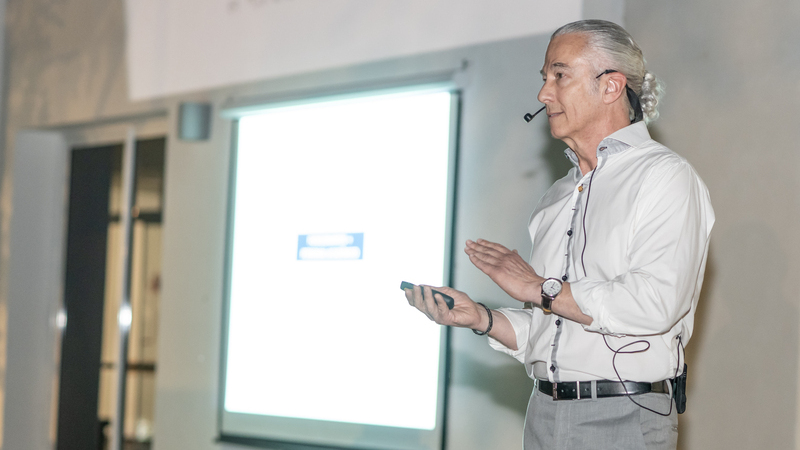
In this context, as architect Boero summarizes, AI should be understood “not as a threat, but as a powerful ally that can enhance the social and cultural value of architectural design”, classifying the tools into functions such as representing, simulating, translating, and connecting, and into different types of systems (algorithmic, empirical, and cognitive).
On Architect’s Day 2025, ORT’s School of Architecture takes a clear stance: AI, augmented reality, and virtual reality are being integrated into the design studio to enhance creativity and rigor, without replacing the critical thinking or professional judgment of the designers.
- For more information, you can also read: “Digital Architecture at ORT: Designing with AI, AR, and VR Starting in the First Year of College”
Sustainable Architecture: Training Agents of Change
Another key feature that sets the school apart is its commitment to sustainability as a fundamental component of its educational program.
https://www.youtube.com/watch?v=7t0f3cMg_0I
A landmark on this journey is the project La Casa Uruguaya, designed and built by students, graduates, and faculty members of the university, which won first prize in the 2015 Solar Decathlon Latin America and the Caribbean international competition.
This self-sustaining home combined energy efficiency, technical innovation, and a social focus, demonstrating how architecture can lead the transition toward more sustainable housing models.
That same spirit is reflected today in the Diploma in Sustainable Architecture, a program that allows students to:
- Become a leader in driving real change in improving the environment and mitigating climate change, in a context where a large portion of Latin America’s energy consumption comes from buildings.
- Earn a specialized diploma in one year of study, with practical tools to design and build sustainable structures, and quickly enter a growing job market.
- Incorporating bioclimatic design principles —sunlight, cross-ventilation, natural lighting— as the first step toward sustainable architecture, improving people’s comfort and quality of life.
- Integrate renewable energy systems (solar, wind, geothermal) and low-carbon construction materials, such as wood and other resources with a lower environmental impact.
- Expand job opportunities in companies, consulting firms, public agencies, and nongovernmental organizations, in a market where sustainability is increasingly valued.
- Update your skills and become a most valuable to companies and clients, with expertise in one of the most in-demand areas of architecture in the region and around the world.
- Access scholarship funds and specific benefits—including a 25% discount for graduates of Universidad ORT Uruguay, as detailed in the institutional announcement—which facilitate access to this specialization.
Beyond the data, those who study sustainable architecture are true “agents of change”, capable of contributing to a more sustainable, smart, and resilient through concrete actions, rigorous projects, and informed design decisions.
On Architect's Day, this perspective gives new meaning to the celebration: not only do we recognize the achievements of those already practicing the profession, but calls on new generations to take an active role in addressing climate change and the environmental crisis.
Learn about the Specialization Diploma in Sustainable Architecture
More than a thousand graduates, a community that continues to grow
The recent history of ORT's School of Architecture is marked by a community of more than a thousand graduates who are now working in Uruguay and abroad, leading projects, ventures, research, and design teams.
youtube.com/watch?v=EzTclnL4q8k&pp=0gcJCRUKAYcqIYzv
To mark the 25th anniversary of the school and the architecture program, celebrated in 2024, the institution held an event at Carrasco International Airport to honor faculty members and graduates who have been pillars of the academic program.
There, architect Gastón Boero provided an overview of the major milestones—from the organization’s founding in 1999 to the ARCU-SUR accreditations and the recent launch of a dual-degree program with PUC Minas Gerais in Brazil, including La Casa Uruguaya and numerous international collaborations—and highlighted the comprehensive and innovative nature of the education.
- You might also be interested in reading: “The only architecture program in Uruguay offering a dual degree”
In the same vein, the faculty honored teachers with 25 years of service and ambassadors from each graduating class of graduates, chosen by their own peers. The gesture encapsulates the spirit of a community that views architecture as a collective endeavor, where the bond between students, faculty, graduates, and administrative staff endures beyond the academic years.
View this post on Instagram
The high employment rate (96%), close ties to industry, programmes , and graduate programs round out an ecosystem that supports architects throughout their professional development. On Architect’s Day, this network becomes visible as one of the greatest assets of ORT’s School of Architecture.
- You might also be interested in reading: “25 Years of Excellence at the School of Architecture and the Architecture Program”
Looking to the future
In celebration of Architects’ Day in Uruguay 2025, the School of Architecture at Universidad ORT Uruguay a conviction: training architects involves much more than teaching how to design buildings. It means educating innovative, ethical, and competitive professionals, capable of understanding the transformations in the discipline and in society, and of responding creatively to them.
https://www.youtube.com/watch?v=nVMKHetW2q0
In the words of architect Gastón Boero, over the years the school has become a “beacon of knowledge, innovation, and creativity in the field of architecture”, bringing together design, theory, technology, research, and social commitment. Today, that light shines on challenges that include the climate crisis, urban density, equitable access to housing, and the rise of artificial intelligence.
If you're thinking about studying architecture and want to learn in an environment that combines hands-on experience starting in the first semester, cutting-edge technology —including AI—, sustainability and high employment rates, Architect’s Day may be the perfect time to take the next step.