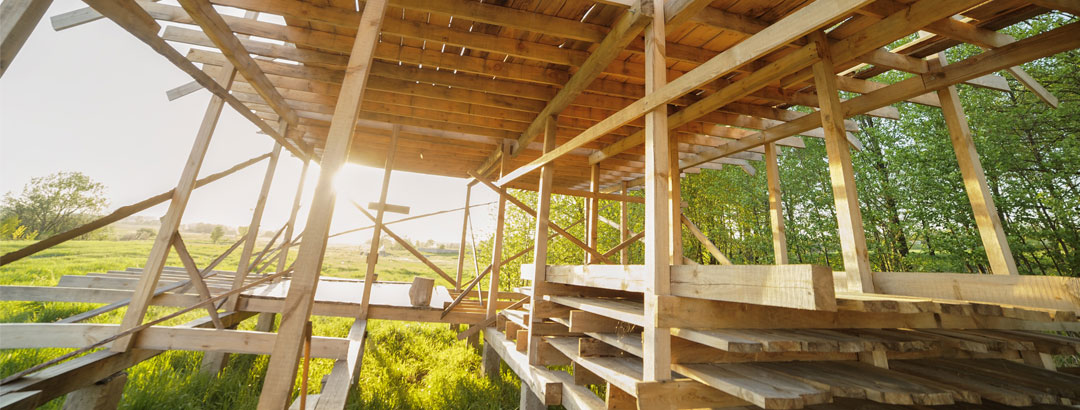
Specifically, starting on October 4, 2011, the School of Architecture will offer the course "Principles of Green Building Design," taught by Keren Gerwer, an architecture graduate who specialized in this field at the Technion—Israel Institute of Technology.
Gerwer provides some definitions on these topics.
What does "green building" refer to?
It refers to construction practices committed to protecting the environment and improving the quality of life for humans and other living beings. In this regard, it seeks to integrate sustainability into the construction process.
Green building falls within the framework of sustainable development, a concept first used in the Brundtland Report (1987) prepared by the United Nations World Commission on Environment and Development, and adopted as a definition in Principle 3 of the Rio Declaration (1992).
The Report (also known as "Our Common Future") defines the concept of sustainable development as: "meeting the needs of the present without compromising the ability of future generations to meet their own needs."
I believe that as long as we view sustainable development as a consistent way of acting with a commitment to society as a whole, the environment, and the economy—and understand that our time on Earth is only a finite period of its existence—we will be on the path sought by green building.
When did architecture begin to focus on this area? Why?
Traditional architecture has always embraced environmentally friendly solutions, which is why I believe that architecture and green architecture go hand in hand.
Keeping pace with the advances of the industrial revolutions through the use of new materials such as steel, glass, and later reinforced concrete, as well as the incorporation of new building programs, architecture has set aside the vernacular considerations passed down for thousands of years, massively incorporating the use of fossil fuels as a means of energy generation.
As a consequence of the global ecological and oil crises, the focus is shifting toward green architecture, integrating scientific knowledge provided by contemporary technology with the essential natural conditioning of the building.
What are the advantages and benefits of this type of construction?
The main advantages of sustainable construction lie in the application of its principles: cost-effective, socially equitable, and environmentally responsible construction.
Who are the customers of green construction?
Concerns about environmental degradation are prompting government agencies to fulfill their responsibilities, under pressure from civil society organizations that are taking up the cause and calling on them to take action. Eco-marketing has identified several types of green consumers. I believe this same classification applies to green building clients.
At the forefront are consumers who express concern for the environment by seeking products with a lower environmental impact. Professionals, suppliers, and clients who are sensitive to and committed to sustainability are receptive to incorporating green solutions into their products, processes, and projects.
The market is beginning to demand and view favorably that its service providers act with environmental responsibility. In short, there are green clients driven by environmental ideology, health concerns, economic outcomes, or image.
What is the relationship between green building and global awareness of environmental protection?
As the market becomes increasingly aware of the irreversible damage being done to the environment, it has become a stakeholder that expects and demands that its governments, industry suppliers, and fellow citizens incorporate sustainable solutions into goods and services.
How is it used in Israel?
Israel is a small, hot country with few natural resources, making the need to research alternative technologies vital. Sustainability in Israel has been incorporated into certain aspects of daily life since the state’s founding (1948). Fresh water is a critical issue, as the only source comes from the Jordan River basin in the so-called “Anti-Lebanon Mountains” (the border region between Israel, Lebanon, and Syria). Annual rainfall averages between 700 millimeters in the north and 25 millimeters in the far south.
This has spurred research, innovation, and the implementation of drip irrigation systems, water purification, desalination of Mar water, wastewater reuse, and cloud seeding to induce rainfall. For several decades, basic technologies such as dual-flush toilets have been used, saving nearly 50% of the drinking water flushed down toilets.
Furthermore, the use of solar thermal energy for domestic hot water is mandatory in all Israeli households, making the country the global leader in per capita solar energy use.
Is it well-known and widely used in Uruguay?
During my time in Israel, I had the opportunity to attend several sustainable construction trade shows. I was amazed by the sheer number of products, services, and technologies being developed and by how well they were being received in the market.
When I arrived in Uruguay in February 2011, after six intense months of study as part of the specialization course “Principles of Green Building Design” at the Technion Institute in Israel, and began preparing the course I teach at the School of Architecture, I found that we have a considerable number and variety of suppliers in this field.
Some indicators of the importance of these guidelines at the national level include: the implementation of sustainable development policies, the creation of the Solar Roundtable in April 2008 following the 4th Regional Forum on Renewable Energy, the passage of the Solar Thermal Energy Promotion Act in September 2009, the requirement (effective February 2010) to submit thermal transmittance calculations when applying for building permits with the Municipal Government of Montevideo (IMM), and the holding of the first National Forum on Sustainable Cities on September 19, 2011 (declared of national interest by the Office of the President and supported by the IMM, the National Energy Directorate, and the National Environment Directorate, among other public and private entities).
Who is this course intended for?
The course is designed for university professionals and technical specialists in the fields of architecture, construction, design, or engineering, as well as advanced students with a strong background in these areas.
What are the course objectives?
To provide tools that help identify the extent to which it is possible to apply concepts and use environmentally friendly products, services, and technologies. Additionally, to analyze the international landscape as an illustration of the milestones being achieved worldwide; to study progress and examples of initiatives at the national level; and to familiarize students with computer simulation tools and technologies.
As a graduate, what would you highlight most about the architecture program?
Its interdisciplinary nature, its dedicated faculty, and its curriculum.
What did you get out of it the most?
First and foremost, the knowledge I gained in the areas of design, technology, and history, as well as research and work methodology and the importance of effective time management, are lessons that have become deeply ingrained in me as a result of my experience at the School of Architecture at Universidad ORT Uruguay.
Do you remember any funny stories from your college days?
Countless all-nighters! Models, AutoCAD (the software), term papers, assignments, midterms…! Just think of how motivated I must have been to put in that kind of effort!