Artists’ work is no longer limited to creating the artwork itself; today, they have the opportunity to fund their own projects and promote them, thereby connecting with their audience.Crowdfunding platforms allow artists to raise the funds needed to bring their works to life, while also involving those who wish to contribute financially in the project.
For example, on Kickstarter —since its founding in 2009—14 million people have contributed $3.6 billion to fund 142,356 projects. More than 12,000 artistic projects were successfully funded.
“Having lived in Uruguay since the days when we were far behind in technology, I can clearly see the contrast with the current situation, where we have access to opportunities on par with the rest of the world,” notesDaniel Anselmi —a musician, record producer, andinstructor in the Sound Design program.
The artist’s daily life has changed: their everyday world interacts with the rest of the world on a daily basis, Anselmi points out. “A simple short video on Instagram has repercussions on the other side of the world, and that creates a different framework within which to operate. The channels for presenting the work are immediate and readily available, growing rapidly and evolving into a language that also influences the content.”
Anselmi asserts that there is no longer a clear distinction between national and international artists.
Today, Uruguayans have also become international artists.
Kristel Latecki—who holds a degree in Journalism, is a cultural journalist, author of the book *Nos íbamos a comer el mundo. 20 años de rock en Uruguay*, and CEO of Piiila Música—agrees. She argues that, when it comes to access to tools, there are no longer any geographical barriers. “These days, artists can record songs on their cell phones and publish them with a single click on any platform, from SoundCloud to Bandcamp; they can manage their own communications across different media, and even Uruguayan artists are gaining easier access to major services like Spotify. I think the biggest challenge is standing out in the tsunami of information, but that’s more of an artistic challenge than a technical one.”
“For local artists, the potential for expansion and reaching audiences beyond national borders faces a major hurdle: overcoming each country’s cultural barriers to connect with people. This is especially true for Uruguayans, who face the added challenge of coming from a small country that isn’t on anyone’s radar,” he adds.
Mauricio Rodríguez is a journalist and the director of the cultural platform Granizo. He is the author of the books *The Gelman Case: Journalism and Human Rights*, *Old Are the Rags*, and *Lives Well Lived!* (the latter two co-authored with Raúl Ronzoni), as well as *In the Night*. Uruguayan Rock After the Dictatorship, La voz de todos: A Biography of Zelmar Michelini, and Una vida en el pretil: Drug Dealer, Con Man, and Uruguayan.
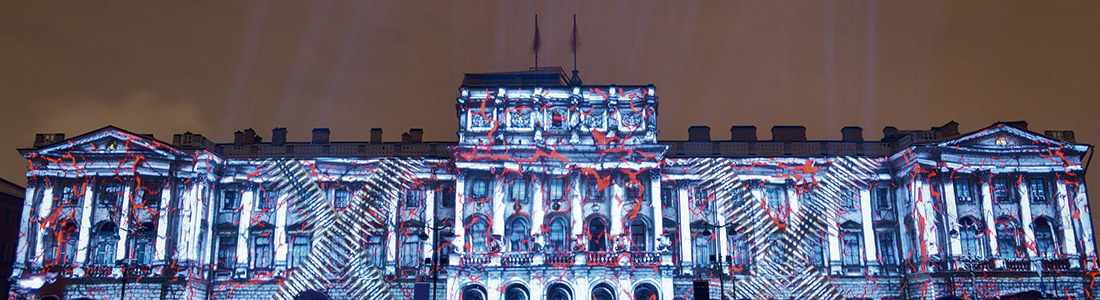
In his view, technology has brought artists closer to the world—and vice versa. “A few years ago, recording depended on the availability of studio time; it was also expensive. The music of Uruguayan bands from the 1980s was recorded in sessions lasting just a few hours precisely for that reason. Today, a band can do it at home and at a much lower cost. That allows them to produce a more polished product that is naturally of higher quality.” Furthermore, he adds, “there is direct and unlimited access to cultural products from all over the world; that opens minds, stimulates, and helps artists grow.” An example of how technology has opened doors for national art, he says, is the case of Marcelo Vidal, Chindogu, who creates video mappings “in a fantastic combination of music, text, and images” and has taken his art to events and festivals around the world.
“That concept of the ‘global village,’” Rodríguez notes, “has become a reality thanks to technology.” Now, “connectivity is instantaneous, and the flow of information is measured in millions of data points per second circulating to and from different parts of the world.”
Anselmi points out that the differences always lie in the artistic realm, not in the technological one.
Advances in technology and the availability of tools greatly simplify the process and cause the technique itself to become detached from the content, sometimes liberating the artist and sometimes restricting them. At that point, the challenge is always present; it is a personal and subjective matter to embrace it and move on to the next level.
“Amid the flood of information available on our cell phones, the additional challenge is knowing how to identify the key elements that will enhance the artistic project,” Rodríguez notes.
Just as the way we produce has changed, so too has the way we communicate. “It’s impossible to work the way we did ten years ago,” says Anselmi. “You can’t even communicate the same way you did two years ago,” adds Latecki. “Social media changes at a rapid pace, and you always have to adapt, stay on top of the latest trends, and keep up with the latest trends to reach people.”
Anselmi concludes: “The rules have changed; the audience is the world. The techniques, collaborators, guidelines, and directives have all shifted, and a fundamental overhaul is needed.”
Territories and Perspectives in the Arts, Technologies, Sciences, and Societies
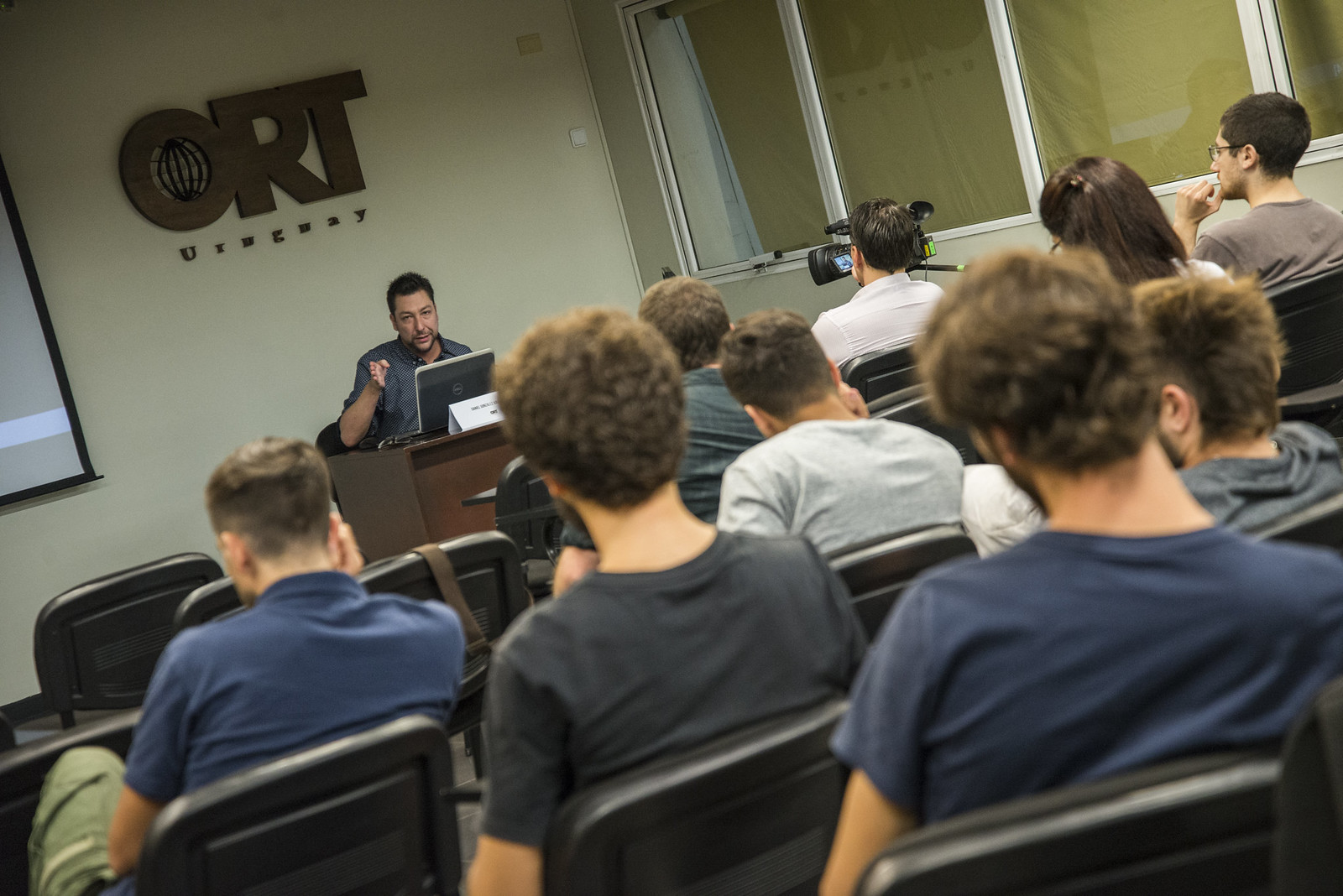
It is in this context and as part ofContrapedal Fest that theBachelor’s Program in Design, Art, and Technology hosted the lecture “Territories and Perspectives in the Arts, Technologies, Sciences, and Societies,” presented by Brazilian Daniel Gonzalez Xavier, who holds a bachelor’s degree in Social Communication from FAAP University in São Paulo and a master’s degree in cultural management from Carlos III University in Madrid, as well as an educator, cultural manager, and independent curator specializing in art, technology, sound arts, audiovisuals, and multiplatform educational projects.
“One of the current trends in digital art is video mapping, which proposes a reconstruction of public space,” he said. “Game art is an appropriation of gaming as an artistic language, transforming video games through narrative.”
The goal was to provide an overview of the intersections between art, science, and technology from a social and historical perspective. The program will offer an introduction to the paradigms of the contemporary creative landscape, focusing not only on the creative process and the development of electronic and digital arts but also on social innovation, education, and the creation of new ways of life.