“Artificial intelligence burst onto the scene en masse without consulting anyone or asking for permission. Denying its entry into the classroom is not a viable option; nor is opening up this space—which is so crucial to humanity’s present and future—to it without questioning it.”
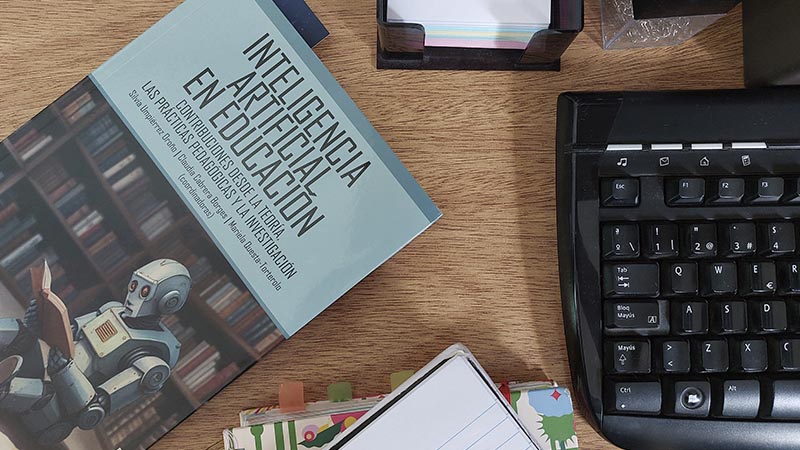
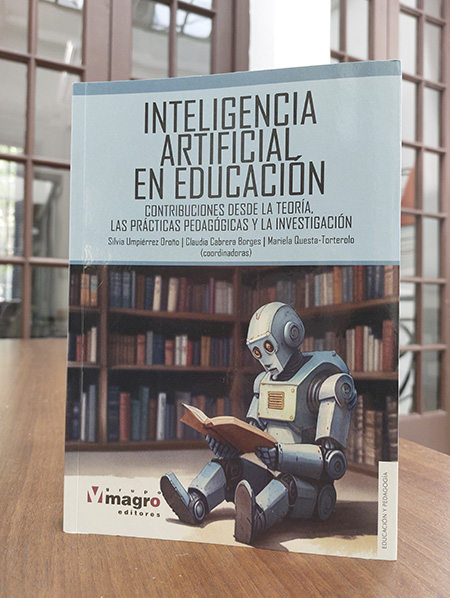
That is just one of the many insights to be found in the book Artificial Intelligence in Education: Contributions from Theory, Pedagogical Practices, and Research.
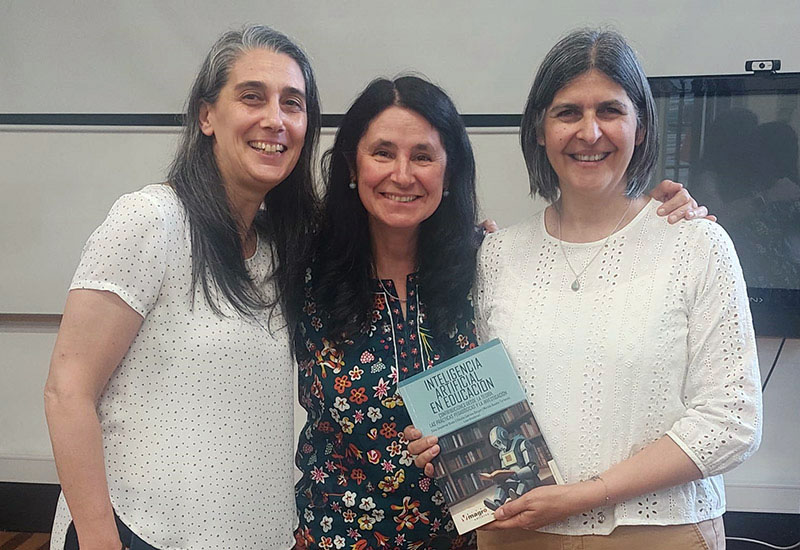
This publication was coordinated by Dr. Silvia Umpiérrez Oroño, Dr. Claudia Cabrera Borges, and Dr. Mariela Questa-Torterolo, faculty members at the Institute of Education at Universidad ORT Uruguay, which explores the perspective of teaching, learning, and researching with and about artificial intelligence.
Why Write a Book on Artificial Intelligence
“One of the reasons I wrote the book was to give a voice to educators and researchers on a topic that marks a turning point in people’s lives,” said Cabrera Borges.
The most significant aspect of the publication is that the authors urge us to view artificial intelligence not as a definitive solution, but as a “complex field of study that requires a critical and reflective approach.”
To this end, they approach the subject from a comprehensive perspective. They explore how artificial intelligence can enhance teaching and learning, while also delving into how to engage with it critically from both pedagogical and ethical standpoints.
“The aim of this book is to help ensure that the decisions we make as educators are grounded in theory, in the recognition of our peers’ experiences, and in scientific knowledge, ” the authors state in the book’s introduction.
And these main themes are the ones presented in the publication, which is divided into three sections:
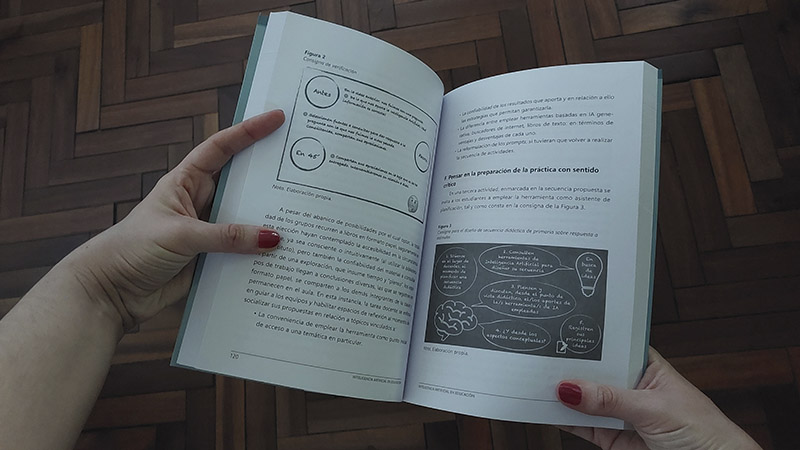
- Theoretical section, which summarizes key concepts related to artificial intelligence in education to understand its impact from an interdisciplinary perspective.
- A section featuring case studies, in which Uruguayan teachers share their practices, with the aim of inspiring readers and helping them visualize how artificial intelligence can be applied in various contexts.
- Research Section, which provides insights into current educational research efforts aimed at generating knowledge with and about artificial intelligence.
However, why capture a constantly evolving topic like artificial intelligence in a book? For two reasons, according to the authors. On the one hand, because of the bibliographic materials cited in each chapter, which offer “added value to the work.” On the other hand, because of the“testimonial nature of each contribution,” which positions the book as a “portrait” of a new phenomenon that is already transforming classrooms.
Artificial intelligence is rapidly transforming many aspects of society, and education is no exception.
Dr. Mariela Questa-Torterolo
Myths About Artificial Intelligence
 “Assuming that artificial intelligence can replace or fully automate the educational process is one of the common myths "that exists in the academic world," said Questa-Torterolo, who noted that people often "overestimate the technical potential" of the tool and "underestimate the complexity of human learning."
Along those lines, Umpiérrez pointed out that the notion that artificial intelligence will replace educators is also “a belief based on our still nascent understanding of the potential and limitations of this technology.”
And thinking that artificial intelligence is neutral is another of the most common misconceptions. “Algorithms are designed by people and, as such, reflect biases and values that we must critically analyze before integrating them into education,” Questa-Torterolo continued.
In her view, for teachers and students to become responsible users —rather than passive consumers—it is important to understand how algorithms work, what their limitations are, and how they can amplify existing biases.
Therefore, taking a critical view of artificial intelligence, in the words of Cabrera Borges, is “essential” to avoid seeing it as either “savior-like or demonic.”
In his view, we must not lose sight of the fact that it is a “tool that can facilitate processes,” but that it does not replace natural intelligence. Nor should we overlook the fact that future teachers are “key pieces” in the educational puzzle: “They will be responsible for educating the next generations, and it is up to them to foster critical thinking in children and adolescents, so they can identify errors and biases that reveal the interests behind these tools.”
The publication's contributions
“The book neither promotes nor discourages the use of artificial intelligence in the classroom. Its purpose is to offer a thoughtful perspective on the phenomenon and encourage others to learn more about the subject, so they can form their own professional views and attitudes,” Umpiérrez insisted.
In his words, the value of the book—published in 2024 by Grupo Magro Editores—lies in the fact that it offers a “historical” perspective by capturing the processes, reflections, and perceptions that arise at the moment of artificial intelligence’s emergence in society and education.
We are navigating the process of learning through the systematization of emerging concepts that have recently been developed in the field of artificial intelligence applied to education.
Dr. Silvia Umpiérrez Oroño
“This effort arose from the need to contribute to a field that still raises many questions and uncertainties, ”said Questa-Torterolo. That said, the book does offer three certainties and insights:
- Artificial intelligence is not a magic solution, but rather a tool that must be integrated with clear educational goals.
- Education facilitated by artificial intelligence must not lose its human dimension; therefore, technology can only serve to complement the work of teachers and students.
- Teachers, researchers, and decision-makers need to be critically educated to understand the impact of artificial intelligence on teaching and learning.
Furthermore, according to Questa-Torterolo, writing the book confirmed how “ill-prepared the education system is to incorporate these technologies in an inclusive and ethical manner.” Although artificial intelligence can support teaching practices, it became clear that “there is inequality in access to these tools.”
"This contrast further convinced us of the importance of combining technological innovation with a critical eye toward equity and social justice in education—an issue that isn’t always apparent from a purely technological perspective," he summarized.
We had the opportunity to learn about valuable experiences that deserve to be documented and shared with others.
Dr. Claudia Cabrera Borges
“In Uruguay, a great deal is done in the field of education, but not enough of the valuable work being done is documented, and this book offers an opportunity to bring together different perspectives from theory, research, and practice,” concluded Cabrera Borges.
Artificial intelligence seems to be the hot topic of the moment. But beyond that, according to the professor, the publication offers insights that help us reflect on education today and what it will look like in the coming years.