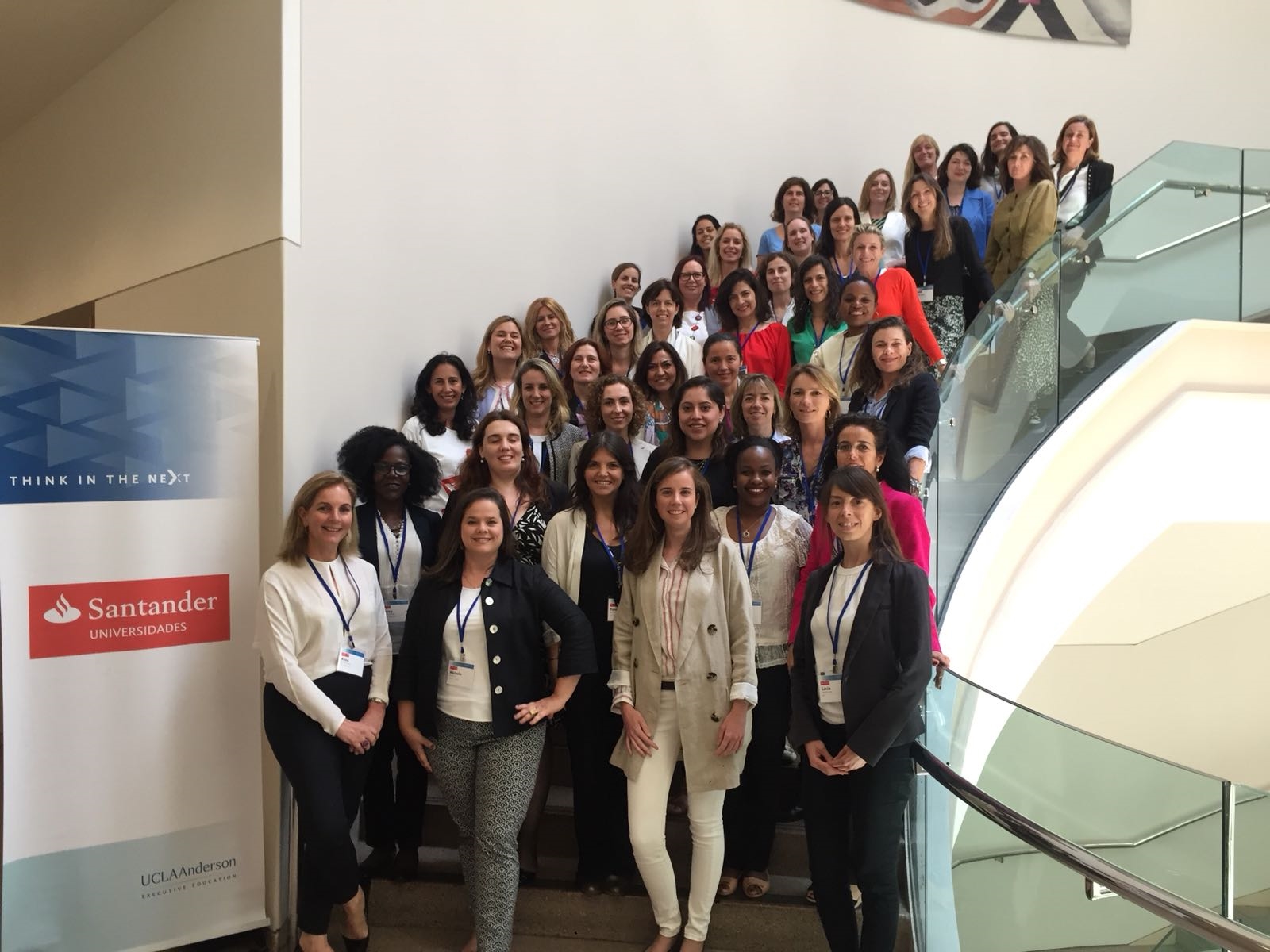
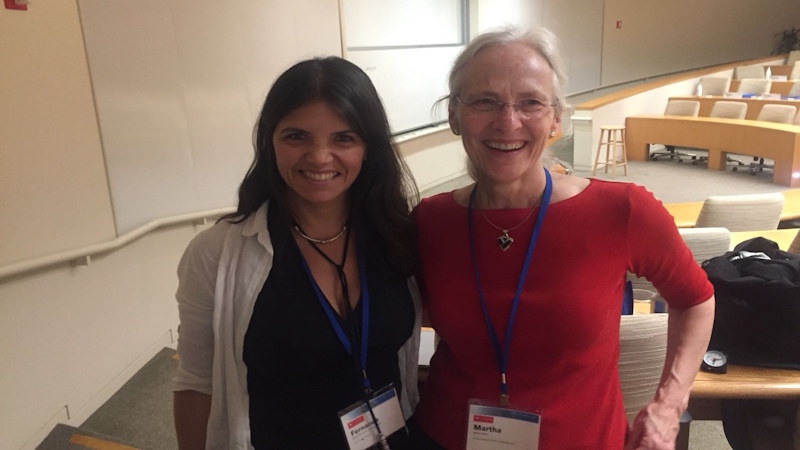
Preparing the next generation of women board members. That is the goal of the W50 program, launched by Banco Santander and UCLA, in which Fernanda Ariceta, a graduate of the Master of Business Administration (MBA) program at Universidad ORT Uruguay, participated.
Ariceta has built her professional career with a clear leadership profile. She served as Director of Strategic Planning at the Young & Rubicam agency, established and led the Burson-Marsteller office in Uruguay, chaired the Uruguayan Advertising Circle, and served as commercial manager at El Observador. Today she heads Doctari Latam, a digital platform in the healthcare sector that she co-founded, and Alva Creative House, her own communications agency.
To build on her leadership experience with new tools she could apply both within her company and in other organizations, Ariceta applied for the W50 fellowship. This program supports excellence and women’s leadership by selecting and training female executives from around the world who have distinguished professional and academic careers.
On Sunday, June 10, she began her adventure at UCLA, where she not only participated in the workshops and panels organized there but also took advantage of the opportunity to interact with the 44 fellows in the program.
Why did you apply to the W50 program?
The opportunity to engage in an exchange with women from around the world at a prestigious institution like UCLA was very appealing. It was appealing from the perspective of broadening my horizons as a female leader in my organization and in the other organizations I’m involved with, both private and nonprofit.
What does the program mean to you?
Women face a dual challenge. On the one hand, as is the case in any organization, we must strive to be better leaders at a time when it is clear that leaders must not only manage and administer, but also be able to inspire our colleagues in an increasingly dynamic business environment. We must work tirelessly to advance our organizations’ purpose, both in terms of business objectives and our social responsibility.
The double challenge is that, as women, we have the same responsibilities as men, but we face the added difficulty that we have not traditionally held leadership positions.
That's why this program is so interesting. As women, we need to support one another and broaden our horizons on a global scale.
What do you think are the main benefits of this program for your education, in terms of complementing, for example, the ORT MBA?
It’s a way to broaden my horizons and gain more experience. Throughout my career, I’ve sought to gain practical experience by working as an executive and later as a leader in various organizations. The MBA provided me with tools that I’ve put to use and that have been instrumental in helping me achieve my professional goals.
More than 15 years after completing my MBA, I greatly value opportunities like this one, where academic learning and interaction with peers foster personal growth, reflection, and the acquisition of new skills.
The W50 program aims to equip and prepare a group of women from around the world to become potential and future board members. This is important because, whether in the private, public, or nonprofit sectors, boardrooms have long been places where it has been extremely difficult for women to gain a foothold. However, from a diversity perspective, the presence of women is essential to continuing to build organizations that are more flexible, representative, and inclusive—and that deliver better business performance. The idea is for this initiative to serve as a catalyst.
We attended talks and lectures by female leaders from the academic world, but there was also a strong emphasis on fostering interaction among the participants. There were 45 of us from different parts of the world and various sectors—the private and public sectors, consulting firms, and both large and small companies—which made the experience all the more enriching.
How is leadership approached and developed within the program?
W50 offers a comprehensive overview of the competencies required for leadership roles. It covers all areas, such as the skills needed to serve on a board alongside other high-performing leaders and collaborate with them to achieve strong results and sustainable processes in both the short and long term.
It is also a form of leadership that seeks to develop personal skills to support teams and improve processes. This has a lot to do with self-awareness and self-reflection. The goal is to identify individual potential and opportunities for improvement—such as one’s character, for example—so that these can then be applied in various settings.
The program also focuses on practical skills related to the operations of a specific organization, which can serve as a foundation for strategic analysis at the business level. It is a course with a strong emphasis on strategy. It provides a cross-cutting perspective through which more functional aspects are examined.
What are your career goals right now?
Today, I have the privilege of running my own company, and I have served on the boards of various organizations. Looking ahead in my career, I’m interested in continuing to contribute to other organizations—in addition to my own company—in the areas of business strategy and achieving goals. To that end, specialized training like the W50 program is particularly appealing.
My goals are to consolidate and continue growing my own company and the projects we are currently working on, as well as to add value to other companies and organizations I become involved with.