Carla Nóbile is an architect and a graduate of the School of Architecture at Universidad ORT Uruguay. She teaches the course on the History and Theory of Architecture, and since 2018 has served as editor-in-chief of the peer-reviewed journal *Anales de Investigación en Arquitectura*.
Her teaching work is closely linked to research; in addition to editing the journal, Nóbile serves as the coordinator for the Final Project course, in which students develop research projects on topics related to contemporary architecture.
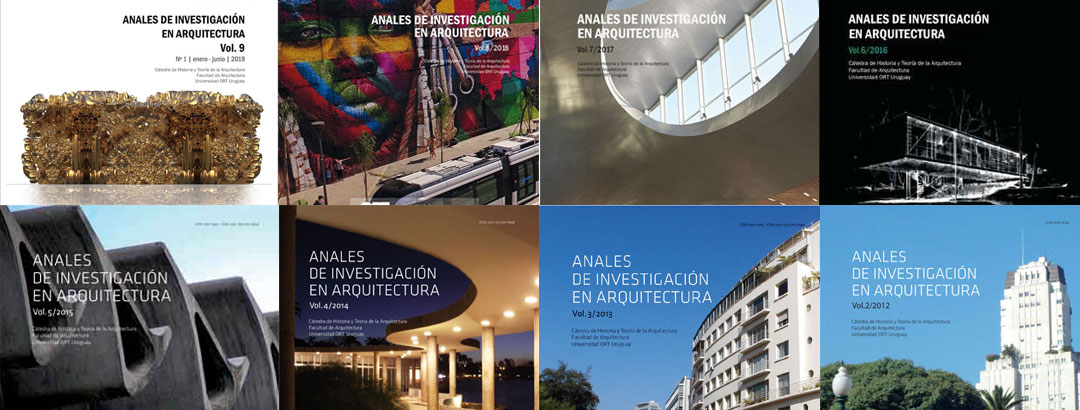
Over the past year, the journal *Anales de Investigación en Arquitectura* has revamped its design and joined the ranks of open-access scientific publications, with the aim of serving as a platform for academic exchange among authors and raising the profile of the research activities conducted by the School of Architecture at Universidad ORT Uruguay.
Can you tell us a little about the *Anales de Investigación en Arquitectura*? What is it? How long has it been in publication? Who is the target audience for this publication?
*Anales de Investigación en Arquitectura* is a peer-reviewed architecture journal established within the Department of History and Theory at our school. Its first issue was published in 2011. During its early years, until 2018, the journal was edited by Architect Ruben García Miranda, who carried out a very important role, from bringing the idea to fruition to serving as editor for several years.
This publication is intended for readers interested in architecture, including undergraduate and graduate students, alumni, researchers, and anyone else with an interest in the field. Its purpose is to disseminate the studies and research conducted by our colleagues, both nationally and internationally—primarily in Latin America—as a way to contribute to the body of knowledge and highlight the importance of academic research within the field of architecture, as well as in other disciplines that may be directly related to it.
How has your first year as editor of the magazine been?
Taking on the role of editor-in-chief of the journal has been a challenge for me, since, up until now, I had only been involved as an author in one of the issues and as someone interested in its content. Having been a member of the department for several years, I have developed an interest in academic publications produced by architecture departments, which has brought me closer to this type of work.
It has also been a very enriching experience for several reasons. One of them is the opportunity to build networks with various institutions through the colleagues who have collaborated with us on the issues we have published, whether as authors or as reviewers. Another is being able to produce a high-quality publication through teamwork with Editor Andrea Castro, the Editorial Board, the reviewers, and the authors, which is extremely rewarding.
What have been the biggest changes the publication has undergone in recent years?
Originally, the journal operated on the basis of articles being submitted for consideration by the Editorial Board; this has been the most significant change implemented since 2018, as the journal now operates on the basis of peer review. That is, authors submit their articles, which are evaluated for their relevance to the journal’s scope and then sent to external reviewers for evaluation. The reviewers determine whether or not the article can be published and may also suggest revisions prior to publication. This type of anonymous evaluation allows for a greater degree of transparency and objectivity regarding the articles published in the journal.
Another major change introduced in 2018 is that the journal is now published twice a year. This has been a challenge, not least because of the demands of meeting publication deadlines and coordinating the various contributors who make the journal possible.
Indexing on various platforms has also been one of our major changes in recent times. With the goal of giving the journal greater visibility and providing authors who publish in it with greater recognition in the academic community, we work every day to meet the requirements of the international platforms on which we are listed. However, this process is still ongoing, as we aim to join new platforms, such as DOAJ and Scielo, in the near future.
How are the architecture students' projects included in the publication?
Articles submitted by undergraduate students—particularly their senior theses—are a cornerstone of our journal. Through this section, we not only provide current students and alumni with the opportunity to contribute to a peer-reviewed journal but also ensure that their research is submitted to indexing platforms such as those we use, thereby giving their work a reach that extends beyond the university.
We are proud to feature high-quality articles written by our students, which have been well received by external reviewers—a testament to the high standard of undergraduate research.
What impact does this have on the academic community?
I believe the journal is still in its early stages, given how recently it was launched and the limited number of issues it has published so far. Our goal is to achieve greater recognition for the journal—through a biannual publication schedule and increased outreach via various platforms and contacts with institutions in the region—which we hope will translate into greater interest from colleagues in different countries in publishing their articles in our journal.
What is the call for submissions for the next issue?
Following up on the previous question, with the goal of increasing the reach of our journal, we hope to build up a larger body of articles that will enable us—and this is where this question comes in—to launch calls for papers or publish special issues that will significantly enhance the journal’s quality. But we are still working toward that goal.
At this time, we are accepting submissions from anyone interested in submitting articles related to our field from the perspective that interests us: the history and theory of architecture.
Discover the Faculty of Architecture’s peer-reviewed journal: Annals of Architectural Research.