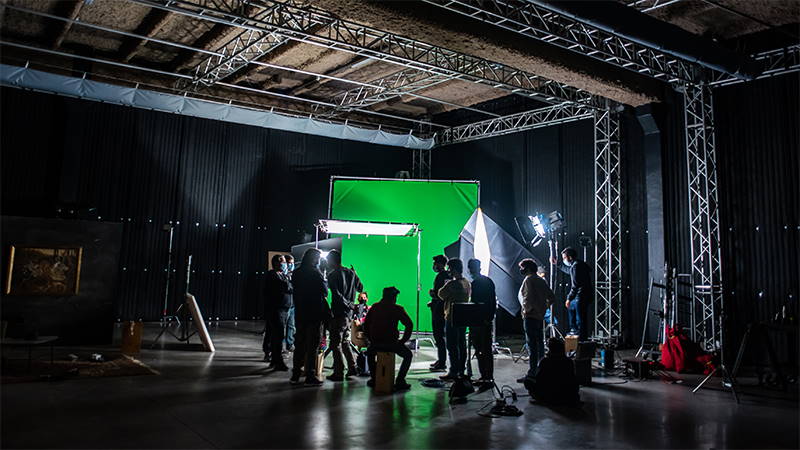
Nearly 70 professionals in the audiovisual industry attended seminars and workshops on audiovisual production, assistant directing, cinematography (camera and data management, and lighting and grip), post-production coordination, screenwriting, and on-set sound.
The first edition of the Audiovisual Specialization and Continuing Education Program was held primarily at Musitelli Films’ facilities, as part of the Strategic Plan for Audiovisual Vocational Training, signed in March 2021.
This program addresses a need identified by both industry and academia: given the strong growth in the audiovisual sector over the past two years, there has been a demand for skilled workers.
https://www.youtube.com/watch?v=68w51M0tA_s&list=PLdInbF47KVC0BfaUpXsPz6yLjjN8xU6a9
“The audiovisual field is an area where many very different areas of expertise converge, where there is coordinated work across many departments, each with its own distinct expertise. The goal of each workshop was to work within a specific department and, at the same time, delve deeper into a specific role, based on the concrete need for training in those roles—a need driven by the market,” explained Mag. Gerardo Castelli, the academic director of the Audiovisual Department at the School of Communication.
“In fact, the Training and professional development Center professional development from a collaboration between academia and industry, in which industry identifies specific training needs for particular professional roles; at ORT, we design customized courses for those roles, focusing on specific tasks in particular fields and on the use of professional equipment.”
This is the first time a specialized audiovisual program of this kind has been offered in Uruguay. Some of these courses have no equivalent anywhere in Latin America, such as those in Grip or Post-Production Coordination, which are specialized roles for which courses are only available in the United States and Europe.
Gerardo Castelli, M.A.
The keys to a groundbreaking, top-notch program
Student Profile
The courses brought together students from a variety of fields. On the one hand, there were graduates from audiovisual schools and university programs in Uruguay; on the other, professionals who are just starting out in the industry. “The students’ profiles are quite interesting—they all come from different backgrounds,” said Castelli.
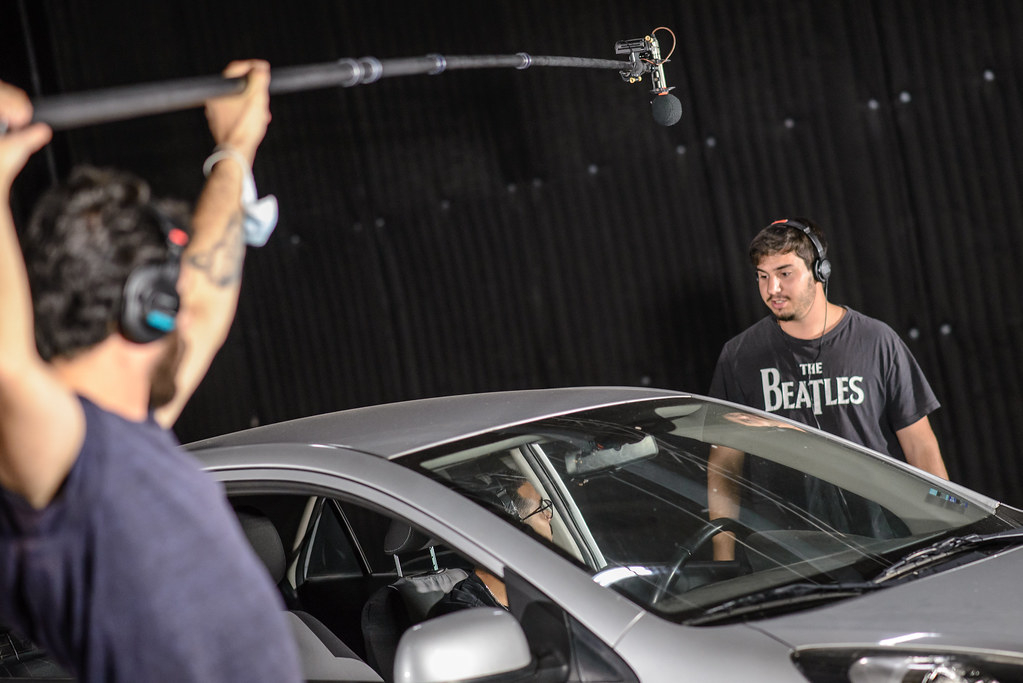
Leading teachers at the regional level
Each workshop was led by a prominent professional in the field: the goal was to work with leading educators in each department and “to give students the opportunity to sit down with the decision-makers in the audiovisual industry.”
- You might also be interested in reading: "Streaming, Sound, and Experiences: Key Elements of the Audiovisual Industry in the Digital Age"
Facilities and equipment
The vast majority of the workshops were held at the Musitelli Films facilities, “which focused on mastering and learning techniques using the available technology: essentially, gaining hands-on experience with the same infrastructure used today to film any TV series or movie in Uruguay.”

Networking
Castelli emphasized that the program provided an opportunity to work with those who hire new professionals on each new project. “Not only do participants learn from editors, screenwriters, and post-production specialists, but they also establish connections with those who will hire them for future projects. This is only possible because that link between industry and academia has been forged.”
Intensive methodology
He enrolled in short courses with a heavy weekly workload, where he focused on specific roles.
The course methodology was very similar to the American approach: “intensive, requiring total dedication, and of short duration.” Castelli explained that this allows students to gain experience similar to that of a film shoot, where there are very demanding sessions—short in duration but physically and mentally taxing, as well as involving long hours over the course of just a few days.

Link between industry and academia
The audiovisual market continues to grow: while the boom of 2021 may not be repeated, there is a production standard that we aim to maintain. “That’s why continuing education is essential: both universities and the industry are committed to lifelong learning,” Castelli noted. “It’s about understanding that both professionals already working in the audiovisual sector and recent graduates need to keep honing their skills.”
According to Castelli, it is very likely that this program will be offered again in 2022, incorporating additional specialized knowledge, always in consultation with the industry. “We are assessing what other specific needs exist so we can get a clear idea of the areas where we need to continue expanding our training, both for our graduates and for the audiovisual sector as a whole.”
Especially in fields such as the audiovisual industry, where technology plays a fundamental role, staying up to date on work methodologies and the technology used in productions is just as important as the knowledge itself.
Gerardo Castelli, M.A.