Sandra Lev Asaravicius held a bachelor's degree in biochemistry; after she had begun a master's degree in biotechnology, she had to put her studies on hold due to health issues.
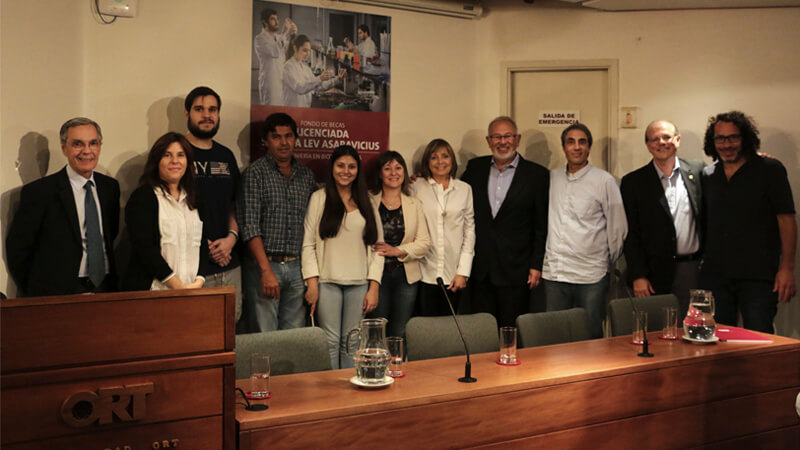
As a passionate scientist, after her passing in 2015, her family wanted to honor her in the way they felt best represented her. So her father, Monis Lev; her mother, Diana Asaravicius; and her husband, Eli Aljanati, contacted Universidad ORT Uruguay established, in her memory, the Lic. Sandra Lev Asaravicius Scholarship for the Biotechnology Engineering.
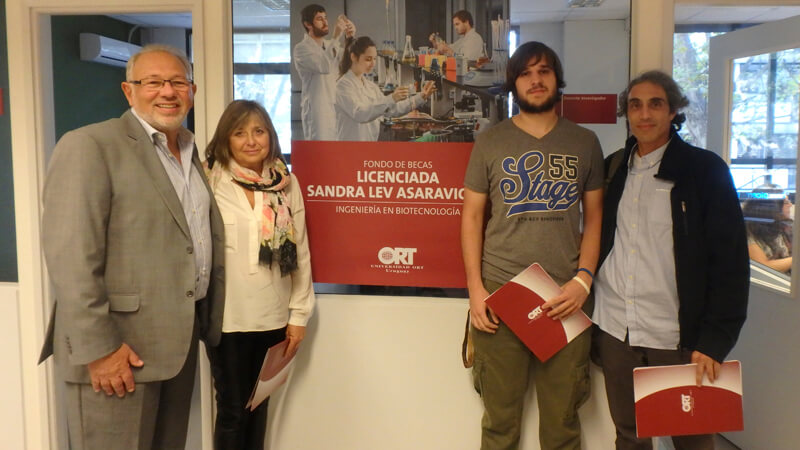
This scholarship was awarded between 2016 and 2019 based on two key criteria. First, it was intended for students from outside the capital. In this way, it could help these young people, who were far from their home communities and families, settle into life in the nation’s capital. Second, it was designed for those who demonstrated a strong commitment to biotechnology, just like Sandra.
The students who have received the scholarship are Mathías Meyer (from Paysandú), Elisa Vanoli (from Melo, Cerro Largo), and Gastón Bonilla (from Maldonado). From the very beginning, they have all stayed in touch with Sandra’s family and feel a deep sense of responsibility to carry on her legacy.
In fact, Monis Lev spoke in the following interview about the bond he has maintained with the students and how important it is to him that a science scholarship bears his daughter’s name.
How did the idea come about to honor Sandra through a scholarship at ORT?
My daughter studied biotechnology at the University of the Republic. She was very passionate about her field, but health issues prevented her from continuing her studies, and sadly, she passed away in 2015.
When she passed away, I wanted to do something that would honor her in some way and, at the same time, be of use to others involved in what was so important to her. That’s why I thought of a biotechnology scholarship and ORT, because it’s an institution I’ve always held in high regard.
When I told my wife that I wanted to do something in memory of Sandra, she agreed and supported me from the very beginning. It was certainly emotional, because even though you want to do it out of the deepest affection, it’s difficult because she’s no longer with us. Our son and the rest of the family were also supportive from the start.
I contacted the university, and they were very receptive to the proposal. From there, we got started on the project.
What is your relationship like with the scholarship students and their families?
I connected with them right from the start. What mattered to me was that they were from rural areas and had a strong sense of purpose. Those were the only two criteria we asked the university to consider during the selection process.
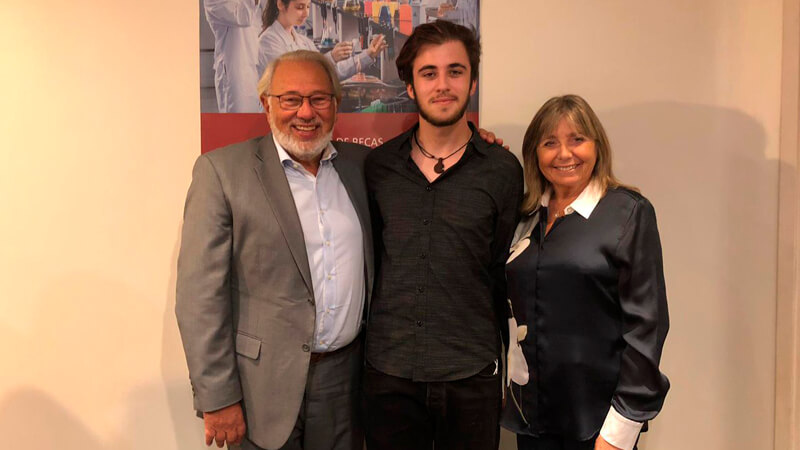
I remember a beautiful and very touching letter we received from Mathías’s mom—he was the first of the boys. It really made me feel that taking on this commitment was worth it. The other day, I met up with Mathías and took him to play soccer. We had a great time together.
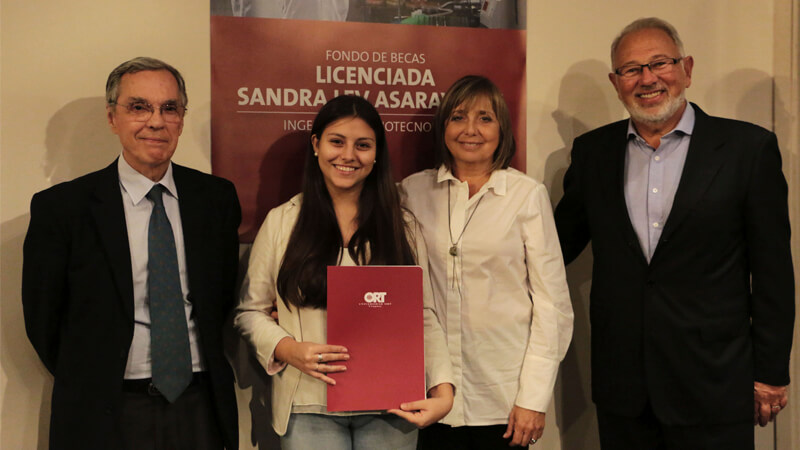
As for Elisa and Gastón’s families, they attended the scholarship award ceremonies, and that’s where we met them. They were always enthusiastic and grateful to us for the support we provided.
We have really appreciated that, because we believe it is essential for students that, in addition to the support we and the university can provide, they always need the support of their families. In all three cases, their families have been very supportive.
Are you aware of the students' progress in their degree program?
Yes, of course. Every so often we write to the students to ask how they’re doing in their studies, but I also check in with Enrique Remuñán (Director of Student Services) to see if the university is satisfied with their performance.
How does it make you feel to know that, year after year, you’re giving young Uruguayans who share Sandra’s passion the opportunity to pursue a college degree?
I feel good. I feel that, in some way, my daughter has transcended the confines of her life and become part of something that was very important to her. Sometimes, when I walk past the ORT lab, I picture her working with her classmates and doing what she loved.
I think that if Sandra were here with us, she would look very favorably on this. And what greater reason could a parent have—even in the unfortunate situation we found ourselves in—than to honor their children?
How do you view the progress of biotechnology over time?
I firmly believe that, given the challenges brought about by the coronavirus, the contributions made by Uruguayan scientists have placed us in a very honorable position. It reflects well on the profession. Thanks to the effective control of the disease in the country, Uruguayan scientists have elevated the profession to a position of honor, and that is something I find heartening amid this unfortunate situation brought on by the pandemic.