https://www.youtube.com/watch?v=1egqLH34Hlw&t=29676s
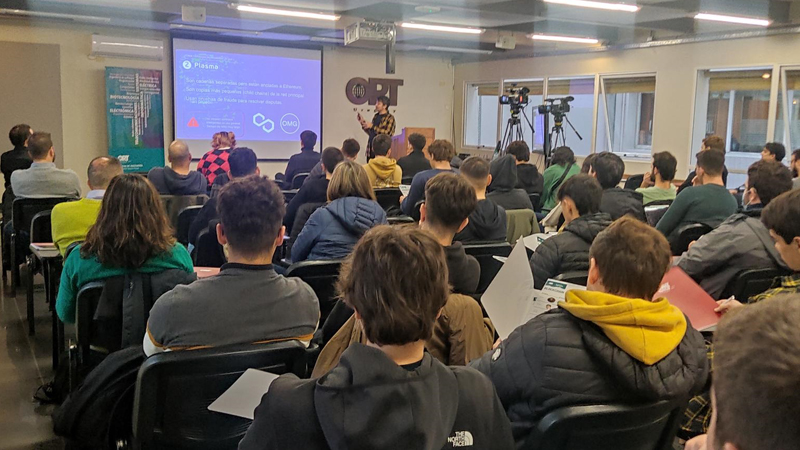
On May 25, the Blockchain ORT 2022 event took place, organized by David Giménez, who serves as a professor of Blockchain Technology and Smart Contracts in the Systems Engineering program. The event featured national and international experts, who discussed various aspects and functionalities of this technology.
Blockchain ORT 2022 was held in a hybrid format and attracted 150 registrants across the morning and afternoon sessions, while the YouTube livestream was viewed by more than 100 people.
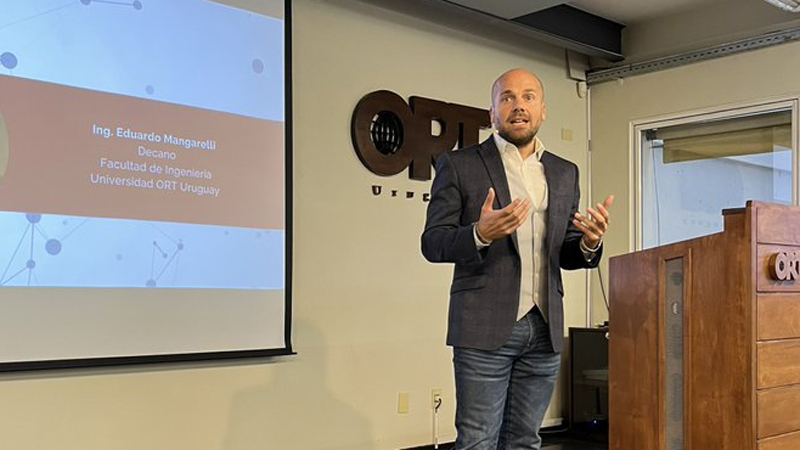
The event was opened by the dean of the School of Engineering, Eduardo Mangarelli, who noted in his opening remarks that the blockchain landscape has some unique characteristics. “This technology is the one most closely connected to the technological phenomenon itself, yet it also intersects with other areas such as financial incentives surrounding cryptocurrency ecosystems, or certain applications linked to art and creativity, such as NFTs. It also brings with it the challenge of the carbon footprint, global warming, and the high level of energy consumption generated by blockchain networks, as well as the challenge of security, to name a few concepts.”
Giménez then highlighted the importance of discussing and raising awareness about this technology, which emerged 14 years ago and has been under study for quite some time.
“Blockchain allows us to transfer value securely over an insecure medium, such as the Internet, without the need for centralizing entities to manage, guarantee, or secure the transaction.”
Giménez then presented the set of technologies that make up blockchain (peer-to-peer computer networks, distributed databases, hash algorithms, asymmetric cryptography, digital signatures, and consensus mechanisms) and explained how they work together synergistically.
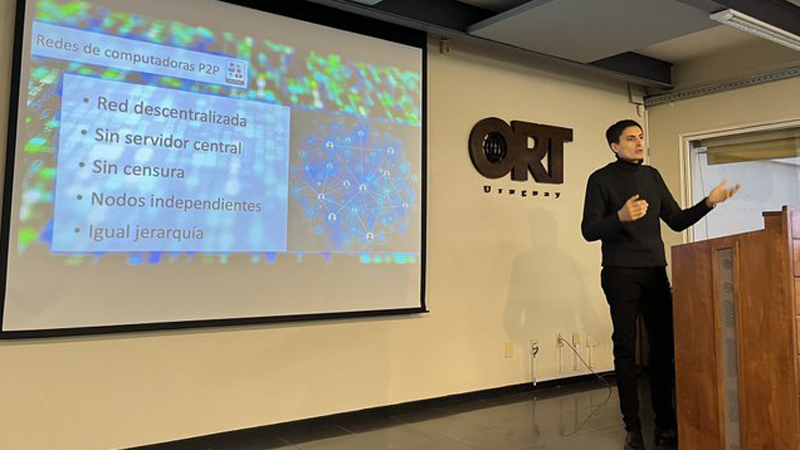
Other participants in the event included: Mauro Argañaraz, Web 3 manager at Clave, who shared his perspective on potential Layer 2 scalability solutions aimed at addressing the challenges posed by the exponential growth of blockchain technology; and Ignacio Varese, co-founder of BlockBear, who noted that blockchain is giving rise to new business models such as certification, voting, and digital identity.
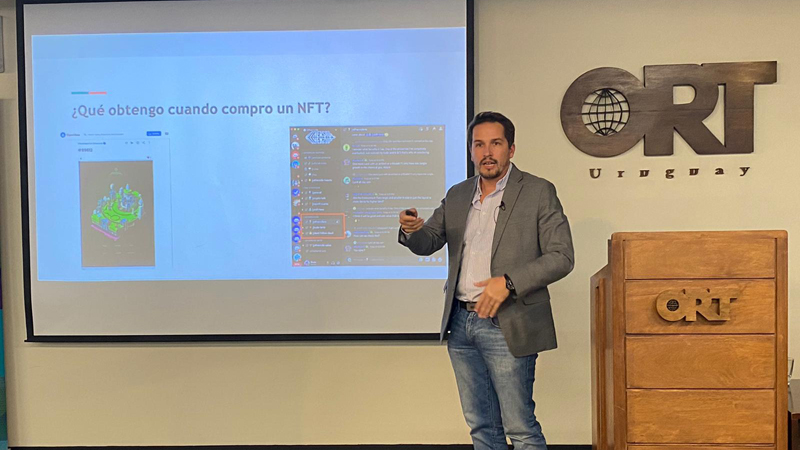
Meanwhile, Omar Saadoun, co-founder and CEO of InMind, explained what NFTs and DAOs are, what they enable, how they are built, and other key features. Martín Alcalá, co-founder and director of Tryolabs, spoke about blockchain as a new business model, entrepreneurship, and the new opportunities that may arise.
The event also featured experts in the field of electronic money and cryptocurrency regulation, including Dr. Rafael García and Félix Abadi of the Rueda Abadi Pereira law firm.
The virtual event featured the following speakers: Clemens Wan, Solution Architect at ConsenSys, who discussed the differences between Web 2.0 and Web 3.0, the decentralization enabled by blockchain technology, and its potential applications. Next, Santiago Palladino, Lead Developer and Security Researcher at OpenZeppelin, spoke about what smart contracts are, how they work, their limitations, and their practical applications in blockchain and cryptocurrencies. Martín Abbatemarco, a Systems Engineer and independent consultant, explained what smart contract security entails, why it is important, and what researchers should keep in mind to help make projects a little more secure.
Maximiliano Hinz, Binance’s General Manager for Latin America, wrapped up the session and outlined the evolution of the web—from a one-way, non-interactive Web 1.0, through Web 2.0, and on toward Web 3.0, which allows users to own and participate in applications.