This project was developed by Diego Sangenis, a student in the Industrial Design program, for the company Vindrais, as part of the Integrative Project | Recreation19.
Brothers Diego and Joaquín Lorieto founded the bicycle company Vindrais in 2015. Sangenis met the Lorieitos at JF Kennedy High School.
“When Recreación 19 launched, I reached out to them because they had recently released an electric bike, and I asked if they wanted to redesign it—sort of like a 2.0 version,” said the aspiring industrial designer. They replied that they already had a new version of the electric bike in the works and, in addition, that they had an electric motorcycle project that had been put on hold due to time constraints.
Sangenis said that he has been interested in electric transportation for several years, so he saw this as “a unique opportunity” to develop such a product.
So far, the only parts they had finalized were the frame, the wheels, the fork, and the electrical components.
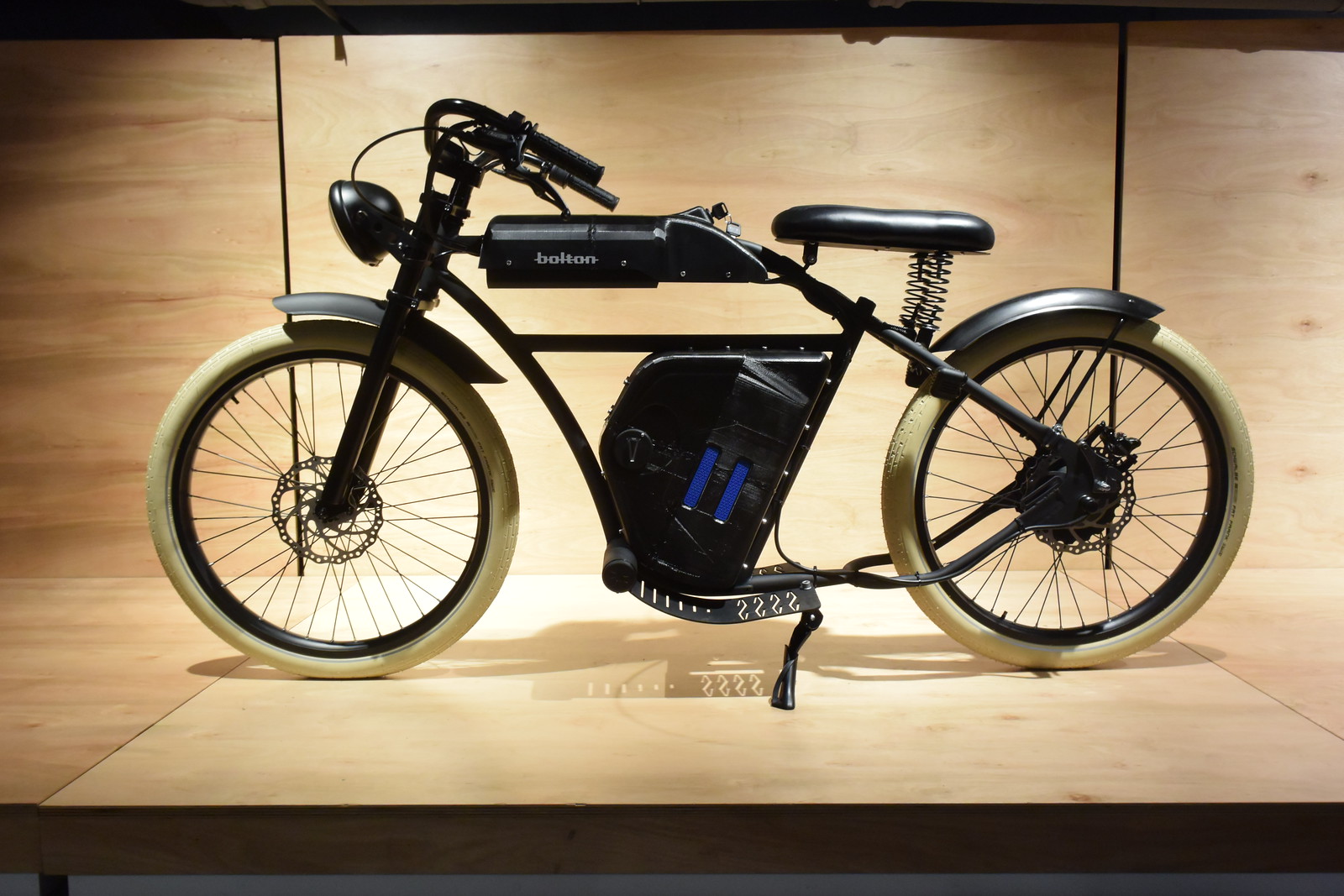
My project involved bringing it to life by designing the missing parts and defining the vehicle’s identity. At the same time, I aimed to promote industrial design in the electric vehicle sector in Uruguay, since currently the vast majority of electric vehicles on the local market are imported (if not all of them).
Vindrais targets a young audience that values quality: the conventional bicycles they sell, the designer explains, have a classic look.
The Path to Identity
The first stage of the design process involved “gaining a thorough understanding of the context in which we were working,” such as researching and learning about motorcycles while developing empathy for the product’s target users.
Given the classic look of the bicycles sold by Vindrais, Sangenis felt it was important to draw inspiration from the past when designing the motorcycle. Similarly, the motorcycle’s basic design “already evoked memories of older motorcycles, thanks to the shape of the frame and the light-colored tires.”
The result is an electric cruiser motorcycle that is unique in its class. Part vintage, part futuristic. Whether it evokes the past or the future—or both at the same time—is up to the viewer. For fans of two-wheeled machines, its aesthetics may bring to mind the early Indian, Harley-Davidson, and “Bembas” of the first half of the 20th century. The Bolton motorcycle fits right in with the current trend toward electric mobility and stands out with its own distinct personality.
During the months of the Integrative Project, Sangenis worked in coordination with Vindrais to achieve the stated goal.
To that end, he suggested they meet once a week. “I felt it was necessary to fully understand where they wanted to take this project, so we could reach a result that would satisfy both of us.”
Before arriving at the final design of the motorcycle, he made ten visits to the company, not counting the WhatsApp exchanges throughout the process, during which he showed them progress through sketches and renderings. “This back-and-forth was essential and allowed us to reach a result that left us all satisfied.”
In summary, the main objective—which was to “define the motorcycle’s identity by creating a product with unique characteristics in the realm of two-wheeled electric transportation”—was achieved. To establish this identity, all the parts needed to complete the vehicle were designed, while others, such as the frame and fenders, were adapted. The seat, handlebars, footrests, enclosures for the electrical components, and covers—all 3D-printed—were custom-designed for this project. Components such as the rear suspension, bolts, and nuts were selected.
The connection to Uruguay was reflected in the details. The national flag served as the primary source of inspiration: the sun and its four blue stripes. The stripes were incorporated into the seat, the upper fairing, and the brake and turn signal housings. An icon was created by fusing the Sun from the flag with the concept used by Joaquín Torres García in his drawing of “Inverted America,” applied to the upper fairing and some of the 3D-printed parts.