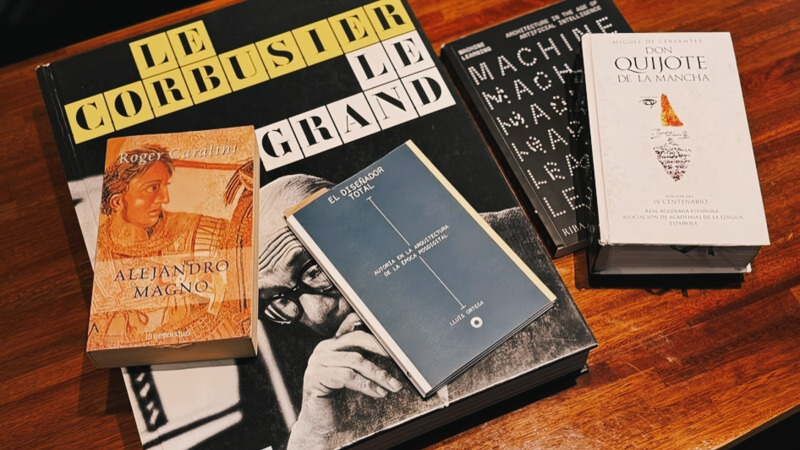
Every May 26, since 1940, Uruguay has celebrated National Book Day, commemorating the founding of the National Library(in 1816), the country’s first public library.
In this context, the Architect Gastón Boero, dean of the School of Architecture at Universidad ORT Uruguay in Universidad ORT Uruguay, recommends 5 essential books for architecture students, researchers, and professionalswho seek to reflect on contemporary practice and architectural theory from innovative and humanistic perspectives.
1. Don Quixote de la Mancha: Architecture as Spatial Narrative
“Reading *Don Quixote* is not merely a literary endeavor, but an essential journey for anyone who aspires to design spaces capable of telling a story,” notes architect Gastón Boero.
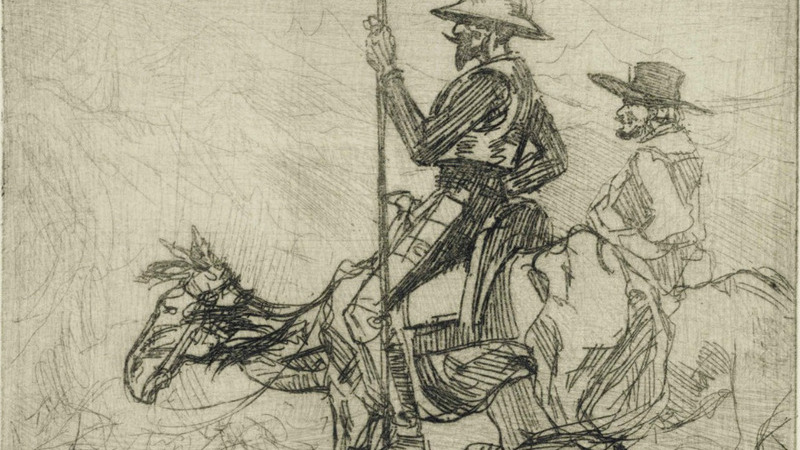
This work by Miguel de Cervantes invites architects to explore the ambiguity between reality and imagination. Every Cervantes-inspired space—from windmills to inns transformed into castles—symbolizes how architectural space is perceived subjectively, continually evoking new meanings in those who experience it.
Boero asserts that this seminal work teaches architects to challenge established certainties, demonstrating that“the most profound architecture is that which first exists in the imagination, and that our duty as architects is, like Don Quixote, to see giants where others see only windmills.”
“Miguel de Cervantes, the unwitting mentor of architects, teaches us to navigate the two worlds that underpin any memorable work: the world of the ideas that breathe life into the project, and the world of the narrative through which they are revealed to the world,” he added.
- You might also be interested in reading: “Architecture and cinema: a sublime artistic relationship through the great classics”
2. Alexander the Great: Innovation and Leadership in Architecture
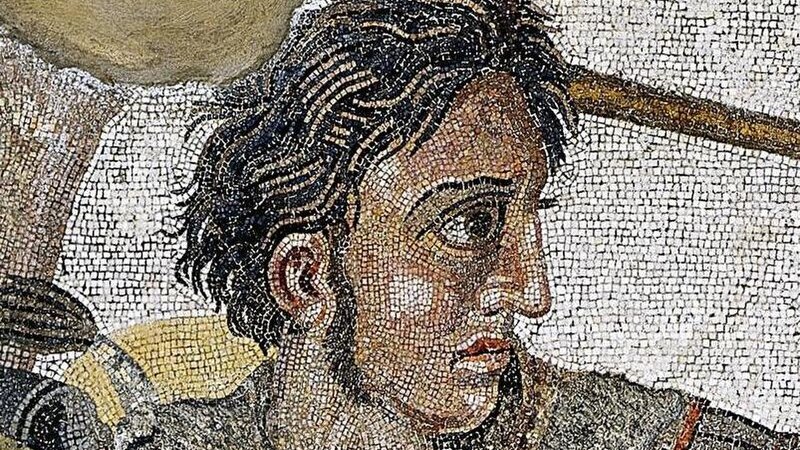 Alexander the Great, by Roger Caratini, is essential reading for demonstrating The Importance of Innovation and Resilience for Today's Architects. As Boero explains, the conqueror’s biography reveals how determination and wisdom are the foundation of major architectural and urban planning projects.
As portrayed by Caratini, Alexander the Great is not merely a distant historical figure, but a surprising mirror in which we architects can recognize ourselves. Reading his biography is to encounter a visionary leader whose understanding of the world resonates powerfully within our discipline.
“Alejandro was a tireless builder of new realities, whose extraordinary sense of space, of the symbolic power of urban planning, and of architecture as a tool for cultural dominance foreshadowed the contemporary role of the architect as a conscious creator and transformer of the human landscape,” Boero notes. In this regard, he added:
“Alejandro’s boldness—that absolute self-confidence in the face of seemingly impossible challenges—inspires us as architects.”
Conceiving a city in the middle of the desert or defending a revolutionary idea in the face of widespread skepticism requires the same determination that Alexander displayed when he took on colossal empires with minimal resources.
That boldness, however, is always grounded in the solid foundation of a deep and well-rounded education. Boero notes: “Alejandro, educated by Aristotle, understood that no truly significant project can be built without the support of wisdom, the humanities, and culture. As architects, we are constantly navigating the stormy seas of difficulties and limitations; that is why the figure of the resilient Alexander, an innovator in the face of adversity, becomes especially inspiring.”
In this regard, Boero places particular emphasis on the famous siege of Tyre, noting that “Alexander’s exceptional ability to communicate with, inspire, and unite his team reminds us of the essential human and empathetic dimension of architectural practice.”
This book teaches, following the dean, that architecture depends deeply on the architect’s personal character: “Boldness balanced with wisdom, resilience fueled by creativity, and communication capable of transforming ideas into concrete, collective realities.”
- You might also be interested in reading the article: “Exhibition of Digital Works: Exploring the Limits of Creativity, with Architect Gastón Boero”
3. Machine Learning: Architecture in the Age of AI
The text Machine Learning: Architecture in the Age of Artificial Intelligence, by Phillip Bernstein, is described by Boero as “a necessary provocation to the conscience of the contemporary architect.”
https://www.youtube.com/watch?v=QE-_IW3PpdY
This book explores the profound disruptions caused by artificial intelligence in architectural practice, inviting architects to actively participate in the current technological dialogue.
- You might also be interested in reading: “EPICA: Artificial Intelligence to Boost Creativity in Architectural Research”
Bernstein proposes to approach design automation from a strategic perspective. In the words of Architect Boero: “not as a threat, but as a powerful ally that can expand the social and cultural value of architectural design.” As the dean explains, “Bernstein classifies these technological tools into four essential functions: representing, simulating, translating, and connecting. In turn, he organizes them into three types of artificial intelligence: rigid and precise algorithms, empirical systems that learn from big data, and cognitive platforms capable of reasoning and understanding complex contexts. This systematic vision not only clarifies the current landscape but also invites us to reflect on the future of our profession.”
Recently, in his role as an instructor for the "Project 2" course in the second semester of the Architecture program, Boero himself led a pioneering project at the ORT School of Architecture.
By integrating generative artificial intelligence (GAI), augmented reality (AR), and virtual reality (VR) from the very first academic year, we demonstrate how these technologies multiply creativity, shorten deadlines, and enhance critical rigor in the educational process, without overshadowing the importance of human architectural thought.
- You might also be interested in reading: “Digital Architecture at ORT: Designing with AI, AR, and VR Starting in the First Year of College”
4. The Total Designer: Authorship in the Digital Age
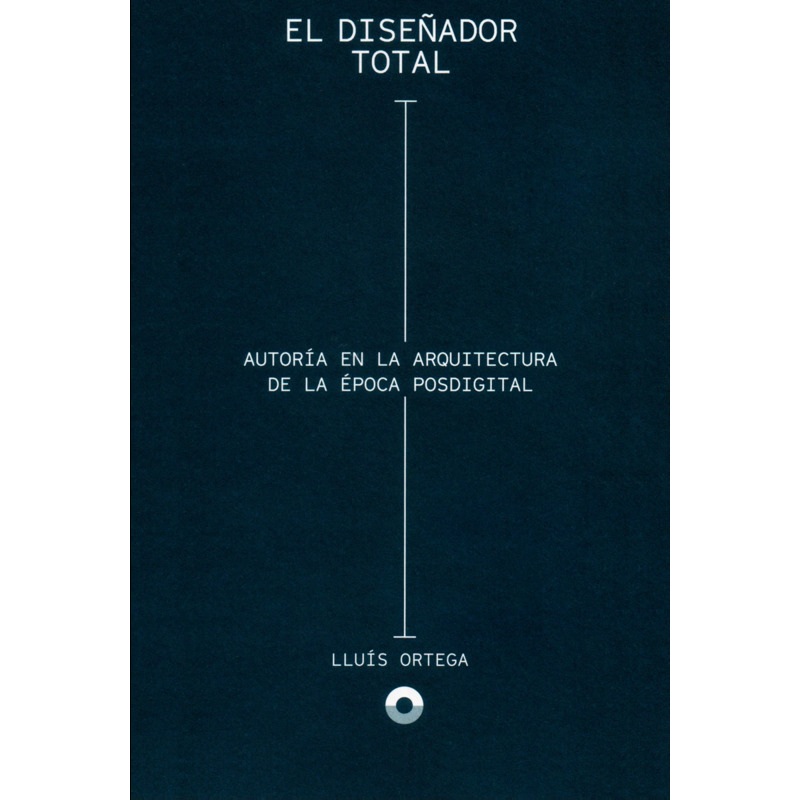 The Total Designer, by Lluís Ortega, offers a profound reflection on How Technology Is Redefining Architectural Authorship.
Architect Boero notes that this book invites us to reconsider architectural tradition as “raw material for innovation”, highlighting algorithmic design as a cultural and creative force that redefines professional identity.
For Boero, this brief yet deeply reflective book “invites the reader to engage in a critical and fruitful dialogue about the present and future identity of the architect as a creator in the digital age.”
“In this work,” explains the dean, “the digital transition is presented as a profound epistemological transformation. Ortega challenges us to explore how algorithmic design alters the traditional concept of authorship, reconnecting the historical visions of Filippo Brunelleschi and Leon Battista Alberti in an unprecedented synthesis.” From craftsmanship to replicable identity, contemporary architecture now operates under the dynamic principles of variability and series, transforming the architect into a designer of open and flexible systems.
Lluis Ortega suggests that the creative act must be open to infinite possibilities, with the digital realm serving as a cultural and creative driving force, avoiding both its idealization and its rejection. His perspective reframes architecture not through static representation, but through performativity, where the process itself is already a work of art and a living experience.
- You might also be interested in reading: “Architecture and Video Games: A Partnership That Is Changing the Way Things Are Done”
5. Le Corbusier, Le Grand: A Lasting Legacy of the 20th Century
Finally, Le Corbusier, Le Grand, edited by Jean-Louis Cohen and Tim Benton, is recommended by Boero as an essential guide to the ideas of one of the most influential architects of the 20th century.
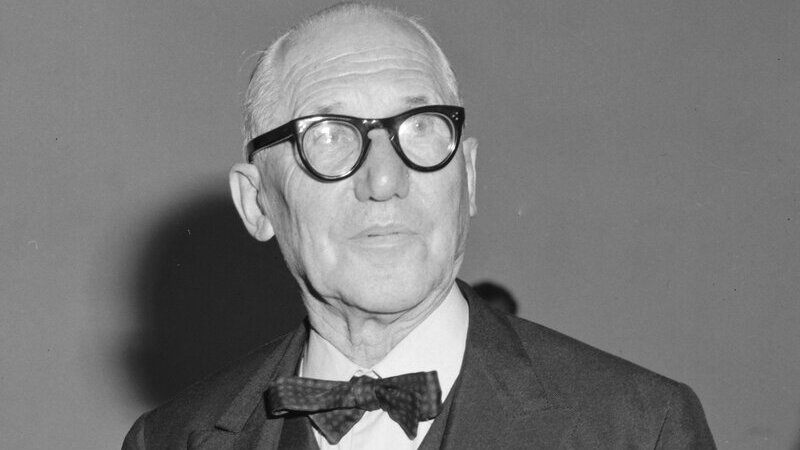
This work explores the vision of Le Corbusier, who transformed modern architecture through a radical integration of technology, beauty, geometry, and urban functionality.
Boero emphasizes that reading Le Corbusier means understanding that “technology and beauty must coexist in harmony,” as well as addressing current debates on density, sustainability, and social well-being from an integrative perspective. “It isan inspiring journey through the mind of a genius whose work continues to resonate today. To delve into his legacy is to immerse oneself in the vision of a man who revolutionized not only the way we design spaces, but also how we inhabit the world,” he added.
For Boero, Le Corbusier was a visionary who broke with tradition to reinvent the language of architecture from scratch, without ever losing sight of human and essential sensibilities. He was a builder who explored the poetic possibilities of reinforced concrete, transforming it into a symbol of modernity and creative freedom. His precision and attention to detail reveal a deep conviction that technology and beauty must coexist in harmony, challenging us as architects to integrate innovation and poetry, ensuring that, with an almost obsessive passion for proportion and pure forms:
“He was a tireless lover of geometry and beauty, because for him, beauty was a vital necessity for the human experience of space.”
Le Corbusier was also an urban planner who envisioned radically new cities—cities that sparked controversy but also sparked urgent debates about density, sustainability, and social well-being. His vision continues to drive current discussions on how to design more equitable and livable cities.
“As a writer, he understood the transformative power of words to express, share, and defend architectural ideas, many of which continue to resonate strongly. As a painter and sculptor, he tirelessly explored forms, colors, and compositions that nourished and enriched his architectural vision and shed light on new ways of seeing and thinking about space,” added the dean.
To explore his life story and revisit his works is to accept an invitation to challenge established certainties, to blend sensitivity, technique, and conceptual rigor into a profoundly human architecture. An essential journey for understanding the power of architecture as a universal language.
- You might also be interested in reading: “Modern Architecture, a Paradigm Shift”
In the context of National Book Day in Uruguay, Boero reminds the university community that these readings not only enrich technical and conceptual training but also strengthen the critical and creative abilities of aspiring architects. Thus, Boero emphasizes:
“Reading is a way of envisioning the future; it is anticipating realities, imagining possible futures, and committing ourselves to a more sensitive, ethical, and innovative architecture.”
- You might also be interested in reading: “The Brutalist: Brutalist cinema and architecture as symbols of resistance and identity reconstruction”