Much more than just a pastime, social media has become an essential resource for education. Whether on Facebook, Instagram, or X, 77% of Uruguayan teachers log in at least once a day to find educational resources, learn from others, and stay up to date on current topics. However, only 37% post content.
How can these findings be explained? How do Uruguayan teachers use social media? What role do educational leaders play on Platform X (formerly Twitter)? Research by Dr. Denise Vaillant, dean of the Institute of Education; Dr. Mariela Questa-Torterolo, associate academic coordinator of the Master’s in Educational Management and the Master’s in Teacher Training; and Dr. Andrea Tejera Techera, coordinator of these graduate programs, offers some insights on the matter.
Teachers and the Use of Social Media
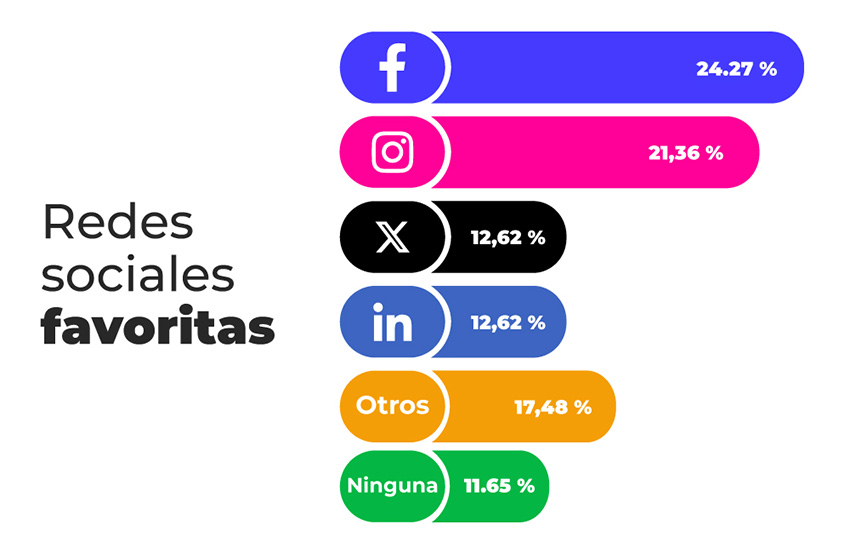
Favorite social media platforms
Although nearly 12% of respondents say they do not use any social media platforms for work, Facebook is the most popular among teachers (24.27%). It is followed by Instagram (21.36%), X, and LinkedIn (both at 12.62% each). Less than 20% of teachers indicate that the platform they use most is WhatsApp, YouTube, Pinterest, or educational platforms.
According to the study’s findings, the level of education at which teachers work is closely linked to the social media platform they use. In this regard, elementary school teachers use Facebook most frequently. Instagram is the most popular choice among secondary school teachers, while college professors tend to use Instagram, X, and LinkedIn.
Frequency of use
Although 77% of the teachers surveyed check social media once or more a day, the study by Vaillant, Questa-Torterolo, and Tejera Techera found that only 37% post content.
Unlike educational influencers, most of the teachers surveyed are not inclined to share their own resources with their followers.
“The survey has made it possible to outline a profile of how teachers use social media, where they are primarily consumers of information, ”the authors state in the article“Educational Role Models in Teaching: Toward New Forms of Interaction and Exchange,”published in the journal Educar.
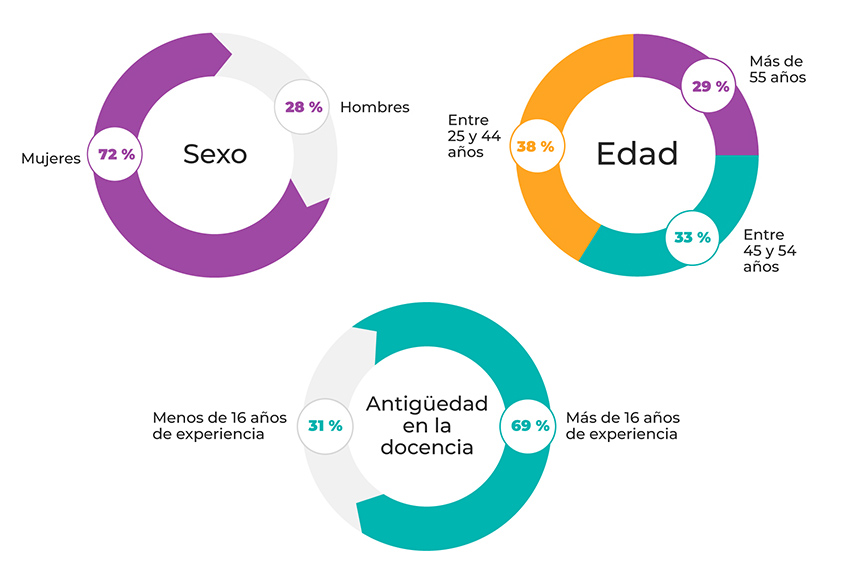
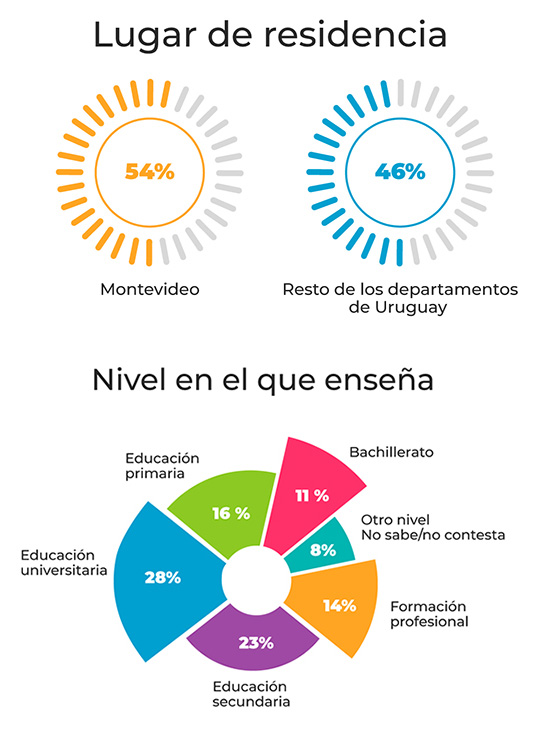
The sociodemographic profile of teachers
Benefits of Social Media
Finding educational resources, learning from others, staying informed about current events, and discovering training opportunities are the main benefits of social media, as identified by the teachers surveyed.
They also use them to promote professional development. For example, reading articles and books, taking training courses, and participating in working groups are some of the most common responses. However, observations by other teachers and innovation and research projects were the least frequently chosen options.
Who are the educational leaders?
“In every social network, there are people who take on leadership roles and play a central part,” state Vaillant, Questa-Torterolo, and Tejera Techera.
Influencers who systematically share information or knowledge through social media share a number of common characteristics, such as:
They have a story to tell
They share resources or insights, and they have a message to convey.
Mostly, they post text-based content, although some include images as well.
Although they acknowledge that social media cannot replace formal education, they believe in its power to spread ideas.
Although they typically maintain accounts on more than one platform, according to research by the ORT Institute of Education, X stands out as the most popular.
They value the lessons learned
According to education experts, social media offers new avenues for learning and professional development. These technologies allow users to access new knowledge and discover inspiring ideas.
“Teachers say that social media gives them the opportunity to enhance learning opportunities, specifically, more so than other traditional professional development options,” states the article in Educar magazine.
They prioritize exchange
Educational leaders value interaction and recognize the benefits of exchange; they emphasize the potential for collaboration to generate innovative ideas or practices.
In fact, one of the greatest sources of satisfaction they highlight is having connected with organizations or individuals with whom they would never have come into contact if it weren't for social media.
They also mention the creation of job opportunities, such as participating in media interviews, writing or promoting books, or building professional networks.
They offer advice on how to engage on social media
The interviewees agree that, when they first started using social media, they did not intend to become influencers; rather, it was a process that developed gradually.
However, when interacting with others, they recommend maintaining a respectful and balanced attitude.
They aim for the dialogue to be constructive and for the information to be verified before it is shared.
In this regard, Vaillant, Questa-Torterolo, and Tejera Techera argue that ethics on social media “appears to be the key” to “contributing to a more positive and beneficial use of online platforms.”
They don't like the term "influencers"
These individuals, who typically work as teachers in formal or informal settings, hold advanced degrees, and have extensive experience in the field of education, do not feel comfortable being labeled as “influencers.”
The reason is that they associate the term with “commercialism, superficiality, and a lack of professionalism,” which is why the study chose to classify them as “role models.”

About the research
The study conducted at the ORT Institute of Education was based on a collaboration with the team led by Dr. Carlos Marcelo García, professor of Teaching Methods and School Organization at the Faculty of Education Sciences at the University of Seville (Spain), who between 2019 and 2022 carried out the research project titled“How Do Teachers Learn in a Connected Society?”
In Uruguay, Vaillant, Questa-Torterolo, and Tejera Techera sought to characterize teachers who use social media.
Identify the distinctive characteristics of Uruguayan educational influencers active on Platform X.
To this end, they conducted a mixed-methods study based on a survey of 206 Uruguayan teachers and in-depth interviews with nine educational leaders from X during 2022 and 2023.
The main findings of the research can be found in the article “Educational Role Models in Teaching: Toward New Forms of Encounter and Exchange,” published in the journal Educar.