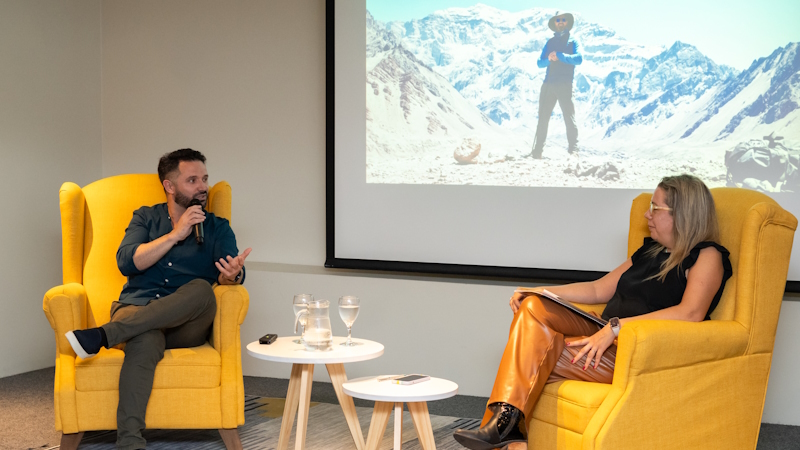
On March 20, a special gathering was held between graduates and graduate students. Sebastián Araujo Sosa—a student in the Master’s program in Creativity, Innovation, and Communication—spoke with Sabrina Bianchi—academic secretary of the School of Graduate Studies and professional developmentabout his experience climbing Aconcagua, the highest peak in the Americas, and linked the lessons learned from this experience to his professional life and graduate studies.
The Challenge, the Journey, and Resilience
How high can our dreams reach? Who decides what is possible and what is impossible? What connection might there be between climbing a mountain and pursuing a graduate degree?
Those questions guided the conversation between Sebastián Araujo and Sabrina Bianchi.
The dream of the mountains began in 2011, the first time Araujo visited Mendoza, Argentina. The first thing that came to his mind, he said, was: “What a waste of time I’ve spent at the beach.” He was truly struck by this kind of landscape and began choosing these mountain destinations for his vacations.
When she first learned about Aconcagua, she wondered what it would take to climb the highest peak in the Americas. To find out, she began researching through books and documentaries. And in 2019, she gave it a try. But the expedition couldn’t be completed. “There were three of us on the expedition: a guide, a French woman, and me. At 6,500 meters, she developed cerebral edema and began to hallucinate, which is one of the dangers of high altitude. There was no contingency plan, and we had to turn back.”
Araujo felt ready to continue climbing, but he couldn't. "Years went by and I achieved some very important things professionally and personally." However, he still had to climb Aconcagua.
In that regard, Sabrina Bianchi emphasized that “it is important to highlight the value of resilience in professional life.”
Every mistake we make is necessary to help us stand stronger in the future and plan the next steps in our career.
Sabrina Bianchi
Taking risks
Araujo—who finally managed to climb Aconcagua—is convinced that there are similarities between climbing a mountain and pursuing a graduate degree.
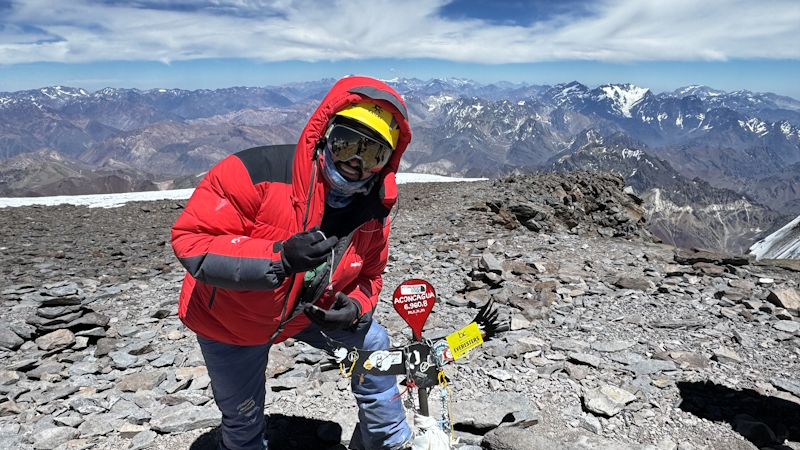
To climb a mountain, you have to "prepare mentally, really inform yourself, take all the necessary precautions, add up the unit costs, take into account the equipment, and all the physical preparation." The same applies to a career: "It's an important decision to make, to think about where you want to go. That involves taking risks."
When you climb a mountain, it’s like making a pact with yourself—a pact where you know there are limits you’re aware of, and there are limits the mountain will reveal to you. The same thing happens in a race: there are pacts you have to make with yourself.
Sebastián Araujo, Esq.
Push your limits, strive to be your best self
"At the limit, you discover new facets of who you are," Araujo reflects. "It's like getting to know yourself all over again."
He recalled that one of his grandfathers always said, "Always aim as high as you can; even if you don't hit it, if you hit close to it, it will still be high."
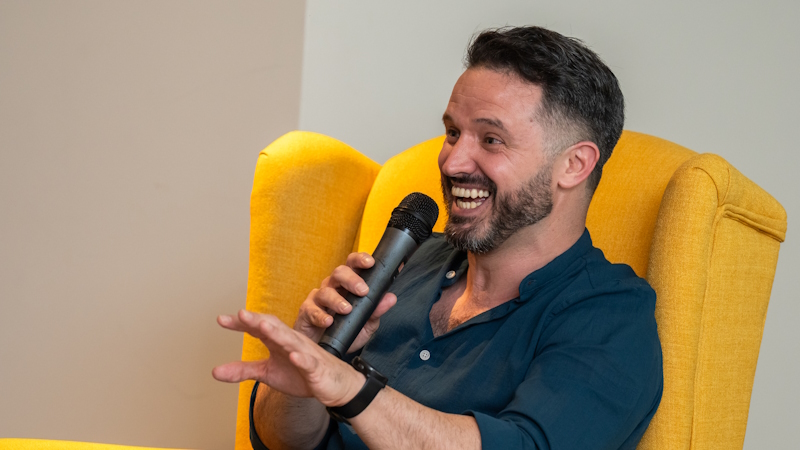
According to Araujo, two steps are necessary to become the best version of oneself: having humility and taking the time to reflect inwardly.
"It's important to take that time, look at what we've been doing and how we've been doing it. To know what we can improve," he said. And when setting new goals, we always have to be aware of the cost. "Be careful with that, because sometimes the costs we incur are quite high."
In that regard, he recalled something he learned during his first year of the master’s program, in the course on Design Thinking Methodology:
When you start brainstorming, you have to set aside all limitations and preconceptions, because they stifle wild ideas.
Sebastián Araujo, Esq.