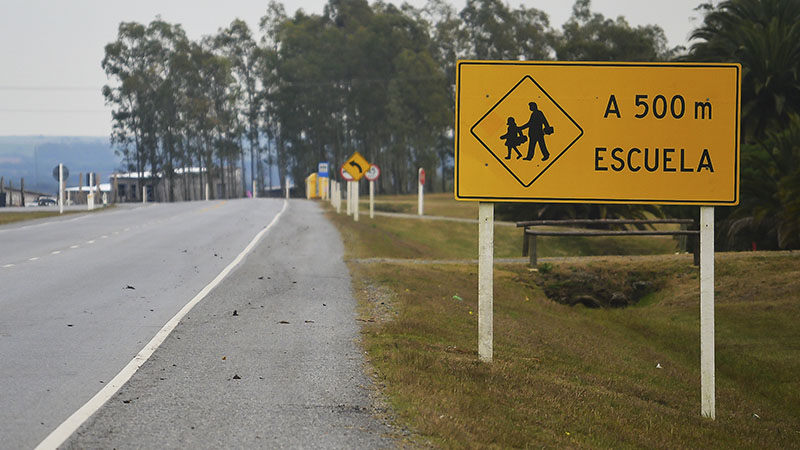
Nearly 20% of students at rural high schools have considered dropping out. The reasons vary, but the most common ones include preferring to work rather than study, feeling bored, or having to get up early to commute and arrive at school on time.
That is just one of the findings of the action research project “Educational Continuity Through a Hybrid Productive Ecosystem,” which aims to design a hybrid learning ecosystem in rural elementary and high schools to safeguard adolescents’ educational pathways.
At an event co-organized by the Institute of Education at the Universidad ORT Uruguay and Edúcate Uruguay —a nonprofit organization working to bridge the opportunity gap for students living in rural areas—the main findings of the research were presented.
A national challenge in numbers
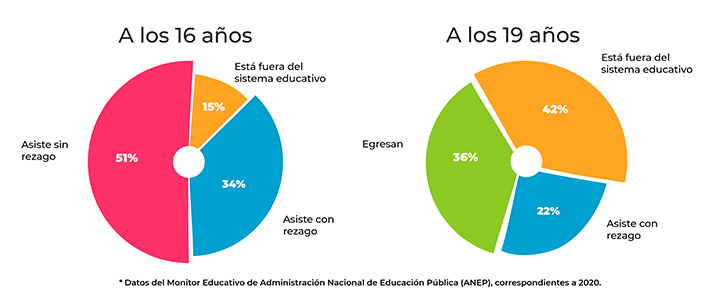
To put the issue of school dropout rates into context, Dr. Mónica Girolami, chief operating officer of Edúcate Uruguay, presented some alarming figures.
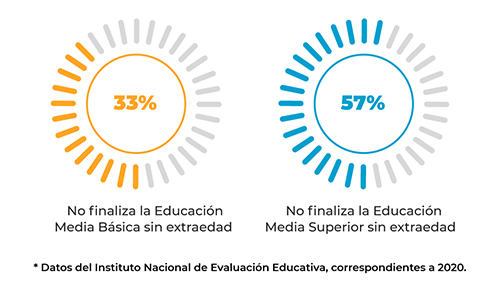
According to data from the 2019 Continuous Household Survey, young people do not complete high school for various reasons: lack of interest, a desire to learn other things, family responsibilities, the need to work, financial difficulties, or pregnancy, for example.
“Basically, it was a problem, ”Girolami said. Since there was no specific data on rural areas, Edúcate Uruguay decided to launch the action research project “Educational Continuity in the Context of a Hybrid Productive Ecosystem”—funded by the Sectoral Education Fund and developed by the National Agency for Research and Innovation (ANII) and the Ceibal Foundation—to gain an in-depth understanding of the challenges in rural areas.
At the same time, they set out to explore the connections between students, the business sector, and the education system. “What would a teaching and learning ecosystem look like that links the technical knowledge of the productive sectors with the knowledge developed in the education system?” was one of the research questions that guided the work, which ultimately involved 17 agricultural companies, 101 students, and 18 administrators and teachers from rural high schools in Cerro Largo and Salto.
Key skills for the job market
What skillsdoes the business sector value most inyoung people who are just entering the job market? According to research by Edúcate Uruguay:
- Effective communication.
- Ability to understand verbal or written instructions.
- Provide precise answers to specific questions.
- Social-emotional skills, such as commitment, punctuality, honesty, and the ability to adapt to change.
“The business sector isn’t interested in employees knowing the specifics of the work they’re doing; they believe that’s something you learn on the job, but they do want them to have these skills,” Girolami explained.
And what did the young people say about their mastery of these skills? Seventy-six percent of the teenagers interviewed said they don’t know how to speak in public or that they need to improve, while 70% admitted to having difficulty expressing their ideas in writing.
There is a very clear alignment between the skills that teenagers need and those that companies require.
Dr. Mónica Girolami
Therefore, can schools serve as the epicenter of learning ecosystems that extend beyond the classroom—for example, to improve communication skills? With this in mind, Edúcate Uruguay developed an initiative that involved significant participation from students and teachers. The teaching strategy consisted of a hybrid workshop on oral communication, which lasted three months and was held once a week at rural high schools in Cerro Largo and Salto.
Connections: The Bridge to Learning
In addition to improving communication skills and the school climate, according to Girolami, there was a noticeable increase in the students’ level of engagement, trust, and commitment during the workshop, as well as in their level of autonomy.
The presentation also showed that teacher support is essential. “We need professionals who are deeply committed, attentive to their students’ needs, constantly seeking solutions to problems, and creating opportunities for interaction,” emphasized Girolami, who added that, inevitably,“the teacher must serve as the bridge.”
For this reason, it is essential to provide them with more training, particularly regarding tutoring strategies and support throughout the teaching and learning process. This also applies to the proper use of technology, since, in Girolami’s words, “most see virtual learning as something that affects social interaction and relationships.” Although it is a “fundamental tool,” he emphasized thatit “still raises doubts” among teachers.
In closing, during the event to present the research findings—held on Tuesday, December 10, 2024, at Universidad ORT Uruguayhe emphasized that relationships are “a structural weakness” in learning ecosystems: “What young people learn depends on the relationship they build with their teacher; therefore, for educators, this is a huge responsibility.”
Event Photo Gallery

Internships that transform lives and careers
One thing that was clear to the Edúcate Uruguay research team was that they couldn’t start from scratch. For that reason, they conducted an analysis of national and international case studies and came across the Big Picture Learning model.
According to its co-director, Dr. Andrew Frishman, it is a U.S.-based organization that works with a mentor to help students discover who they are and what their purpose is through meaningful learning experiences outside the classroom. “Our mission is to unlock the potential of schools, systems, and education through student-driven, real-world learning,” added Frishman.
In collaboration with local businesses and organizations, they develop internships tailored to the interests of high school students, which has a significant impact on young people. Having been involved with the organization for over 20 years, he has witnessed how the initiative influences students’ “professional and personal” trajectories, as experiences with mentors “are crucial to helping them advance in their careers” and to encouraging them to work in “sectors directly related” to one of their internships.
The investment we make in our education system is the best investment we can make in the future of our young people.
Dr. Andrew Frishman
“I don’t think we’d ever try to teach someone to swim out of the water, yet it seems that much of our education system is geared that way,” lamented the co-director of Big Picture Learning, who added that, at present, young people are feeling“hardly challenged or prepared”by school for their future.
That is why he invited us to reflect: What were the most meaningful learning experiencesbetween the ages of 13 and 18? For Frishman, one of them was when he did an internship at a bilingual preschool—attended by many immigrants from Spanish-speaking countries—where he was able to learn Spanish.
That is what sparked his interest in exploring meaningful learning experiences, which, in his view, share certain common patterns:
- They stem from a personal interest or passion, which sparks a curiosity to learn more.
- In general, they involve a relationship with a mentor or an experienced adult who shares specific knowledge and expertise and acts as a guide.
- They involve creating something authentic, original, or tangible in the real world.
- In most cases, they occur outside of school or involve issues that go beyond the classroom.
Finally, Frishman emphasized that the key lies in building networks to connect young people with the sectors they aspire to join, since both students and adults can benefit from internships.
“It’s not just students who learn from their teachers; teachers can also learn from their students, ”he said. And, in closing, he added: “Being an educator is more than just teaching content. It’s about human connection, and that has been the most rewarding part for me.”