As part of the program of activities for the "Project 5" course in the Architecture program, the Faculty of Architecture at Universidad ORT Uruguay the conference “Building from the Site: The Logic of Landscape.”
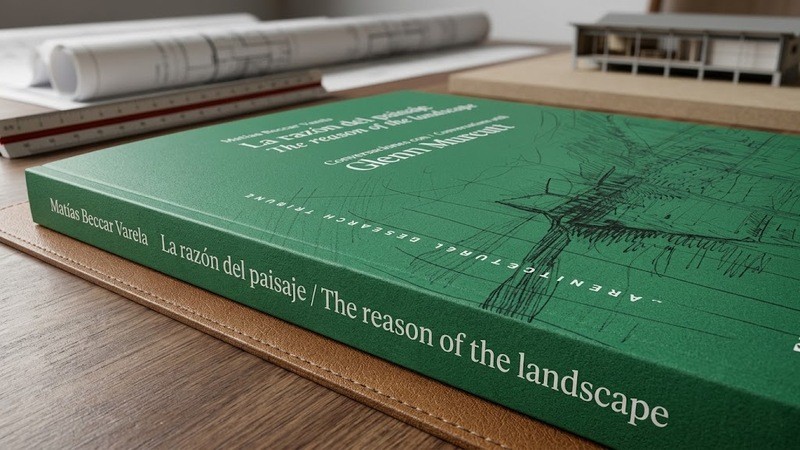
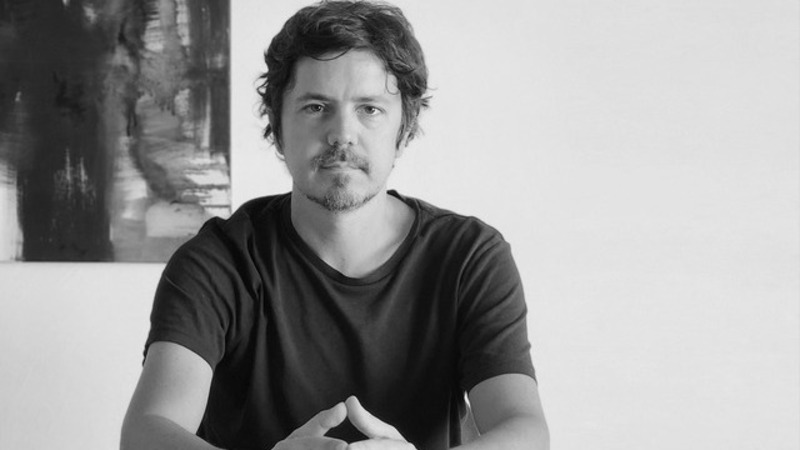
The event featured as a guest Architect Matías Beccar Varela, an architect with a degree from the University of Buenos Aires and a tenured professor at Torcuato Di Tella University (Argentina), head of the MBVAA studio, and author of the book La razón del paisaje / The reason of the landscape: Conversations with Glenn Murcutt (2021, TC Cuadernos).
The event was led by architects María José Budelli, Francisco Díaz, Andrés Gobba, and Maya Suárez, and marked the conclusion ofthe “Building from the Site”series, which in its first two sessions had explored the relationship between territory, community, material culture, site-specific technologies, and approaches to design based on the specific conditions of the site.
In this third session, Beccar Varela proposed an analysis focused on the work of Australian architect Glenn Murcutt (Alvar Aalto Medal and Pritzker Prize) and on how his projects allow us to the study of relationships between architecture, climate, landscape, and technology. This article brings together the key concepts discussed during the session, as well as the audiovisual recording of the full lecture.
A South-South dialogue through the lens of the landscape
At the start of his presentation, Beccar Varela introduced the talk as “The Reason of the Landscape, a South-South Dialogue”. With this formulation, he situated his research at the intersection of Australia, South America, and the Río de la Plata, exploring the possibility of recognizing climatic, geographical, and design affinities.
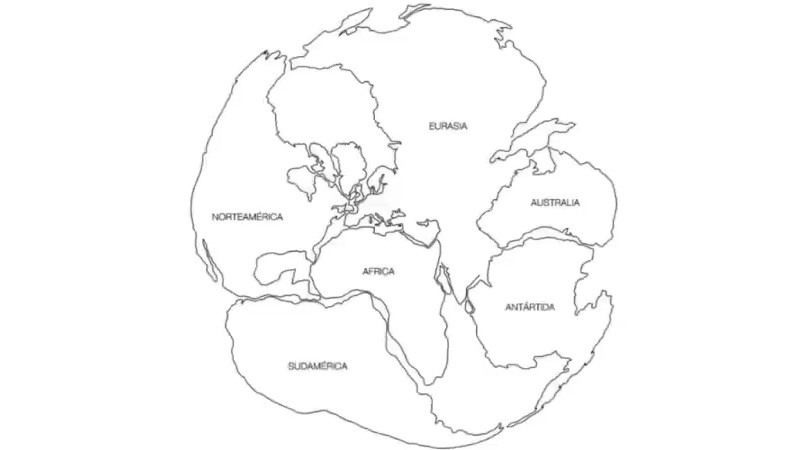
The architect explained that his connection to Murcutt’s work began by chance, but grew into a doctoral dissertation, a publication, and ongoing research into the ways in which a project can respond to its environment. Along the way, he spoke of an architecture “so distant, yet in some way deeply connected to our environment.”
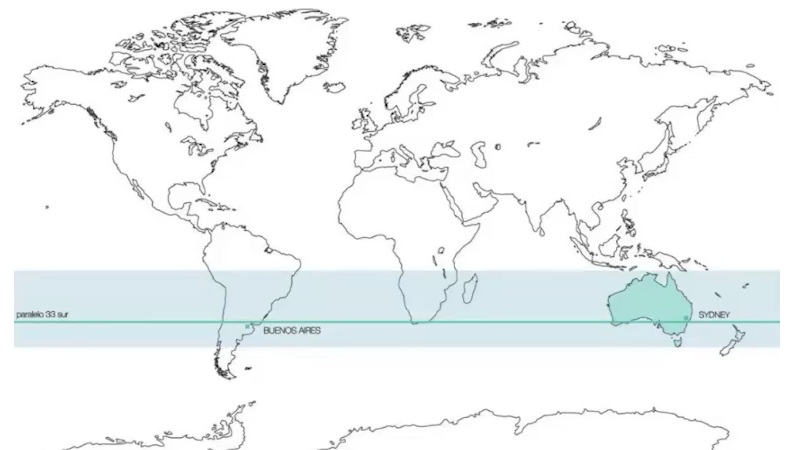
In his presentation, the 33rd parallel south served as a framework for a comparative analysis of Buenos Aires, Montevideo, Sydney, and other regions. Rather than a formal comparison of architectural works, the lecture sought to revisit a fundamental design question: how to interpret orientation, wind, humidity, vegetation, topography, and material availability before defining an architecture.
- You might also be interested in reading: “Building from the Site I: Collaborative Architecture and Situated Technologies, with Architect Ceballos Ugarte and Architect López Isabellas”
Glenn Murcutt: Archive, Work, and Territory
During the lecture, Beccar recounted his trip to Australia, his work with architectural drawings at the Mitchell Library in Sydney, and the interviews with Murcutt and his tour of various sites and landscapes.
That direct contact allowed him to study sketches, plans, details, implementation processes, and design decisions. It also allowed him to observe that, in Murcutt’s work, interpreting the landscape involves understanding how the sun moves, how air circulates, what vegetation is present, what materials are available, and how the house can function in response to each of those conditions.
View this post on Instagram
The archives, drawings, site visits, and conversations with Murcutt emerged as parts of a single method: to study how architecture can be formulated based on the specific conditions of the site.
- You might also be interested in reading: “Building from the Site II: Architect Utrabo and an Architecture Situated Between Territory, Material Culture, and Collaboration”
The House as a Climate Tool
One of the central themes of the exhibition was the Mary Short House, one of the works Beccar Varela analyzed in his thesis on Murcutt. The architect presented it as a pivotal house in the Australian architect’s career, because it marks a shift in his design approach.
The story began with a seemingly simple scene: the client wanted a house that would recapture the experience of sitting under a blackberry tree. In summer, the tree provided shade and caught the breeze; in winter, having shed its leaves, it let the sun shine through. Beccar Varela cited that image as a key element of the project: “I want a house that feels like being under that blackberry tree”.
In Beccar Varela’s interpretation, this scene allows us to understand the house as a mediation between the body, the climate, and the landscape. Orientation, ventilation, porches, shade, awnings, finishes, and materials all became part of a single design logic.
For Beccar Varela, this is where one of the most powerful ideas in Murcutt’s work emerges: “The house becomes an instrument for interpreting the climate, the environment, and the landscape”.
In this interpretation, decisions are not seen as isolated responses. The house functions as a responsive and adaptable system: it opens, closes, filters, ventilates, protects, and either lets the sun in or blocks it out depending on the season. Living in it also means learning to read the environment.
- You might also be interested in reading: “Landscape Project Series: How Landscape Architects Are Trained and How Landscaping Is Done at ORT”
From technical details to the rationale behind the project
The lecture also focused on a fundamental aspect of Murcutt’s work: technical detail as part of architectural thought.
Beccar Varela demonstrated how sunshades, louvers, roofs, skylights, galleries, raised floors, water tanks, and skin systems do not appear as later additions, but rather as decisions that shape the meaning of the project.
At that point, he noted that the Murcutt’s drawings are more than just building instructions. They also explain the reasons behind each decision: why a sunshade has a certain angle, how it responds to the sun’s movement, how it allows for ventilation, or how it protects the interior at one time of year and opens it up at another. That is why one of the clearest statements of the lecture was:
“The detail becomes the work”.
Much of the talk’s meaning is encapsulated in that statement. The technique is not separate from the landscape, nor is materiality as a purely aesthetic decision. Detail is the point where atmosphere, construction, economy of means, user experience, and ethics in relation to the context converge.
The conference also provided an opportunity to see assessment of the precise use of available elements. Rather than an accumulation of sophisticated resources, the technique emerged as a way to recognize possibilities, adjust decisions, and bring out the maximum architectural potential of each component.
- Recommended reading: “Lina Bo Bardi and the Other Modernity: Architecture, Popular Culture, and Sustainability”
The Simpson Lee House and the Project as a Dialogue with the Site
The second key case presented by Beccar Varela was the Simpson Lee House, located in the Blue Mountains, near Sydney. Unlike the Mary Short House, this project revealed another tension: the relationship between solar orientation, views, existing rock formations, access, and the way the hillside is inhabited.
Beccar Varela explained that Murcutt had intended to orient the house toward the north, but the clients did not want the house to visually intrude on the valley. This conflict led to a process of adjustment, resulting in the project being situated against the mountainside, in harmony with the terrain, the forest, and the local rock formations.
The house then appeared as a way to accompany the terrain, not to dominate it. The approach, the side entrance, the relationship with the rock, and the possibility of continuing to walk along the hillside were all part of a strategy in which the site selection became a decision that was at once climatic, spatial, and cultural.
According to Beccar Varela’s interpretation, this project also demonstrates how Murcutt’s architecture employs edges, layers, and devices that allow the house to open up to the landscape without compromising environmental control. The house can be transformed into a gallery, capture breezes, shield itself from the sun, and operate with varying degrees of openness.
- We also recommend reading: “Bernard Rudofsky, the multifaceted architect of ‘architecture without architects’”
From Murcutt to Beccar Varela’s practice
The final part of the lecture provided an opportunity to connect the research on Murcutt with the work of Beccar Varela’s own studio.
The architect demonstrated how certain questions arising from his study of climate, orientation, detail, and architectural skin subsequently appear in MBVAA projects. In that context, the research was not presented as an external reference, but rather as a tool for thinking through specific commissions.
One of the clearest examples was the quest to translating an environmental logic into a vertical skincapable of responding to solar radiation, the orientation of each facade, and varying degrees of perforation. There, solar analyses and construction decisions once again emerged as part of the same design process.
Thus, the conference concluded with a question that runs throughout the“Building from the Ground Up”series: how to design without separating territory, technique, climate, and material culture.
In Beccar Varela’s exhibition, that question took the form of an architecture attentive to what the site offers and demands, capable of translate those conditions into decisions regarding orientation, detail, technique, and materiality.
Watch the full conference:
https://www.youtube.com/watch?v=Dp9XPx-p3o0
- You might also be interested in reading: “Situated Learning in Architecture: Heritage, Technology, and Territory”