What is *Ir* about?
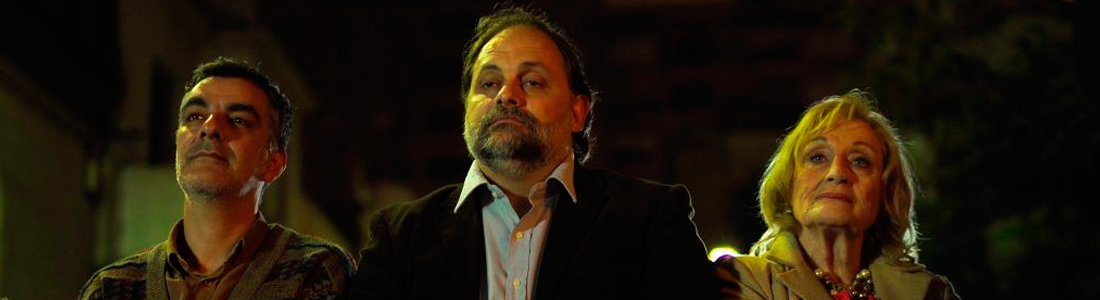
It’s abouta traffic jam that leads to a philosophical conversation. A man is stuck in a narrow street, and another man in front of him is blocking his way. The man behind gets out of his car and asks him what’s going on, why he isn’t moving. He replies that he has no intention of moving: at that moment, he realized that perhaps there is nowhere to go. That is the premise that sparks an existential conversation.
Is the tone more dramatic or comedic?
It’s an absurd piece. It follows a unique logic. The characters view the car breakdown from a metaphysical perspective: perhaps there is no such thing as destiny. So they pull over, ask what’s going on, receive an answer, and—without much conflict or resistance—sit down to chat and ramble about life. It then has a decidedly comedic resolution.
This isn't the first time you've done comedy, is it?
I've done things related to the absurd. For example, a short film called *I Am a Monster*. *Ir* came about through an initiative by the folks at Mutante Cine. We had a feature film script in development and wanted to put our collaborative work dynamic into practice. Plus, the short film helped us find the right tone for the feature, and that's exactly what we did.
How long did it take you to make the short film?
We made the short film right before I was about to move to Madrid. They suggested we shoot it earlier. There was about a month left, and I had two ideas. I went in with the ideas, and they decided which one they liked best. I wrote it, they gave me some feedback, and it went really fast. They were actors I’d worked with before; as for the crew, I suggested half of them because they’re the ones I usually work with in advertising, and the other half came from the film world—they brought them in. It was super fun.
What challenges did you face while filming it?
It rained. That’s also very typical. But we had to shoot that day; everything was scheduled. Luckily, we had the scenes, shots, and actors all down pat, which helped us overcome the difficulty. We filmed at a good pace. Then there were other, more technical challenges, such as certain camera movements.
They’re known for shooting a lot of static shots, in the style of *25 Watts* or *Whisky*. When I went there with the shooting plan, we hadn’t met yet. They didn’t know how I filmed, so they asked me to explain how I was going to do it. I showed them a close-up shot where you see a woman’s shoes; the camera pulls back, moves upward, follows her until it reaches the first car in the row ahead, then pans the camera again and shifts the focus to depth. As I described the shot, I could see the look on their faces—they were amazed that I’d move the camera so much. That was funny; in reality, they’ve filmed other movies that don’t have that distinct aesthetic.
What do *Ir* and *Abrazar a Nelfa* have in common?
The tone—which is the hardest part of anything. An actor’s gesture or a slightly more dramatized action can place the viewer in a state of pain or humor. Finding that rhythm, that specific quality found in the absurd. It has to do with sustaining, through acting, situations that are sometimes nonsensical—that’s what they have in common. In the film *Hugging Nelfa*, there’s a group of people who develop a hyper-sensitive awareness. A woman suddenly starts alternative therapy and begins meeting hypersensitive people. At first she resists, but slowly she starts to be drawn into that world. It’s a story of self-discovery through this new worldview.
So this woman from Carrasco takes her first bus ride, but out of ignorance, she greets everyone. She goes around giving each person on the bus a kiss. These situations arise, and you film them from her perspective—one that never makes you, the viewer, an accomplice to the fact that it’s a joke. She’s living it. The others react with bewilderment, which is also a typical feature of the absurd and is present in *Ir* and *Abrazar a Nelfa*.
In what way did college influence your work?
It’s a framework of possibilities. The project I’m currently working on withPardelion Madrid is with two close friends, Alfonso Guerrero and Marcos Hecht; I met one of them in college. My first conversations about film with an interesting philosophical depth took place within the college setting. Some professors were great mentors who pushed us to ask questions we likely wouldn’t have asked otherwise, or would have asked much later.