The call for proposals titled “Creative Processes of Remote Exchange,” issued by the Goethe-Institut, reached across the entire continent with the aim of exploring alternative creative processes in digital environments.
Among the eight selected projects is the Uruguayan initiative Creatilandia, led by Fabián Barros—academic coordinator of ORT’s Bachelor’s Degree in Design, Art, and Technology —and Deborah Szwedzki—an innovation specialist—and developed by the Center for Innovation and Entrepreneurship (CIE).
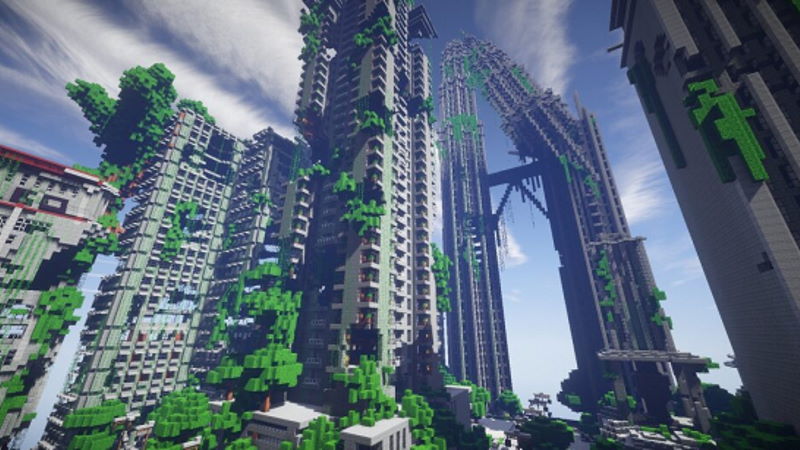
The initiative involves a group of participants with creative backgrounds experimenting with creative processes in an alternative virtual environment—such as massively multiplayer online games—focused on sustainability in line with the UN’s 2030 goals. The aim is to generate proposals that help envision inclusive, safe, and resilient cities. To this end, Minecraft was chosen as a platform that fosters creativity.
The team
An open call was issued to invite participants in the program, and out of some 60 applicants, a dozen people with a wide range of backgrounds were selected: students, professionals, entrepreneurs, researchers, scientists, communicators, and multidisciplinary artists from different generations.
Participants will be asked to adopt an online identity, complete with avatars and nicknames, in order to minimize any preconceptions related to age, gender, or nationality.
We are interested in studying the interaction among the various participants. It is fascinating to see how people with different backgrounds will engage with one another. The goal of this project is not so much to produce a final piece as it is to study the relationships that develop among the participants within these settings.
The experts
In the early stages of the project, Barros and Szwedzki decided not to involve academics or professionals from older generations, but rather “to adopt a reverse approach and recruit centenarians as expert advisors on these platforms,” given that young people make up the majority of their user base.
The team of collaborators—or rather, experts—was comprised of students Bruno Zecchi, Lucía Russo, Fiona Fernández, Josefina Silberman, Franco Pareja, Camila Rodríguez, Nicolás Guala, and Pedro Corso, who holds a bachelor’s degree in graphic design. Barros emphasized that decisions are not made solely by the project leaders, but rather through collective discussion, with priority given to the experts’ recommendations.
Using the reverse methodology has allowed us to achieve much higher-quality creative results, since these guys are expert players.
The project will be carried out using two complementary platforms: first, Discord, a multimedia communication platform widely used by young people that offers more features than a standard chat, and second, Twitch, where every step of the process will be streamed live.
The results obtained will serve as the “building blocks” for designing workshops, simulations, or discussions with the entrepreneurial ecosystem linked to innovation. The ultimate goal is to learn how to manage uncertainty by applying creativity in virtual environments.