Against this backdrop, on March 21, a symposium titled “The Cuplé Today: How Far Does Carnival Go These Days?” was held in the Auditorium of the School of Communication at Universidad ORT Uruguay.
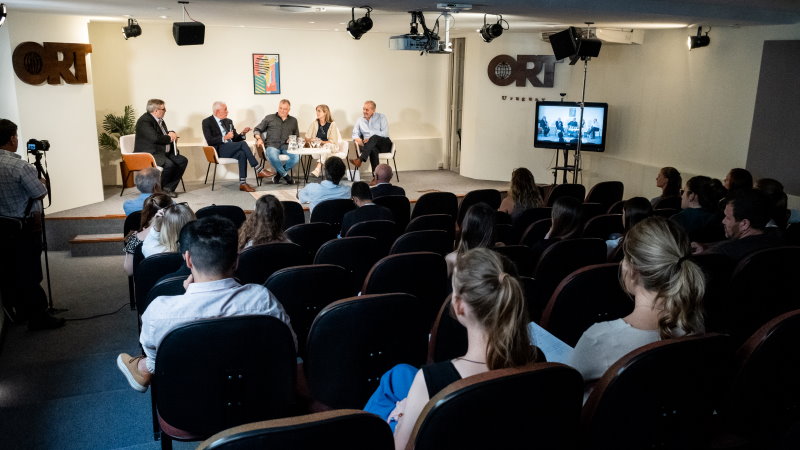
The event brought together various figures and leaders from the worlds of media, culture, and law to discuss the boundaries of Carnival, censorship, and the role of authorities in the organization of this popular festival. Here are some of the key points from the discussion.
Freedom of Expression and the Limits of Carnival
Have the criteria changed? What role do authorities and groups play in the content of the lyrics? Do the authors self-censor? How wild does today’s carnival get?
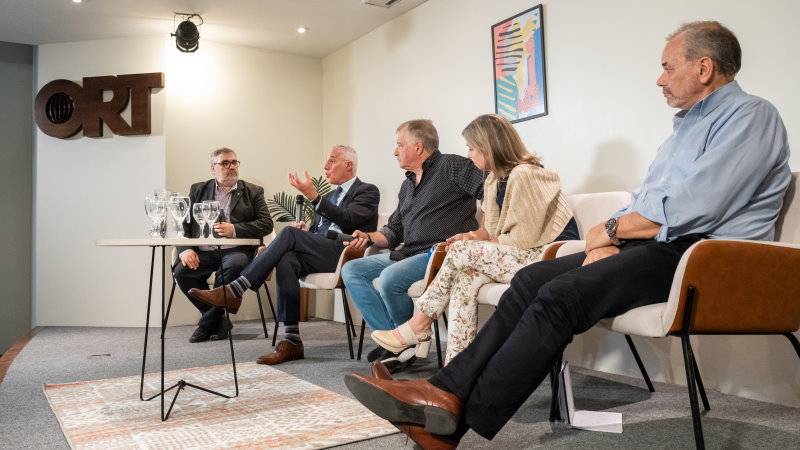
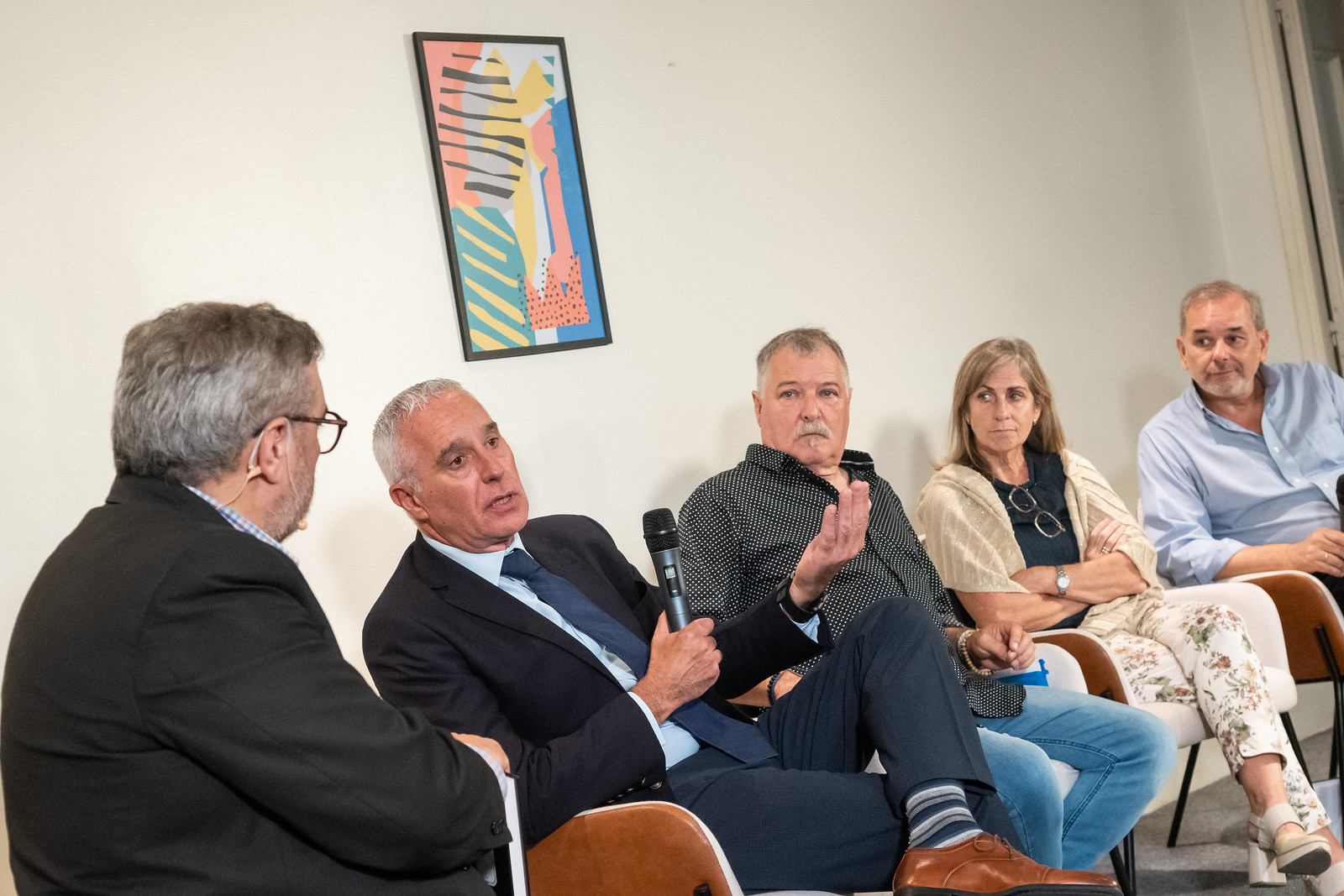
Based on these questions, the panel—composed of lawyer and journalist Marcelo Fernández, a commentator on the program *Pasión de Carnaval* (VTV); Eduardo Rigau, author and carnival lyricist; Carlos Negro, a prosecutor specializing in organized crime; and Virginia Silva, who holds a Master of Science in Journalism from Boston University and serves as academic coordinator of Communication at Universidad ORT Uruguay, exchanged different points of view under the moderation of journalist Jaime Clara.
To begin with, the meeting started with a brief overview of the origins of Carnival, from its earliest forms to the first manifestations of Carnival as we know it today, in the Middle Ages, when satire, humor, and freedom gave rise to all manner of licentiousness, accompanied by carnal pleasures.
The vague regulatory boundaries of this context were further blurred by the anonymity afforded by the costumes, and both the judiciary and the Church—which by then were inseparable—not only raised no objections but were also part of the festivities and enjoyed the same legal leeway. It was a setting where anything went, something unimaginable today.
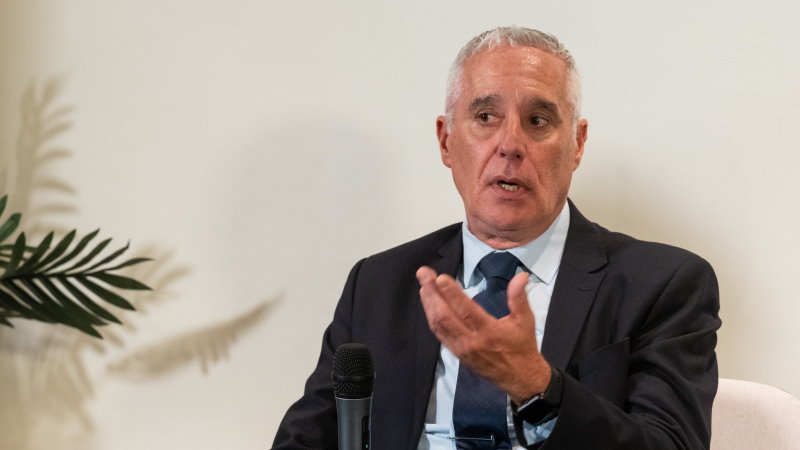
When asked about this, Prosecutor Negro pointed out that while such a legal framework would be simply impossible to transpose to the contemporary world and the laws of the 21st century, the specific case of Uruguay reflects “a very broad legal and constitutional framework (...) regarding the scope of freedom of expression.” In this regard, he added:
Freedom of expression is the only right that the Constitution explicitly states is entirely unrestricted (...). This constitutes—from both a legal and a symbolic standpoint—a very powerful characterization of freedom of expression that will later shape the legal framework governing freedom of expression and its limits.
Has Carnival changed?
In this regard, Eduardo Rigau—who has than 40 years of experience in the creative world of Carnival—placed special emphasis on the transformation of Carnival’s poetic tradition and on how this not only accompanied the sociopolitical and cultural changes that, in tandem, have been unfolding over the past few decades within the structures of Uruguayan identity, but also defined it as a natural outcome of these changes. In this regard, Rigau noted:
(...) Carnival changed because life changed—because modernism, industrialization, and technology changed; everything changed. We—human beings, society—have changed.
Rigau also pointed out that certain styles of writing and humor during Carnival still rely, even today, on more rudimentary and outdated methods of making people laugh. And these styles persist precisely because they still find an active audience in contemporary society, although, fortunately, they are in the minority.
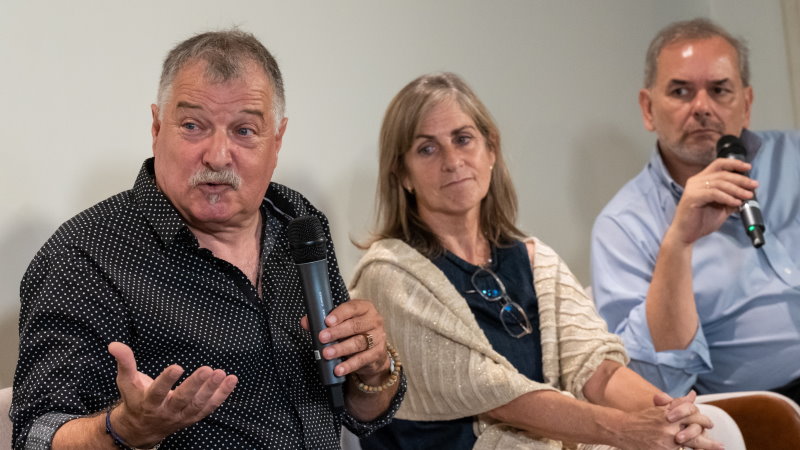
“There are still comedians who write while teetering on the edge of the precipice—a style of humor that still has its audience during Carnival (...), with elements bordering on the crude, risqué double entendres, and things that border on the tacky. But it’s also important to understand that people really enjoyed this kind of humor in the ’80s and ’90s (...) “It’s difficult to talk about the humor of the past and the humor of today,”Rigau also noted.
Similarly, Rigau acknowledged this evolution in his own writing and creative abilities, noting that when he looks back at his work from that time, he finds no connection whatsoever with his current conception of humor.
Regarding anachronisms and changes throughout the contemporary history of Carnival, journalist Marcelo Fernández revisited the central concept: “We are all products of our context. It is not Carnival that has changed; it is society that has changed.”
Controversies at Carnival: The Cases of Larrañaga and Laura Raffo
In this context, and after discussing topics such as censorship, so-called“political correctness,”and discrimination on stage, two recent and controversial incidents at the carnival were brought up: those involving former Senator Jorge Larrañaga and economist Laura Raffo.
In this regard, the panel agreed that both incidents were outbursts that strayed from the usual course of the various forms humor typically takes during Carnival and that, beyond being isolated and atypical occurrences that do not characterize this popular festival, they raise the question of where the true boundaries lie.
However, Negro pointed out that, in Raffo’s case, there is “clearly a defamatory statement, and what the murgista does is insult the person. It is a case involving actual malice, and if it had been taken to court—at Raffo’s request—the courts would have had to act,” which did not happen because the economist decided not to file a complaint.
https://www.youtube.com/watch?v=0nB3eLrWDyc