Heritage Day is an annual celebration that highlights the importance of preserving a country’s architectural and cultural heritage. In Uruguay, this holiday has become a flagship event that allows society to connect with its history, traditions, and values.
Heritage Day 2023 in Uruguay
As noted by Architect Gastón Boero, this celebration plays a fundamental role in preserving a community’ s identity and cultural cohesion. Through the preservation of architectural and urban heritage, collective memory is sustained and the Uruguayan society’s sense of belonging is strengthened.
https://www.youtube.com/watch?v=hkOfFesAf2I
In addition, Heritage Day offers valuable lessons from the past that can be applied to the present and the future, thereby promoting more sustainable development that benefits the community.
Furthermore, the festival not only allows us to connect with our past and understand our cultural identity, but also promotes the preservation of our heritage for future generations.
As architect Gastón Boero notes, this event is essential to prevent the loss of our history and traditions in a world where current trends sometimes lead to a dangerous devaluation of the past.
- You might also be interested in reading: “Heritage Day 2023: A Tribute to the Builders of Schools and High Schools”
Architect Gastón Boero's perspective on architectural heritage
In a conversation with architect Gastón Boero, dean of the School of Architecture at Universidad ORT Uruguay, we explored his perspective on the importance of Heritage Day and the significance of figures such as Alfredo Jones Brown in Uruguayan architecture.

Why is it important to celebrate Heritage Day, as our country has been doing for decades?
“Preserving and valuing a community’s architectural and urban heritage is essential for a variety of reasons. Of these many reasons, I would highlight three: it preserves cultural identity and cohesion, it preserves the best lessons of the past, and it promotes the local economy and tourism,” said Boero, who goes on to describe each reason in detail:
Preserves cultural identity and cohesion
A community’s architectural and urban heritage reflects its history, traditions, and cultural values, and is therefore an integral part of its identity. For a society, understanding its history allows it to connect with its roots, comprehend its traditions and values, and strengthen its sense of belonging. Preserving heritage is a way of preserving collective memory, as Viollet-le-Duc once said.
This fosters cultural cohesion and unity among its members, which in turn can promote greater cooperation and solidarity among everyone. In this context, distinctive buildings and iconic public spaces serve as tangible reminders of that cultural heritage, allowing current generations to connect with their past and understand their cultural identity.
In this regard, the architect and art historian Charles Jencks argued that buildings and urban spaces tell stories about society and its evolution over time.
By learning about and appreciating these elements, communities can better understand their own history and their place in the world, forging an emotional connection with the built environment that surrounds them and supports them as they go about their daily lives.
- You might also be interested in reading: “Great works that shaped the history of Uruguayan architecture”
Preserve the best lessons from the past
Furthermore, studying the history of a community—whether cultural, economic, political, architectural, or urban— offers valuable lessons about the mistakes and successes of the past.
These lessons can be applied to make more informed decisions in the present and the future; specifically, in the fields of architecture and urban planning, they enable us to build a better city, one that is suited to our needs and challenges.
Understanding our history helps us avoid repeating the mistakes our ancestors made and build on their achievements to foster more sustainable and beneficial development.
History provides a long-term perspective that is essential for community planning and development. Understanding how infrastructure, institutions, and social dynamics have evolved provides a foundation for developing strategies for the future. Furthermore, preserving historic buildings and sites can attract tourism and contribute to the local economy.
Promotes the local economy and tourism
There is also an economic aspect to preserving our built heritage. Well-preserved architectural and urban heritage often attracts visitors, generating income for the community through tourism and related activities such as restaurants, souvenir shops, and tourist services.
In addition, heritage preservation helps sustain traditional trades and professional specializations, creating jobs related to the restoration and maintenance of these buildings, which contributes to local economic development.
Finally, I would like to highlight this celebration of our heritage and the preservation of our architectural and urban history, along with its traditions and cultural values. I believe this is of the utmost importance at a time like the present, when our culture and way of thinking are becoming susceptible to trends that seek to diminish the importance of valuing our history and our past, with all their values, traditions, and culture.
What school of thought are you referring to?
“I’m referring to a school of thought that, in addition to erasing the past, emphasizes emotionalism in a somewhat exaggerated way, whereby good and evil are defined based on how one feels in a given context—almost instantaneously—and without any critical analysis or reflection on that emotion.”
This requires more effort and time. An emotionalism that becomes an epistemological, moral, and political criterion; as if our moral assertions were based solely on emotions.
A school of thought in which, viewed from a more spiritual perspective, the victim takes on a new role. Stripped of the historical context of our tradition, the victim now becomes a sort of deity with the power to censor any discourse that does not align with their way of thinking.
"A school of thought that, although still in its infancy in our country, calls on all of us who value our history, our traditions, and our cultural values—as expressed through various means, and in this context, through our architectural and urban heritage— to remain vigilant."
- You might also be interested in: “Exhibition of Digital Works: Exploring the Limits of Creativity, with Architect Gastón Boero”
The Role of Alfredo Jones Brown in Uruguayan Architecture
Alfredo Jones Brown, born in Montevideo in 1876 and died in 1950, was a renowned Uruguayan architect. His legacy, particularly in the field of school architecture, remains relevant today.
His most iconic work, the Alfredo Vásquez Acevedo Institute (IAVA), which opened in 1911 and was designated a National Historic Landmark in 1976, reflects the influence of European architectural movements such as the Vienna Secession and Art Nouveau.
Jones Brown successfully adapted these trends to the reality of Montevideo, creating a classic yet functional design for the IAVA.
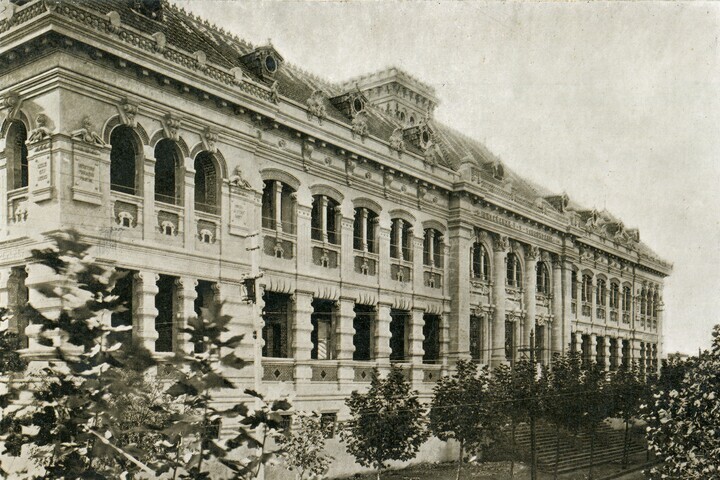
His approach to architecture, characterized by meticulous attention to both functional and ornamental aspects, continues to be a source of inspiration for contemporary architects.
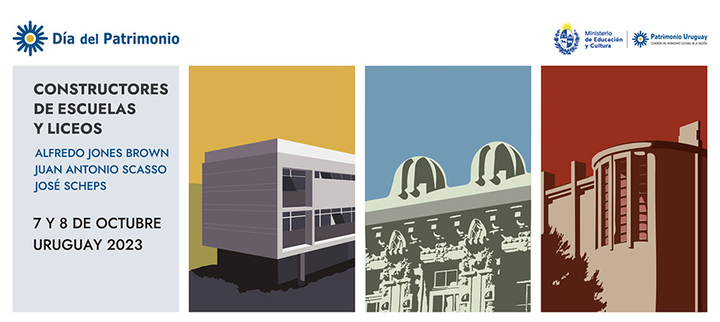
This is evidenced by the fact that today, along with Juan Antonio Scasso and José Scheps, Jones Brown is one of the three Uruguayan architects being honored on Heritage Day.
What impact has Alfredo Jones Brown had on architecture in Uruguay?
Alfredo Jones Brown was extremely active as an architect. He was a university professor and an active participant in the professional associations of his field. He served as Director of Architecture at the Ministry of Public Works and authored the Regulations for the Construction of School Buildings.
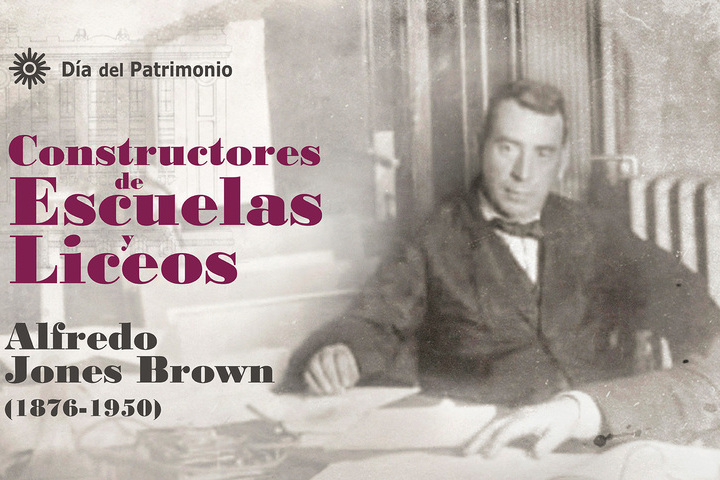
In addition, he designed several major educational facilities. In this regard, Jones Brown’s legacy is particularly notable in Uruguayan school architecture. The IAVA, with its classical composition and meticulous attention to functional aspects, serves as a prime example of his architectural approach. But what impact did Alfredo Jones Brown have on Uruguayan architecture? On this point, Boero noted:
He left us a legacy of exemplary works that form part of our country’s architectural heritage, particularly in the field of school architecture, such as the IAVA, the Enriqueta Compte y Riqué Kindergarten, the Alemania School, the Chile School, and the Gran Bretaña School.
Lorenzo Piria’s House —the oldest building in the coastal area of Piriápolis—theSanta Rosa de Lima Chapel in Soriano, and the Rex Building are also part of his architectural oeuvre. Regarding the latter, Boero remarked:
Beyond school architecture, the Rex Building, located at the corner of 18 de Julio and Río Negro, is particularly noteworthy; with its observation tower, it forms one of the two endpoints of the axis created by Avenida Del Libertador.
“Among his school buildings, the IAVA—which opened in 1911 and was designated a National Historic Landmark in 1976—deserves special mention, as it embodies the characteristics that distinguish what is perhaps Jones’s finest work,” he added.
View this post on Instagram
“Being part of something bigger”
Finally, architect Gastón Boero shared a final perspectiveon the importance of Heritage Day and Uruguayan architecture: “Celebrating Heritage Day is an act of love for our history, our traditions, and our cultural values. By preserving our architectural and urban heritage, we are ensuring that future generations understand and appreciate the roots of our society. We must be guardians of our architectural legacy, honoring figures like Alfredo Jones Brown, whose impact lives on in every structure he designed.”
Finally, Boero reflected:
In a rapidly changing world, Heritage Day gives us the opportunity to pause, reflect, and appreciate the beauty and history that surround us. It serves as a reminder that we are part of something greater—an unbroken chain of traditions and knowledge that we must protect and pass on to future generations.