Sofía Spektor and Rafael Paganini, graduates of the Bachelor of Economics program at Universidad ORT Uruguay, are embarking on a new phase of their education: a Master’s in Education at Harvard University and a PhD in Economics at the University of Wisconsin–Madison (United States).
Their stories reflect the variety of career paths the program can open up, the quality of the education they received, and the value of faculty guidance in graduate programs abroad.
Whether through research or the design of educational policies, both share the conviction that economics can be a means of transforming reality. And their time at ORT was the first step on that path, which today takes them, quite literally, from the classroom to the world.
Two paths, one shared passion for understanding and transforming reality
Sofía Spektor 's interest in education stemmed from the same motivation that led her to study economics: the need to understand social problems and seek concrete solutions.
Over time, her coursework and work experiences led her to recognize education as a powerful tool for improving people’s quality of life.
I've always been socially conscious. I wanted to understand why poverty exists, what lies behind the stories I heard on the news, and how I could help bring about change.
Sofía Spektor, B.A.
“Education isn’t the only thing, but it’s essential for people to get ahead. I find it very inspiring to think about how to make it more equitable,” he says.
For his part, Rafael Paganini pursued an academic career, driven by his interest in research.
After working as a research assistant at CINVE and completing a master’s degree in Argentina, he decided he wanted to pursue a doctorate.
My main reason for studying economics is that I enjoy learning about the field, and pursuing a career in research is a great way to turn that into a job.
Rafael Paganini, B.A.
Harvard and Wisconsin-Madison: Learning at the Frontier of Knowledge
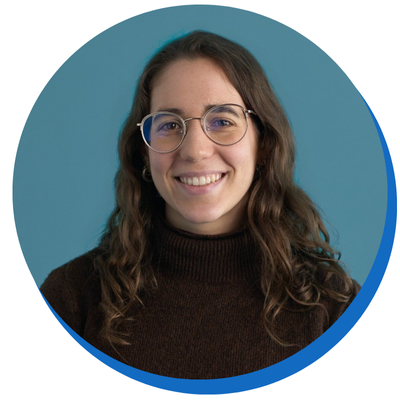 For Spektor, choosing Harvard University wasn't just a matter of prestige, but also of focus. Her program, Education Policy and Analysis, combines a solid quantitative foundation with an applied approach.
“It was the one that best suited me in every way. It takes an analytical approach to impact assessment, to understanding which policies work and why. Plus, Harvard offers the opportunity to take courses at other schools, such as the Kennedy School or the Business School, and even at MIT, which makes the experience much more well-rounded,” he notes.
She also appreciates the diverse and global academic environment. “There are many international professors from Latin America and the Caribbean who study educational issues in developing countries. That allows me to apply what I learn to my own reality, not just to that of the United States.”
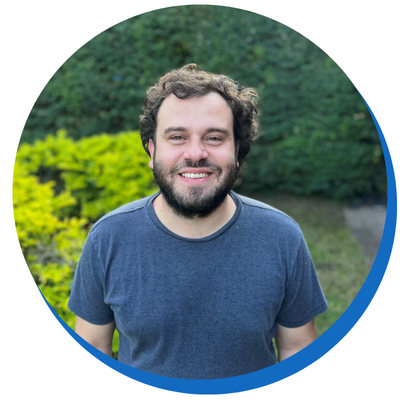 In the case of Paganini, the University of Wisconsin–Madison stood out for its strength in labor economics and econometrics, the areas in which you wish to develop.
“The department has an excellent overall reputation and offers the opportunity to work with top-notch researchers. In addition, the collaborative atmosphere among students was something that everyone who studied there highlighted.”
For him, pursuing a doctorate at a university of this caliber means “learning from those at the forefront of research, as well as alongside those who will take their place there in the future.”
ORT's Legacy: Training, Support, and Open Doors
Both Spektor and Paganini emphasize the key role that their time in ORT’s Bachelor’s program in Economics played in their academic and professional development.
In Spektor's case, the support provided by the teachers is particularly noteworthy.
“I always felt very supported, especially when I was unsure about my career or professional path. My professors were very open to guiding me, giving me advice, and even helping me find jobs. I got some of those jobs thanks to their recommendations,” she recalls.
He also values the ongoing updates to the curriculum. “I was part of the last cohort of the previous program, but they were already incorporating programming courses and the use of tools like R.” As he put it, that “was key,” since it allowed him to enter the job market with skills that other professionals his age didn’t have.
Paganini agrees that his training at ORT gave him “a broad overview of the various fields within the discipline and a clear idea of the topics he wanted to explore in greater depth.”
He also highlights the value of the network of alumni and faculty: “I’m good friends with Emanuel Schertz, who is currently pursuing a Ph.D. at Harvard. Talking to him about his experience had a big influence on my decision. I also received valuable advice from professors such as Néstor Gandelman, Flavia Roldán, and Francisco Rosas.”
Are you interested in economics?
Bachelor's Degree in Economics
Tips for those who dream of studying abroad
Both graduates agree that the process of applying to universities abroad can be challenging, but deeply rewarding.
-
Don't be afraid to ask for help
Spektor notes that “the process involves a lot of red tape, but also a lot of self-reflection.”
“You have to think about what you want and communicate it clearly. It’s essential to talk to others who’ve been through the same thing. In my experience, everyone I reached out to was very supportive and helped me more than I ever imagined,” she says.
-
Take the time needed to prepare the applications
“Sometimes we want to rush through it, but it’s a long process. Starting early gives you more scholarship options and makes the whole experience more enjoyable,” says Spektor.
-
Get involved in the world of research as soon as possible
Paganini notes that working as a research assistant “is the best way to confirm that you enjoy it and, moreover, to obtain letters of recommendation.”
“It also helps you connect with people who can give you good advice. My experience pursuing a master’s degree before starting my Ph.D. was very positive, and I highly recommend it: it builds your confidence and strengthens your application,” she explains.
-
Don't delay
For those who are weighing their options, he has an encouraging message: “I’m starting my PhD at age 31. I’m very happy with how everything turned out, but if I could, I would have done it sooner. It’s not too late, but it’s worth taking the plunge as soon as possible.”