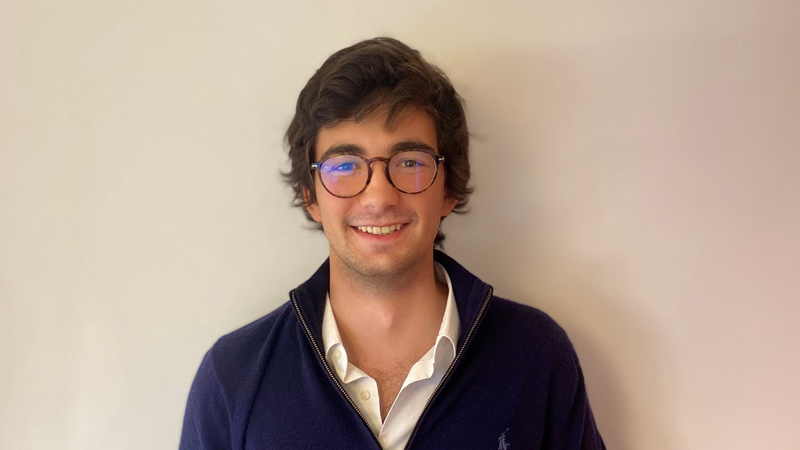
What motivated you to choose Harvard for your studies?
I wanted something different—something that would challenge me academically. I considered going on an exchange program to Europe, but I wasn’t sold on the idea of living there, so I started looking for exchange programs at universities in the United States and found this opportunity, which immediately caught my interest.
I was always certain that at some point in my life I would study in the United States. When I was 16, I took a two-week programming course at MIT, which convinced me even more to study there—specifically in Boston—since I loved the city and the universities.
I was also very motivated by the chance to study at a university that’s at the forefront of artificial intelligence, machine learning, and data science.
What procedures or steps did you have to go through to get in?
The admission process for the exchange program is quite different from the admission process for Harvard’s degree programs. Fortunately, the only things they asked for were an English proficiency test (the TOEFL), documentation of my academic record (transcripts from college and high school), my resume, letters of recommendation from two professors who knew me, and an authorization form signed by the dean. You can also submit additional materials, such as other letters of recommendation, publications, or recognized work. Once I received my acceptance, I had to find an apartment in Boston and apply for a student visa.
How do you feel your college experience prepared you to study at one of the most prestigious universities?
I feel like it prepared me really well. I went in thinking the classes would be like in the movies—with blackboards full of equations that only one or two people in the class understand—but luckily I was able to handle the four courses I took pretty well, since I had a very solid foundation from here. The professors are also very approachable and willing to answer all questions, no matter how simple or complicated they may be.
It’s worth noting that the U.S. system for undergraduate degrees is very different, because for the first two years you take general courses and maybe a few specific ones, and then you focus on your major in the last two years. I think that coming with a foundation of four years of specific coursework really helped me do well in the classes I chose to take.
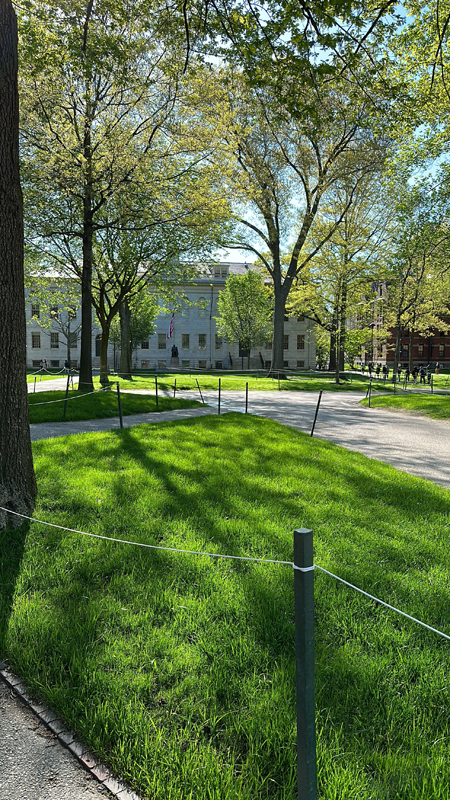 How has Harvard influenced your personal and academic growth so far?
I think that beyond Harvard itself, the exchange experience had a profound impact on me; it was my first taste of living on my own in a big city like Boston.
Harvard, in particular, had a significant impact on my academic growth because I was able to take courses and explore topics that are truly at the cutting edge. You go from studying from textbooks to having the author of the book teach you.
Did you get involved in extracurricular activities and community life at Harvard?
Yes. There are thousands of student clubs, with something for everyone. Each one has its own interview process before you’re accepted into the club; some are easier to join, while others are quite selective when it comes to accepting members. Personally, I got involved in the Data Analytics club, where real clients provide data to the club so they can develop data science and data analytics solutions.
How do you think your experience at Harvard influenced your future goals?
I think my experience will be a big help, because Harvard does a great job of teaching you how to navigate a very complex system like the university. From signing up for classes to meeting with academic advisors, you have to coordinate everything yourself, figure out who to talk to, and go from person to person until you find the one who can resolve your question or problem (though there’s always a support system available). That gives you independence and confidence when it comes to tackling new goals. Another very valuable thing I’m taking away are the connections; I made friends from all over the world and built relationships with professors who are leaders in their fields—people I wouldn’t hesitate to reach out to if I needed help.
What advice would you give to prospective students who want to have an experience similar to yours?
First, do your research thoroughly. Many universities have specific requirements for exchange students (for example, Columbia requires credits in chemistry, physics, and biology). Check whether the university will sponsor your student visa and find out the costs associated with the programs.
Putting together a strong application is key, as are letters of recommendation. It’s best to ask professors who know you and are familiar with your work style.
Finally, I think you should apply with the mindset that the worst that can happen is that they say no, and that’s not a big deal—it helps calm your nerves and anxiety a bit while you wait for a response.