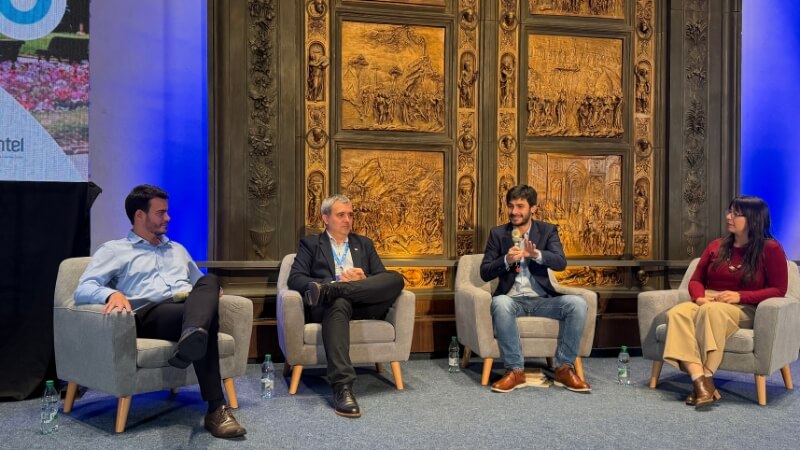
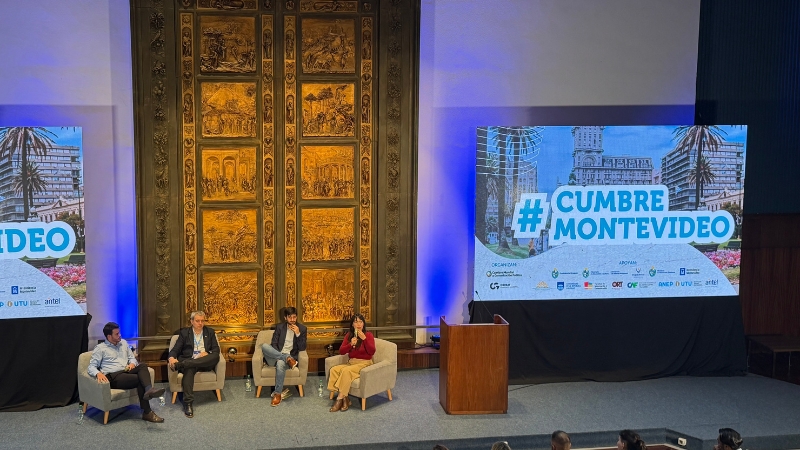
The debate on the impact of artificial intelligence on democracy and the production of knowledge took center stage at the World Summit on Political Communication, which brought together political leaders, consultants, communication specialists, and academics from various countries.
In this context, Esteban Zunino, dean of the School of Communication, served on the event’s university panel, a forum designed to reflect on the field’s current challenges, with a focus on academic research, technological innovation, and the strengthening of democratic systems.
The panel from Uruguay also included Carolina Garzónfrom the University of Montevideo and Gerardo Iglesiasfrom the University of the Republic (UdelaR), and was moderated by Leandro Fagúndez, CEO of OGreat Comunicación & Marketing.
University functions as the cornerstone of professional development
In his presentation, Zunino structured his analysis around the basic functions of the university.
When reflecting on how institutions can stay up to date, he explained that university extension programs play a key role in connecting with the international academic community.
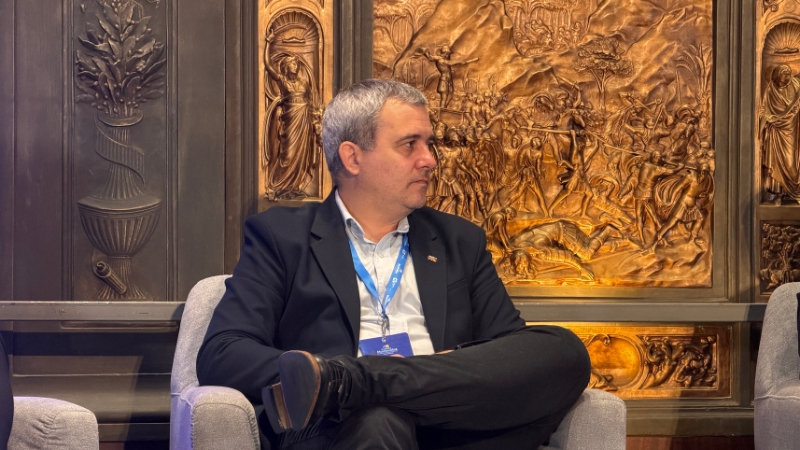
In that regard, he noted: “To stay at the forefront or keep up to date—one of the university’s core functions—we must be part of these forums, which involves meeting with colleagues, staying constantly abreast of developments in our field, and gathering literature; in this way, we fulfill one of the institution’s central functions.”
Research and data to understand society
With regard to the university’s research function, the dean highlighted the development of context-specific studies on media consumption in Uruguay. In this regard, he stated: “Another of the university’s core functions is research. To that end, we have developed programmes that seek to understand these practices, but also to analyze them within their specific context.”
- You might be interested in: Communication Research Center
Among the key findings, he noted: “70% of Uruguayans get their news from online platforms, but only 30% of Uruguayans trust the information they consume on those platforms.”
These figures reflect tensions within the information ecosystem, where high levels of consumption coexist with low levels of trust.
He also cautioned against certain social perceptions surrounding artificial intelligence.
In this regard, he noted that the public harbors both hopes and fears: “Most Uruguayans have certain expectations regarding what artificial intelligence and the digitization of public services can offer.”
However, he also highlighted concerns about its impact: “Most Uruguayans are worried about how it might affect their jobs, and many more— 7 out of 10—are wary of news content generated by artificial intelligence.”
Artificial Intelligence and Democracy
One of the key points of his speech was the impact of artificial intelligence on political communication.
In this context, he warned: “Today, in the field of political communication, we are discussing how the use of artificial intelligence —and especially its misuse—can contribute to the creation of deepfakes, which disrupt the normal functioning of democracy or undermine the health of the democratic system.”
For Zunino, academic research plays a key role in this context: “I believe that systematic research on issues of public and political concern is a contribution that universities must make to bridge the gap between the public and private sectors, but also, ultimately, to safeguard the democratic system and its health or to establish empirical defenses for it.”
In that vein, he emphasized the need for universities to generate data and monitor media diversity as an ongoing responsibility.
Education and Innovation in the Academic Ecosystem
The dean also emphasized the importance of education and academic innovation, particularly through new programmes : “And in that regard, everything we’ve discussed so far must be grounded in the analysis of our own data and that of others, and in innovation through new programmes such as the one we are launching, which is a master’s degree in government and public affairs communication.”
- Learn about theMaster's in Government Communication and Public Affairs
As he explained, this proposal aims to bring together various stakeholders in the field: “It puts forward a proposal that involves key players from the political sphere, the consulting industry, and academia, because I believe it’s important not to be narrow-minded and to foster these connections.”
He thus emphasized the need to foster greater dialogue among sectors that have traditionally been disconnected: “I believe this is a time to build bridges rather than erect barriers, to create spaces for dialogue that bring the educational project together.”
A Critical Look at Artificial Intelligence
He emphasized that universities must prepare students for a professional environment shaped by these technologies: “We cannot deny students the tools that will be essential for their entry into the job market once they graduate, and we must work with them to develop these skills.”
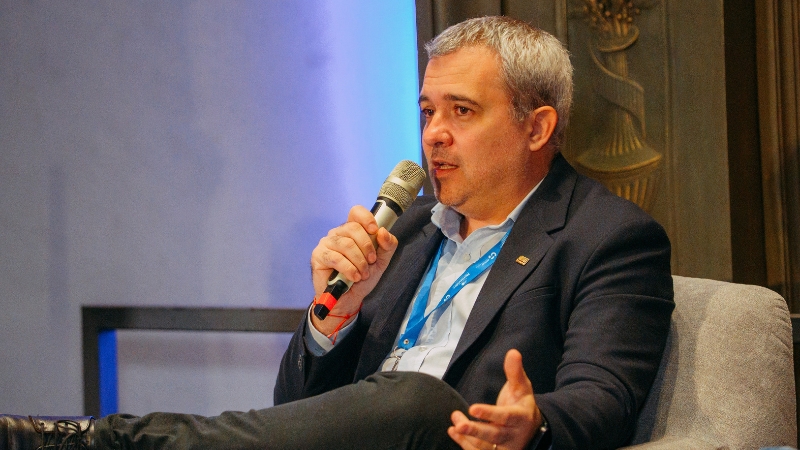
From a historical perspective, he put current fears into perspective by noting: “Every new technology has caused dread, every new technology has caused fear, and every new technology has eventually been adopted.”
Thinking About Technology Without Determinism
Finally, the dean suggested taking a reflective look at contemporary technological processes: “We are certainly in a new landscape, but we do have some analytical frameworks, and what I would suggest here is that we pause for a moment—perhaps give ourselves the time to slow down a bit.”
In closing, he emphasized the importance of analyzing the impact of artificial intelligence from the users’ perspective as well: “So in that sense, let’s take a moment to pause and think.”