 Guigou also teaches geography at Crandon High School and serves as an instructor for the Geography Pedagogy 2 course at the Artigas Teachers' College.
Was the health crisis an opportunity to modernize education? Or are we still facing the same challenges and problems we had before the pandemic?
At the start of the health crisis, I saw the challenges posed by the pandemic as an opportunity to transform education. Today, I see that some teachers and institutions have managed to embrace these changes and make them their own, continuing to build on them, while others have reverted to traditional methods.
In the midst of the pandemic—as Argentine professor and researcher Mariana Maggio put it—countless activities were “thrown around” haphazardly. Many of them were pointless and placed the burden of learning on the students.
We face many challenges, but they are not the same as before. Today, as we return to full in-person learning, we are facing new challenges stemming from the fact that teenagers have not experienced socialization with their peers in the way we were accustomed to. We have students who are emotionally unstable, fearful, and have low self-esteem.
In some cases, the pandemic paved the way for change. In others, efforts were made, but they did not yield good results.
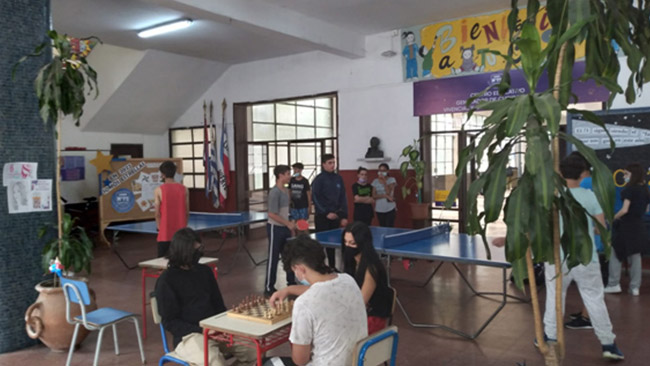
After two years of COVID-19, what lessons have we learned?
A fundamental lesson is that we must not lose sight of our humanity. We cannot continue to look the other way and focus solely on ourselves. It is important to educate for life and, from there, move on to the specific academic disciplines.
We learned how important it is to listen to others—and to be heard ourselves. We also learned that the curriculum is too vast to cover everything and that we need to prioritize, keeping in mind that less is more.
Of everything we’ve implemented and learned, what can we continue to apply in the classroom in the future?
We must convey our passion for teaching. We must inspire students by sparking their curiosity and creating shared experiences in a variety of settings, both in person and online.
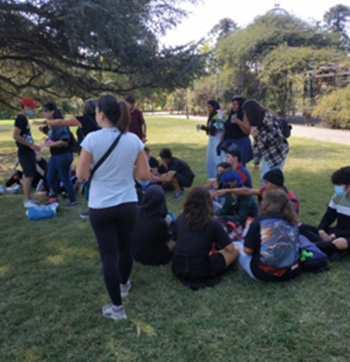
Experience learning through different settings and teaching strategies, using diverse and engaging resources. Focus on skills and competencies to foster meaningful, deep, and active learning.
And what, exactly, should we definitely stop doing in class?
It is essential to stop requiring students to do things that belong to the last century and no longer make sense today.
Thinking about the students who experienced the closure of schools and that emergency remote learning, what distinctive and positive traits do you think they will have in 20 years’ time, compared to other generations?
For the past decade, the high school I lead has been part of the Global Learning Network. And we embarked on this journey alongside Plan Ceibal, with its platforms, online courses, rubrics, and various online tools. From that perspective, I can say that what Ceibal failed to achieve over decades, the pandemic accomplished in less than a month...
At that time, we turned to online platforms to stay in touch and continue our courses. We had no other choice. That upheaval highlighted the importance of working across different classroom settings and using digital tools.
Looking ahead to the next 20 years, I see education embracing new ways of teaching, of learning together, and, most importantly, a renewal in the ways we assess learning.
Are there any areas of knowledge or skills that students have not developed as a result of the pandemic, school closures, and the lack of in-person instruction?
Independence is a skill that must be prioritized. During the pandemic, the isolation of being at home led students to become even more isolated. Rather than becoming independent, they became lonely, unsure of how to cope or act on their own.
Without autonomy, it is very difficult to develop critical thinking, character, and civic responsibility—skills that are essential to their development.
In addition, communication among the young people suffered, since although they were connected via the internet, the fact that they were not together in person meant that essential communication was lost.
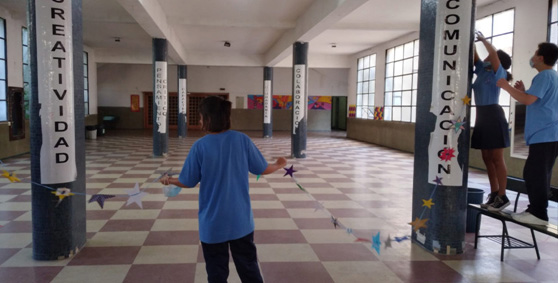
What do you think teachers should focus on today in order to address the consequences of pandemic-era education?
As teachers, we must keep in mind that we can no longer teach the way we did decades ago. Even though this idea has been touted everywhere, we still rely on lecture-based teaching.
We also continue to work in a linear fashion. As a result, students are merely consumers of data and concepts. They are not provided with deep learning, but rather with inert knowledge that is of no practical use to them in life.