In conjunction with the exhibition, Larghero gave a lecture in which he shared his perspectives on design and the work of a graphic designer, the processes behind his outstanding creative work, anecdotes, and some of the secrets behind an original, effective design capable of standing the test of time.
The exhibition was part of the third edition of the "Diseño Dinamiza" series, which, on this occasion, focused specifically on the work of Marcos Larghero, a graphic designer who has been active in the field of visual communication since the 1960s and a former professor of Brand Identity Design at Universidad ORT Uruguay.
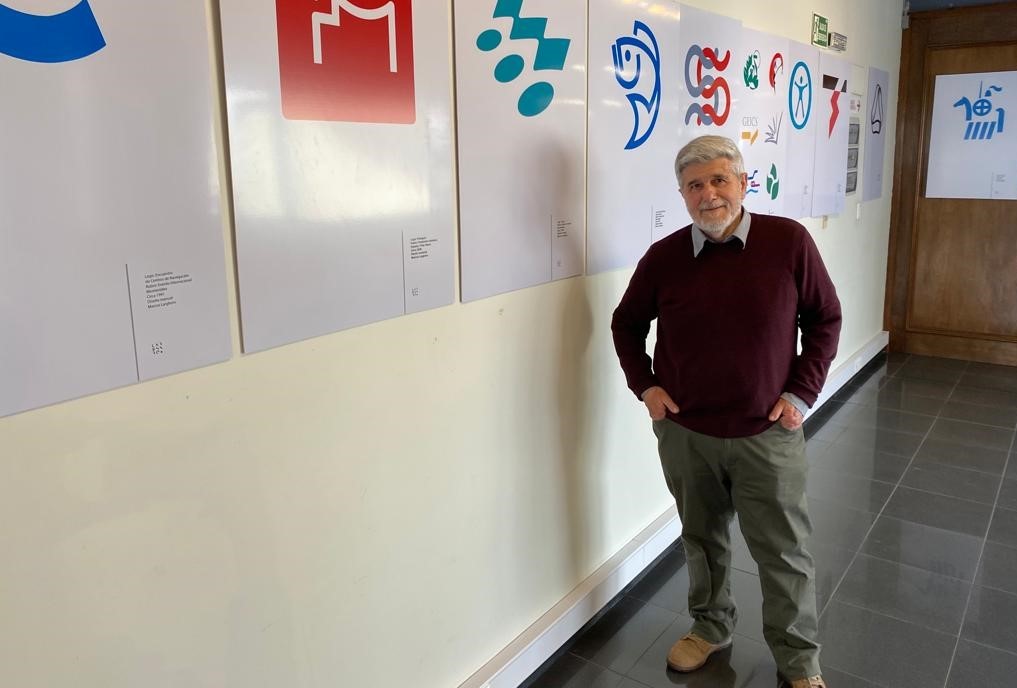
Larghero has played a pivotal role in graphic design associations. He has participated in both group and solo exhibitions and has received numerous awards for his professional work.
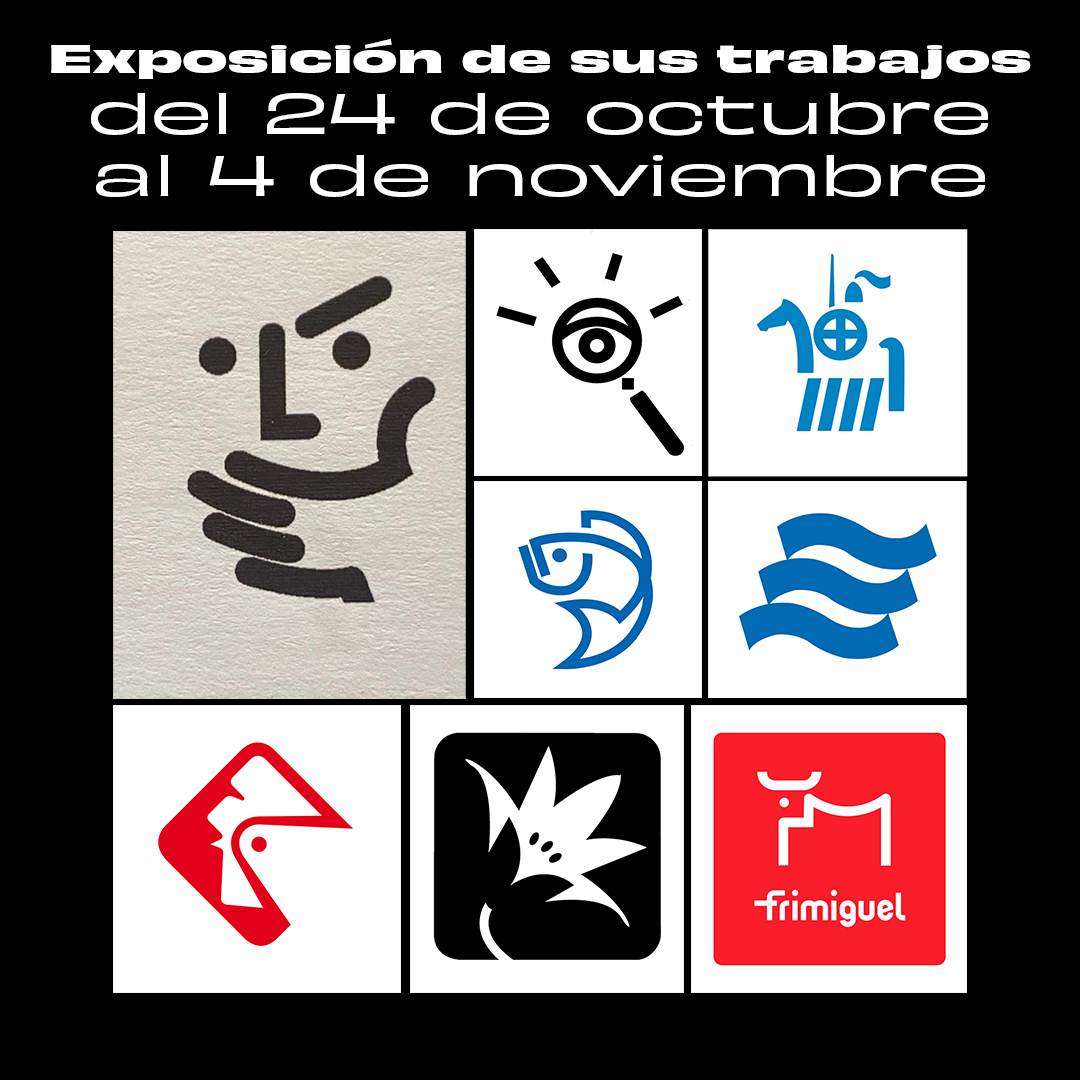
The exhibition in Larghero offered a journey through more than five decades of work in graphic design, primarily logos (corporate identity) for some of the most prominent and influential companies, not only locally but also internationally.
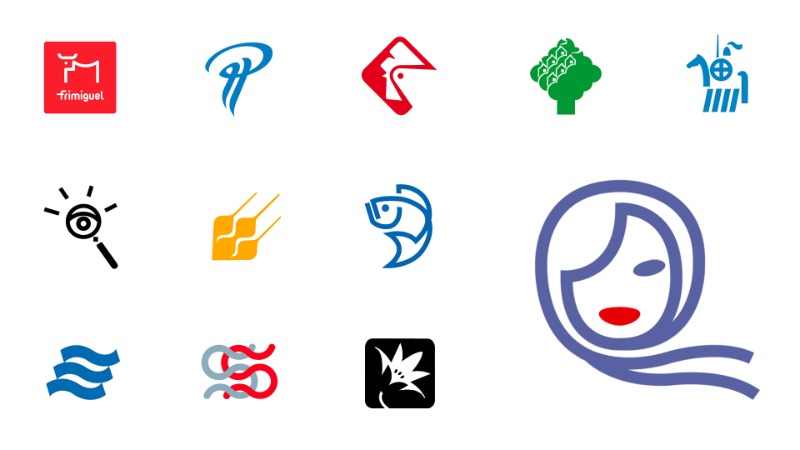
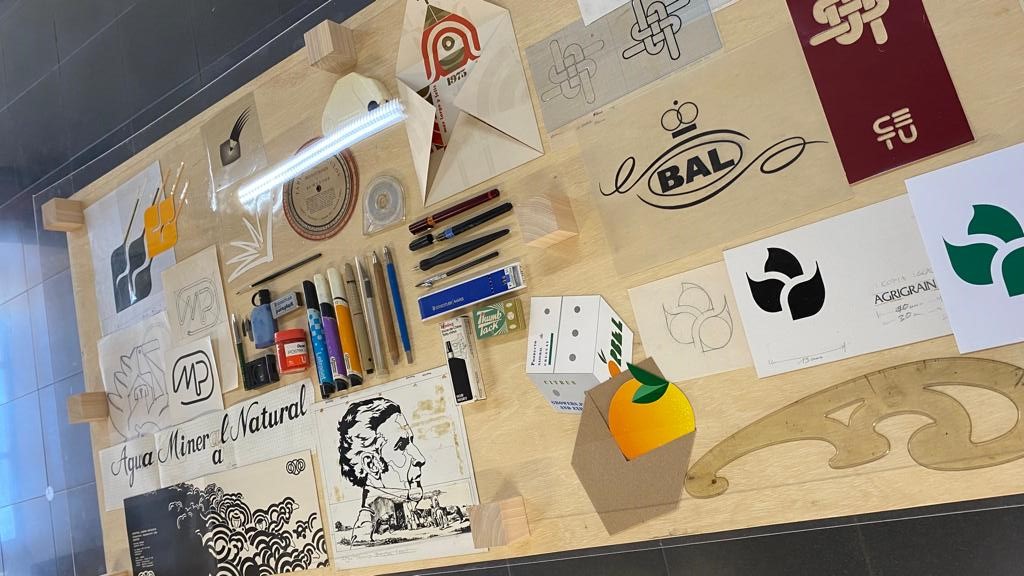
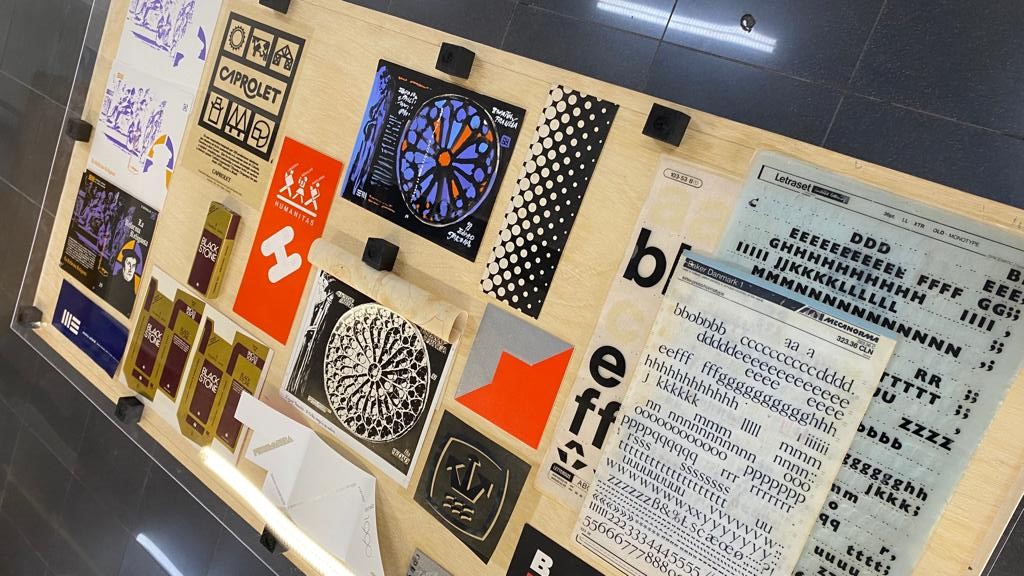
The exhibition featured more than 15 large-scale logos, dozens of prints with various designs, work tools, and two televisions displaying a rotating slideshow of other creative works by Larghero.
The significance of this exhibition, which featured the presence and participation ofGustavo “Maca” Wojciechowski, one of the most prominent contemporary Uruguayan artists and a former professor of various design courses at Universidad ORT Uruguay, lay in the fact that Larghero’s work has always been characterized by his professionalism, reaching a top-tier level both in terms of conceptualization— identifying what needs to be communicated and how—and in terms of formal character—the visual result of the work— with a degree of synthesis that allows his work to transcend the boundaries of time and become timeless: many of the logos designed by Larghero are decades old, and yet they remain relevant and are often even considered contemporary.
In this regard, according to Larghero, graphic design “is largely about exploring the concept of time,” and working in design “requires something very specific that is essential: the artist must always maintain a sense of curiosity.”
We have to deal with creativity as it applies to specific requirements. It’s not just about having a creative spark; it’s a combination of reasoning, intuition, and the ability to develop an idea that comes to mind and that you want to bring to life (...) Design takes time and requires a great deal of self-criticism and conviction.
When it comes to the role of the designer, their technical skills, and their tools, Larghero believes that “intuition is what comes after experience.” In this regard, he considers it essential to “take the work seriously, but always leave room for a significant dose of humor. Humor here means connecting one thing that seemingly has nothing to do with another, and that infuses those moments of levity, allowing things to flow.”
In this regard, Larghero added:
These days, people often say that a good designer doesn’t need to know how to draw. I disagree with that: it’s not that they have to be a genius at drawing, but they do need to have certain personal tools that they know how to apply to achieve specific results. On the other hand, there’s another issue, which has to do with time—as we mentioned—and that is that nowadays what works is immediacy, so everything has to be faster and faster, but flexibility in creative work and in all of this is essential.
In this regard, professional training in graphic design is essential for fostering creativity and mastering the tools needed to bring ideas to life and drive innovation.