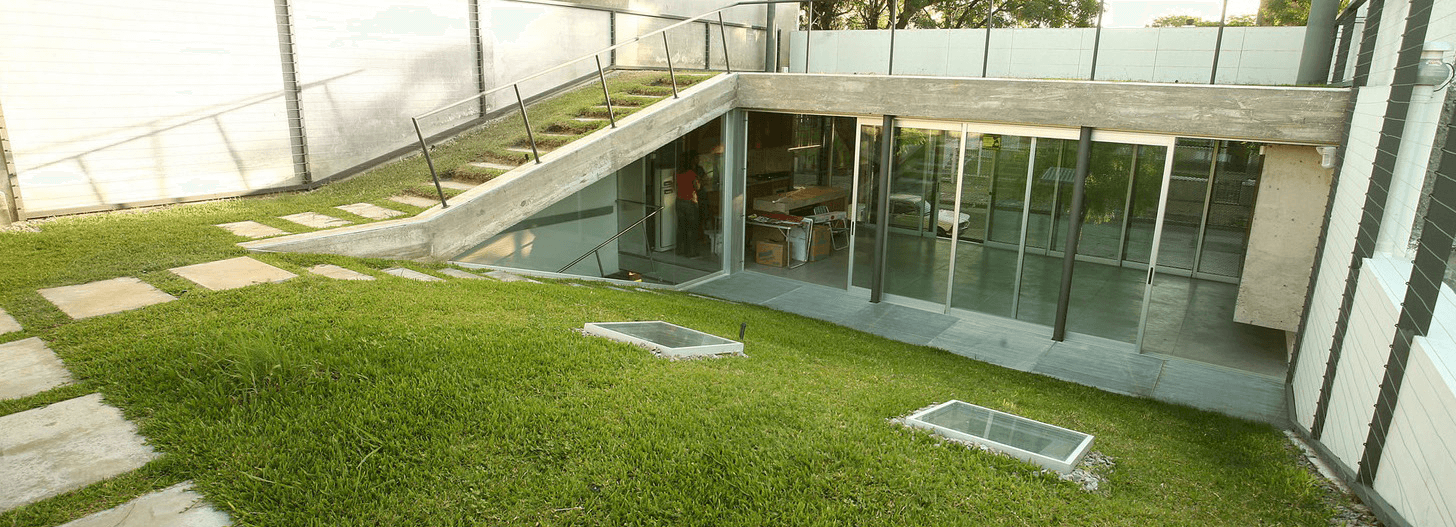
With less than a month to go before the municipal elections, the name Alfredo Ghierra is once again making headlines in Montevideo. The exhibition “Ghierra Intendente” opens on Friday, September 4, at the Espacio de Arte Contemporáneo and will run through November 7.
“I’m from Montevideo by birth and by choice. I studied many of the things I love most, such as film, art, and architecture, but I’d need several lifetimes to do everything that interests me.” This is how Alfredo Ghierra introduces himself; he leads a multidisciplinary team with a cultural—rather than political—vision for the country’s capital. Architects, visual artists, designers, and art directors think, propose, and ask questions, focusing on the periphery, the eco-city, and heritage as their central themes.
His team includes Agustina Bello—a curator specializing in industrial design—and Caro Curbelo—who oversees the website and social media—both of whom are faculty members.
One of the guest artists is Fabián Barros, a professor of multimedia at the School of Design, where he teaches. “Rather than presenting my own work, I thought it would be more interesting to showcase the work of *Contemporary Design Trends*. Last year’s focus was Sustainability—a topic that encompasses urban design, sustainability, and the circular economy—and featured Alfredo Ghierra as a speaker.” The course’s work can be viewed on this blog, the result of multidisciplinary collaboration among students in the Graphic Design, Industrial Design, Multimedia, and Fashion Design programs.
The projects
Preserve, reuse, and develop ideas for a sustainable Montevideo. This is how the four projects from ORT are presented in the Ghierra Intendente catalog.
Four projects will be carried out through a video installation:
- ReCoLab proposes using the web as a means to promote recycling. By Dolores Bonino, Romina Melián, and Mariana Sosa.
- The circular economy proposes shifting from a linear to a circular economy, using the food service sector as an example. By Sabina Correa, Mateo Roldós, and Tatiana Conde.
- "Green Roof " highlights the benefits of sustainable architecture. By Pedro Corso, Ana Saya, and Matías Deangel.
- Arte Vivo proposes the creation of vertical gardens to enhance our heritage. By María Victoria López, Tamara Rajchman, Guadalupe Gutiérrez, and Cecilia Acero.
ReCoLab: Recycle, Innovate, and Protect
Romina Melián, a multimedia design student and member of the team behind ReCoLab, explained that the project aims to create a web platform as a means of promoting recycling by giving away waste materials that can serve as raw materials for other businesses, thereby benefiting the environment.
The idea came about after studying the circular economy, which proposes using non-biodegradable waste as a resource while allowing biodegradable waste to return to nature.
Living Art: Turning Graffiti into Vertical Gardens
It is becoming increasingly common to see public and private properties covered in graffiti. With this issue in mind, this group of students concluded that “repainting wasn’t a solution.” “We felt that leaving the ‘canvas blank’ again could be counterproductive; it would just happen again—they’d just tag it again,” said students María Victoria López and Tamara Rajchman.
And so “Arte vivo” was born—a project that aims to restore spaces defaced by graffiti by installing vertical gardens.
These ecosystems not only beautify the city with their variety of plants and designs, but they also:
- serve as non-invasive barriers against vandalism
- purify the air,
- regulate room temperatures,
- They act as thermal and acoustic insulators.
Arte vivo stems from our interest in environmental stewardship, art, and the idea of proposing a solution that would enhance the beauty of our city.
Green Roof: Sustainable Architecture
This term does not refer to green-colored roofs, but rather to “technologies used on roofs to improve the environment or reduce energy consumption—that is, technologies that serve an ecological purpose.” They are also known as green roofs or landscaped roofs.
The idea is for the roof to be partially or completely covered with vegetation, either in soil or in a suitable growing medium, with a waterproof membrane.
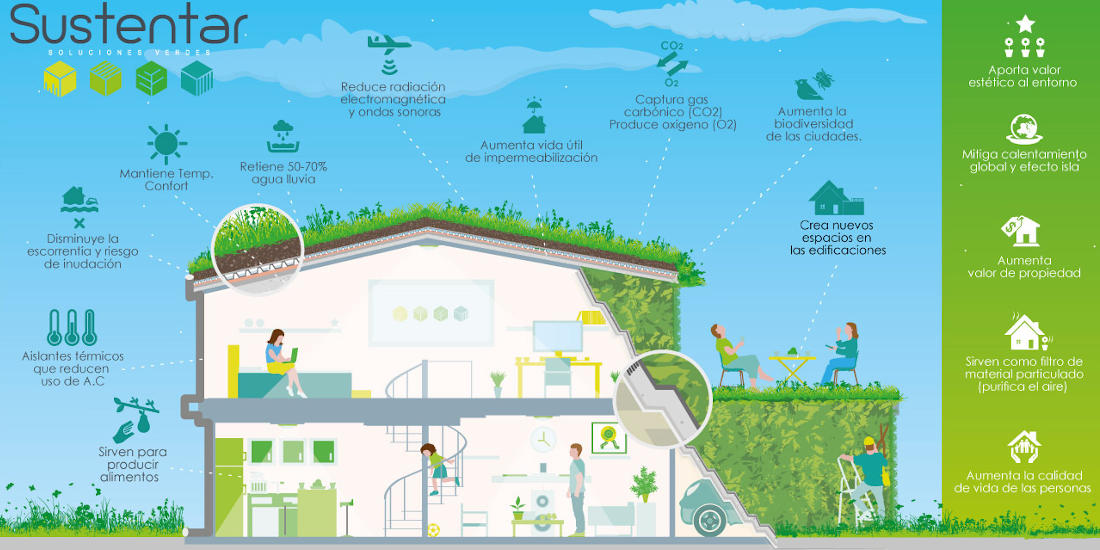
The benefits are varied:
- Better thermal insulation in both winter and summer, resulting in substantial savings on heating and air conditioning.
- Reduce air pollution.
- It creates microclimates and urban biodiversity.
- It reduces runoff caused by rainfall.
- They improve overall air quality by releasing more CO2.
- They provide better sound insulation by increasing the sound-absorbing surfaces on the exterior.
- They address the shortage of fruits and vegetables or reduce the cost of transporting them.
- They provide more attractive views from other buildings.
The proposal was to make Montevideo a greener city. That was our starting point. As we researched the topic, we saw that this was a growing trend within the department, which led us to want to create a campaign to promote this initiative and show those who aren’t familiar with it the benefits and why we believe it would be good to encourage its use.