In the context of the global COVID-19 pandemic and drawing inspiration from experiences in other countries, Daniela Waldeck, who holds a degree in industrial design, called on collaborators to help design and manufacture ventilators. So many people responded that, as she admits, “we can do so much more.”
I believe we need to view this crisis as an opportunity for growth and improvement. As a society, we are showing that we can stand together and work collaboratively despite our differences—a sense of solidarity that is not something you see every day.
In an Instagram post, you reached out to designers, engineers, makers, and anyone else who wanted to get involved. What was the initial idea?
I heard that there were groups in Spain designing ventilators and other products to help with the health crisis. At first, I thought about joining them; I did just that, joining their Telegram groups and offering my expertise in industrial design to help out. But I saw that the project was already well underway, and designers working remotely weren’t much help. That’s when I realized that if I wanted to help, what I had to do was replicate it here. In Uruguay, the situation wasn’t yet as urgent as it was there, but that made it all the more necessary to get started so we’d be prepared if we ever reached that point.
How many people showed up? Did the different perspectives help shape the initial idea?
Fortunately, the word started to spread, with many people sharing and reposting the announcement. More than 700 volunteers and some media outlets reached out to us. Together with the staff at UTEC’s LabA (who also got in touch after seeing the post), we created a form to better organize the data. Through the form, we were able to gather information about the volunteers’ knowledge and skills, as well as the tools they have available and the time they can dedicate to the project.
The different profiles helped us shape the entire project. We began grouping them into work teams:
- Input Data,
- Design and Prototyping,
- Production and Validation,
- Tests and Protocols.
Those four teams are led by UTEC faculty members and by me, who co-lead the Design and Prototyping team.
Within these four main teams, we created subgroups to better organize our activities. We identified several volunteers with extensive experience in team leadership, management, and project management, as well as valuable technical expertise. We reached out to them to ask them to serve as key contacts within each subgroup so they could work directly with us to organize them.
We haven't yet contacted everyone who signed up: we're currently working with about 300 volunteers and plan to bring in more as needed.
What is their current situation, and how do they plan to handle their work—which will likely be remote?
Although the initial announcement stated that the goal was to build ventilators, it is clear that with more than 700 people on hand, much more can be accomplished.
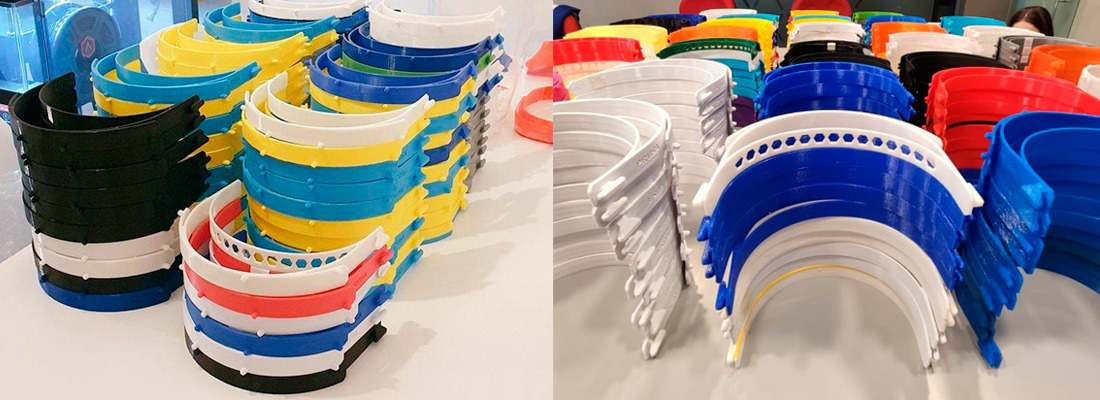
One week and one day into the project, we are organizing logistics to deliver materials to volunteers with 3D printers and collect all the parts that have already been printed (so far, they have been printing with the materials they already had) so we can clean them and transport them to medical assistance centers. At the same time, the design teams are working on improvements and production scalability to scale up manufacturing. There are also teams analyzing materials and costs, while others are collecting data to develop predictive models that will allow us to analyze needs for the coming months, based on current stock levels and the virus’s progression.
Now that all teams are working remotely, we want to keep it that way for the duration of the project so that everyone can adhere to their voluntary quarantines.
What are the specific goals being set?
Our goal is to help the country in any way we can. We have reached out to other groups with similar initiatives in the country to coordinate our efforts and support one another.
It's not a matter of who gets there first, but of doing our best and working together as efficiently as possible.
So far, we have identified several areas of focus, but new ones are being added or adjusted as time goes on. We are currently working on the design of protective equipment for medical personnel, including masks and face shields; modifications to everyday items to reduce the risk of infection; ventilators (based on documented open-source work from other countries); and IoT devices with medium- and long-term goals focused on assisting medical centers, while also preparing for a “return to normalcy.”
What challenges do they face?
The challenge is to set up a “company” with 300 employees on the payroll overnight. There are many issues to resolve and details to iron out. But as a team, we’re getting it done. The urgency of the situation is also forcing highly bureaucratic institutions to operate in new ways, which makes these first few weeks of adjustment the most difficult.
On the other hand, we need to keep the volunteers motivated and committed, since we believe this project will be around for a long time. With that in mind, I’m organizing small virtual workshop-style sessions to use methodologies likedesign thinking, so that all participants can be directly involved in the projects.
Personally, I see this as a great opportunity to give back to society by applying everything I learned during my training at ORT, and, of course, to continue learning. I’m grateful for the connections I made in college; they’ve been crucial to this effort, as colleagues, professors, and students have come together as volunteers and have also been helping me with advice on both design and group management and leadership—which is largely my role in this project. As a designer, having the responsibility to care for society and save lives was what inspired me to launch this initiative, and fortunately, people with the same intention began reaching out to help make it a reality.