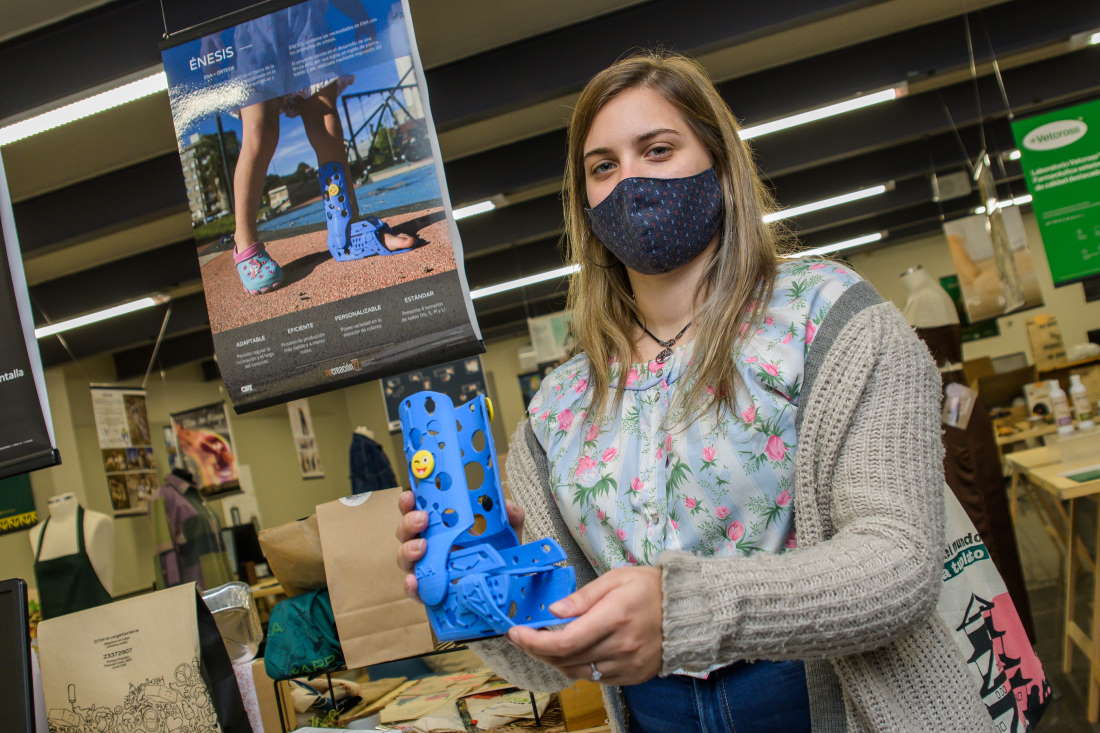
Ever since she began her degree program, Carolina Tió has been interested in working on anything related to ergonomics, specifically in developing products whose functionality “improves quality of life.” That’s how she came to the Integrative Project during her final semester of the Bachelor’s degree in Industrial Design, where she chose to work with ENA, a clinic specializing in the rehabilitation of children and adults with neurological conditions and neurodevelopmental disorders.
His final project involved creating Énesis, a standard 3D-printed leg, ankle, and foot brace.
The development of ENA stems from a specific problem: currently, there are few products designed for neurological use, which makes them difficult to procure. In fact, due to their high cost, they are procured through a bidding process, which can result in delays of up to six months.
It is in this context that Énesis was developed, combining the needs of the ENA clinic with orthotic products (medical devices used to treat injuries or diseases of the musculoskeletal system).
- It is adjustable. You can adjust the angle and length of the assembly.
- It is efficient. The production process is faster and less expensive because it uses 3D printing. Plus, it is waterproof.
- It's customizable. It offers a wide variety of colors and accessories.
- It is a standard design. It comes in four sizes (XS, S, M, and L), with up to seven size options available. It is gentle on the skin, features breathable openings, and is easy for the user to handle.

The biggest challenge was trying to develop a product that would reduce production time and, at the same time, be more cost-effective, while maintaining a standard design so that it could be used by as many users as possible.