This information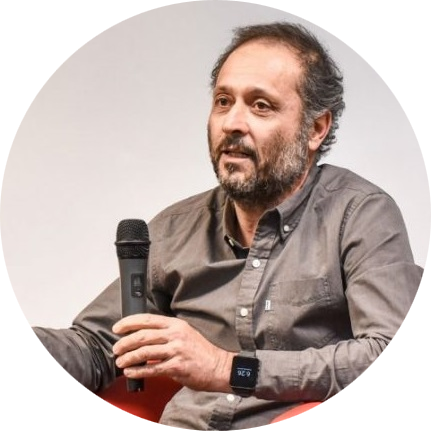 is based on the publication "Updated science-wide author databases of standardized citation metrics", authored by Dr. John Ioannidis, professor of medicine at the Center for Research on Prevention, Epidemiology, and Population Health, Statistics, and Biomedical Data Science at Stanford University, published on October 10, 2022.
Dr. Sergio Yovine, professor and academic coordinator of Artificial Intelligence and Big Data, who specializes in the study of artificial intelligence, ranks 93,281st globally, with 74 articles that have been cited 4,360 times, and ninth in Uruguay.
Meanwhile, Dr. Fernando Paganini, associate dean for research, ranks tenth in Uruguay and 112,166th on the global list, with 125 articles (ten more than in 2019) and 3,352 citations.
The database of the most-cited scientists created by Ioannidis is based on the C-score composite indicator. This indicator focuses on impact (citations) rather than productivity (number of publications) and also incorporates information on co-authorship and author positions (sole author, first author, last author).
The study clarifies that "the calculations were performed using all Scopus author profiles as of September 1, 2022."
Yovine and Paga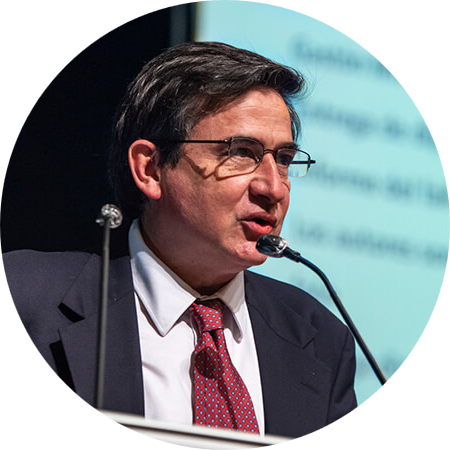 Nini are the only researchers from private universities in Uruguay to appear in the ranking.
Sergio Yovine holds a Ph.D. in Computer Science from the Institut National Polytechnique de Grenoble (France) and a Habilitation à Diriger des Recherches from the Université Joseph Fourier in Grenoble. He also holds a Bachelor’s degree in Computer Science from the Escuela Superior Latinoamericana de Informática at the University of Luján (Argentina).
Universidad ORT Uruguay as a professor and academic coordinator of Artificial Intelligence and Big Data at the Faculty of Engineering at Universidad ORT Uruguay . He is a Grade 5 researcher in the field of Computer Science within the Basic Sciences Development Program (PEDECIBA) at the University of the Republic (Uruguay). He is a Level II researcher in the Natural and Exact Sciences field, subfield of Computer and Information Sciences, within the National System of Researchers (SNI).
Fernando Paganini holds a degree in Electrical Engineering and a Bachelor's degree in Mathematics from the University of the Republic, as well as a Master's degree and a PhD in Electrical Engineering from the California Institute of Technology (United States).
Since 2005, he has been a professor of Telecommunications Theory in the School of Engineering. He serves as associate dean for research, a position whose primary objective is to improve the quality and quantity of the school’s academic output. He is a Level III researcher in the Engineering and Technology area, subarea of Electrical Engineering, Electronic Engineering, and Information Engineering, within the National System of Researchers, and served on its Honorary Commission (2008–2019). He has served on the editorial board of the journals IEEE/ACM Transactions on Networking, IEEE Transactions on Automatic Control, andIEEE Transactions on Network Science and Engineering. He is a member of the National Academies of Sciences and Engineering, as well as the Latin American Academy of Sciences. He served on the Honorary Scientific Advisory Group (GACH) that provided scientific recommendations in the areas of health and data science to the Office of the President regarding COVID-19.