This project was developed by Ignacio Pérez, a student in theBachelor of Multimedia Design program, for Lannister Bookstore, as part ofthe Integrative Project | Recreación19.
When he started Proyecto Integrador, Ignacio Pérez knew he wanted to work with a company that sold comic books. To that end, he did a little market research and found, on Google Maps, “a store called ‘Comics Uruguay’.” It piqued his curiosity: “The location marked on the map was Librería Lannister.”
At first glance, it seemed to me that there was a kind of cognitive dissonance. I looked into their social media, and that’s what led me to confirm my suspicions. Their promotions and informational posts were mainly about comics, but they had a traditional profile using the “Bookstore” brand. It was important that I had studied all this before speaking with the owner, since his response would confirm whether my analysis was correct or not. When I met him, I asked him to tell me a little about their situation, and, just as I had suspected, the problem they were currently facing was exactly what I had anticipated: they had great content but weren’t reaching their audience in the way or with the level of impact they desired.
Pérez summed it up by saying that there was an entire area—especially in the digital realm—where Lannister had a lot of potential but wasn't able to tap into it properly.
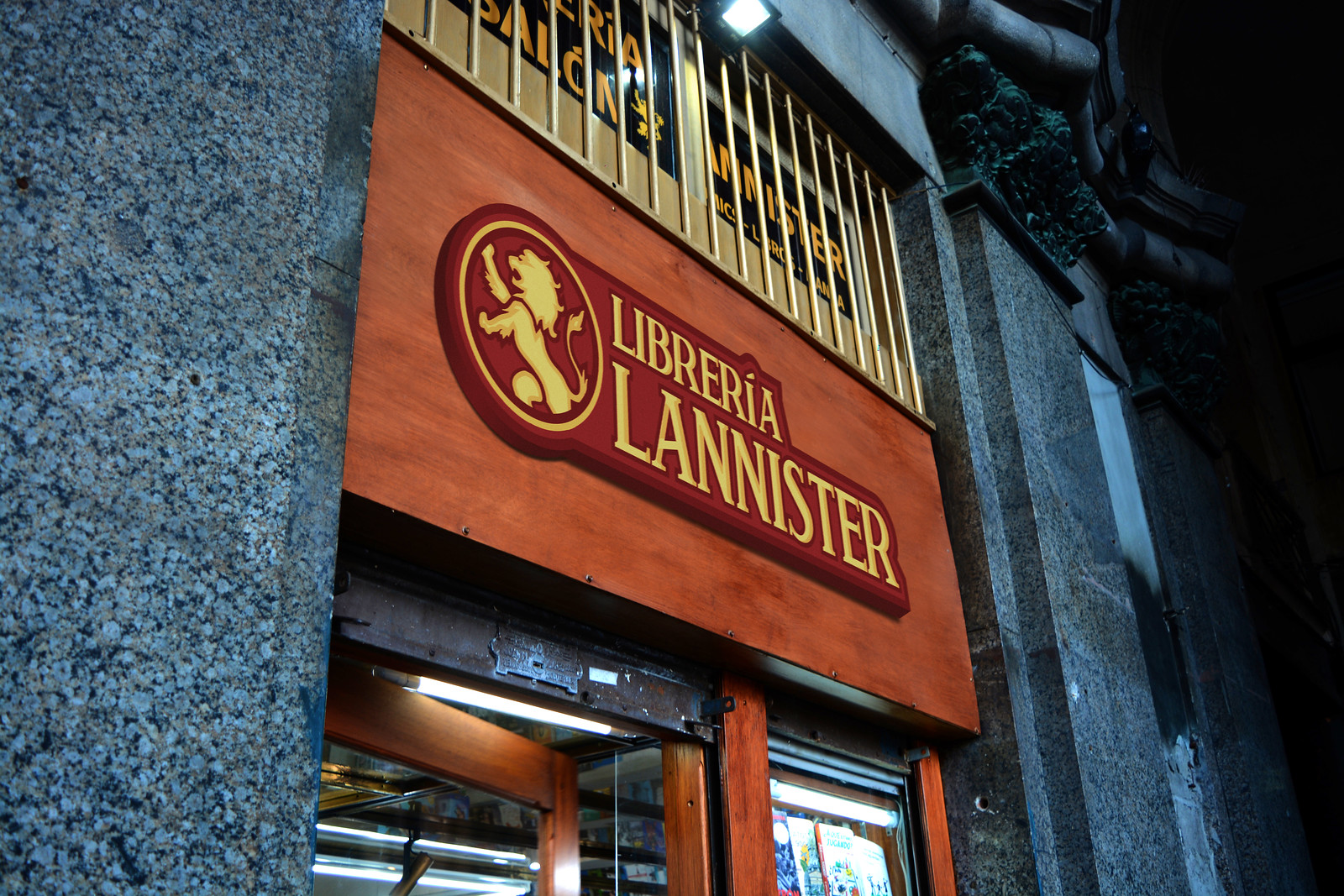
The original proposal was to rebrand the company and establish its identity as Lannister Comics, since its focus was on selling comics and manga. In addition, most of its customers came from the internet.
Despite this approach, it was important to keep in mind that revenue was shared with book sales. “A large portion of the customers who made a purchase at the store were interested in books, not comics or manga. On top of that, the store is located beneath the Palacio Salvo, a place that many tourists visit daily, drawn by the charm of a classic bookstore,” the student explained.
Based on that, Pérez changed his approach and decided to focus on “two sister brands, part of the same company, designed specifically to attract and retain their respective audiences in the most effective way.”
On the one hand, a nearly 100% digital platform for promoting and selling comics. On the other, a physical retail location featuring eye-catching, well-organized, and modern printed materials.
Both designs would be visually linked to its sister brand, “to remind customers that they were dealing with the same company.”
In summary, the presentation included the design of both brand identities: the redesign of Librería Lannister and the new Lannister Comics brand, along with their respective brand guidelines. The proposal included a redesign of the storefront featuring the new brands, the design of glass decals for the bookstore’s second floor, a promotional banner, and a reversible bookmark. For social media, the proposal included profiles, templates for standard posts, a template for swipe-style posts about new releases, a video format for recommendations, and a corporate-style cover video exclusively for Facebook. Finally, a responsive e-commerce website with an admin panel for management operations.
Pérez said that this is a field he enjoys, adding that once he got to know the company—how they worked, what materials they used, and how they maintained them—he became committed to the project almost without realizing it. “It got to the point where, on several occasions, I had to rein myself in because I wanted to take on so much that I wouldn’t have been able to finish anything in time for the university’s deadline,” he admitted. “The bookstore gave me a lot of freedom to create and make changes. We were on the same page about practically everything, and thanks to good planning, the entire process went smoothly, without any problems.”