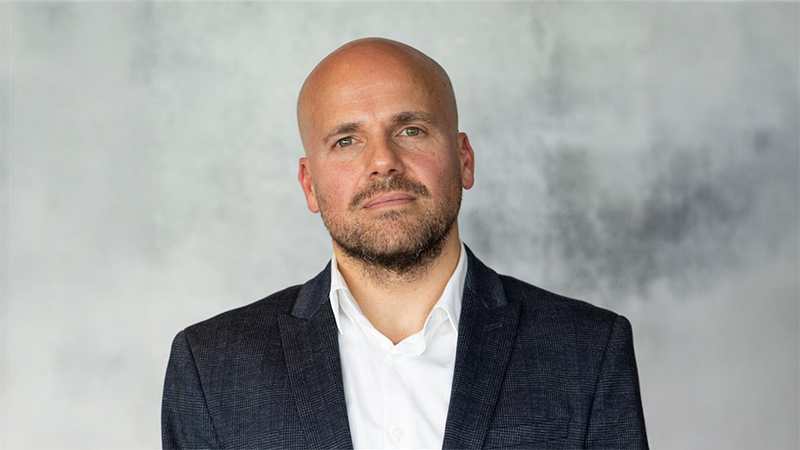
More than an engineer, teacher, or leader, Mangarelli defines himself first and foremost as a father. “I am the father of Lucero, my 14-year-old daughter, and that is what defines me above all else,” he says.
That deeply human perspective shapes his understanding of personal growth, work, and education. Fatherhood, he says, “brings about a dramatic shift in our priorities” and teaches the importance of “leading by example.”
His conversation with Sanz also touches on the driving forces behind his life: curiosity, a passion for working with people, and a constant desire to learn.
“I enjoy putting myself in deliberately uncomfortable situations,”he confesses, convinced that personal growth comes from pushing one’s own limits.
Mangarelli acknowledges that this quest is closely tied to his personality: he considers himself an introvert, so public speaking and giving lectures were a challenge for him for a long time. He decided to face this challenge head-on, “setting” these challenges for himself in order to push his limits.
Along the way, people have been the cornerstone of his success. “I’ve been incredibly, incredibly lucky with the people I’ve met and worked with,” he says, referring to his bosses, colleagues, teachers, and his first business partner.
That first professional experience, which began at Universidad ORT Uruguay itself, had a profound impact on him because it taught him “something as profound as trusting someone in a society.” From that point on, he understood that trust and generosity in teamwork are the foundation of any meaningful project.
Mangarelli explains that human relationships are his main source of inspiration and learning:
“I seek to surround myself with people who challenge me, who question me, who inspire me, and who teach me.”
He believes that every connection leaves a mark and that surrounding oneself with diverse people who bring different perspectives broadens one’s outlook and fosters collective growth. For him, building strong, trust-based relationships is what allows us to go beyond mere results.
Vulnerability is another central theme in his reflections on leadership. Although he considers himself an introvert, he chose to put himself out there in order to grow: “I’m very comfortable with vulnerability and I enjoy it, because it connects us on a different level, through a more human connection.”
His move from a global role at Microsoft to the deanship of ORT in 2019 was a decision guided by purpose and emotion, prompted by a simple question his daughter asked him: “What do you think would make you happiest?” That answer led him to choose the path of education, his true calling.
Today, he reflects on the future of leadership as a process of self-discovery.
“Developing leadership skills starts with understanding our emotions. Self-awareness is a muscle that needs to be exercised every day.”