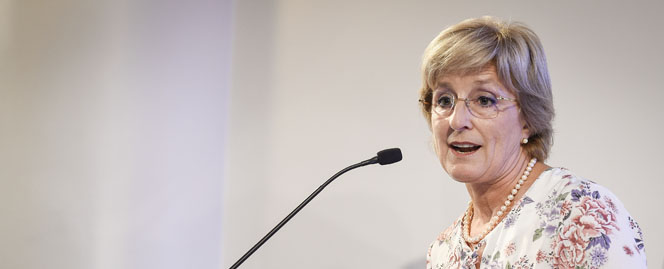
That is one of the conclusions reached by Margarita Romero in her doctoral dissertation Between the mandate for inclusion and reality: the impact of teachers’ social representations on the construction of inclusive cultures.
Romero—who currently serves as director of Educational Planning and Evaluation for the Secondary Education Council—set out to analyze the beliefs and social representations that teachers in the APRENDER program hold regarding their students’ learning potential. She also sought to understand what opportunities the school system offers and how effective it is in educating children with socio-educational challenges.
Isn't that possible?
“The students aren’t going to learn,” say both teachers and principals of schools participating in APRENDER: an educational inclusion program that began in Uruguay in 2011. It serves the most vulnerable children and, as its website states, its purpose is to “ensure students remain in school” and “achieve quality learning.”
Although teachers often believe they can teach them, this view changes over time as they get to know them and gain a deeper understanding of their perspectives. The students’ poor communication, expressive, and reasoning skills are among the reasons teachers cite for believing their students will fail.
They feel helpless and isolated. Teachers believe that external support—both in terms of resources and technical assistance—is “insufficient,” and they lack the tools to address the high level of complexity among their students.
But the reasons they give are always external. According to Romero, he did not find any analysis among the principals and teachers regarding their role and that of the institution in the learning process.
A bleak future
In addition to revealing a negative perception of the learning potential of the most vulnerable children, Romero found that the stakeholders he studied had “little confidence” in the inclusion of the most disadvantaged.
He reached this conclusion after analyzing a sample of 10 APRENDER schools—out of the 271 that existed in 2012—five in Montevideo and five in other parts of the country. He also conducted a literature review, semi-structured and in-depth interviews, and classroom observations.
Although principals and teachers “strongly agree” with the goals set forth by the APRENDER program—and view them as the “goal to strive for”—they feel these goals are unattainable because they are “broad and ambitious.” In fact, teachers do not believe their schools are inclusive; rather, they describe them as “welfare-oriented and merely accommodating.”
Nor do they have high hopes for these children’s future: “They believe the children won’t have a chance, since they’ll be attending high schools that aren’t nearly as supportive as the schools they currently attend.” The fragmentation of the curriculum, lower standards of teacher training, and the culture of secondary schools are some of the factors on which they base their assertions.
How to Change Reality: Some Suggestions
“It is clear that there has been a lack of dialogue between teacher training programs and the type of students served by APRENDER schools,” said Romero, adding that professional development courses are not “sufficiently contextualized and tailored.”
She expressed concern about the teachers' lack of confidence. She was also concerned because she observed that they do not see themselves as part of the transformation and because, although they speak of innovation, their practices remain largely traditional.
For her, it doesn’t take big decisions, but rather “taking a chance and trusting.” “We can transform the classroom using the existing curriculum structure and content, as long as there is a shared effort, reflection, and effective use of available time to implement concrete strategies based on simplicity,” she concluded.
From Master's Degree to Doctorate
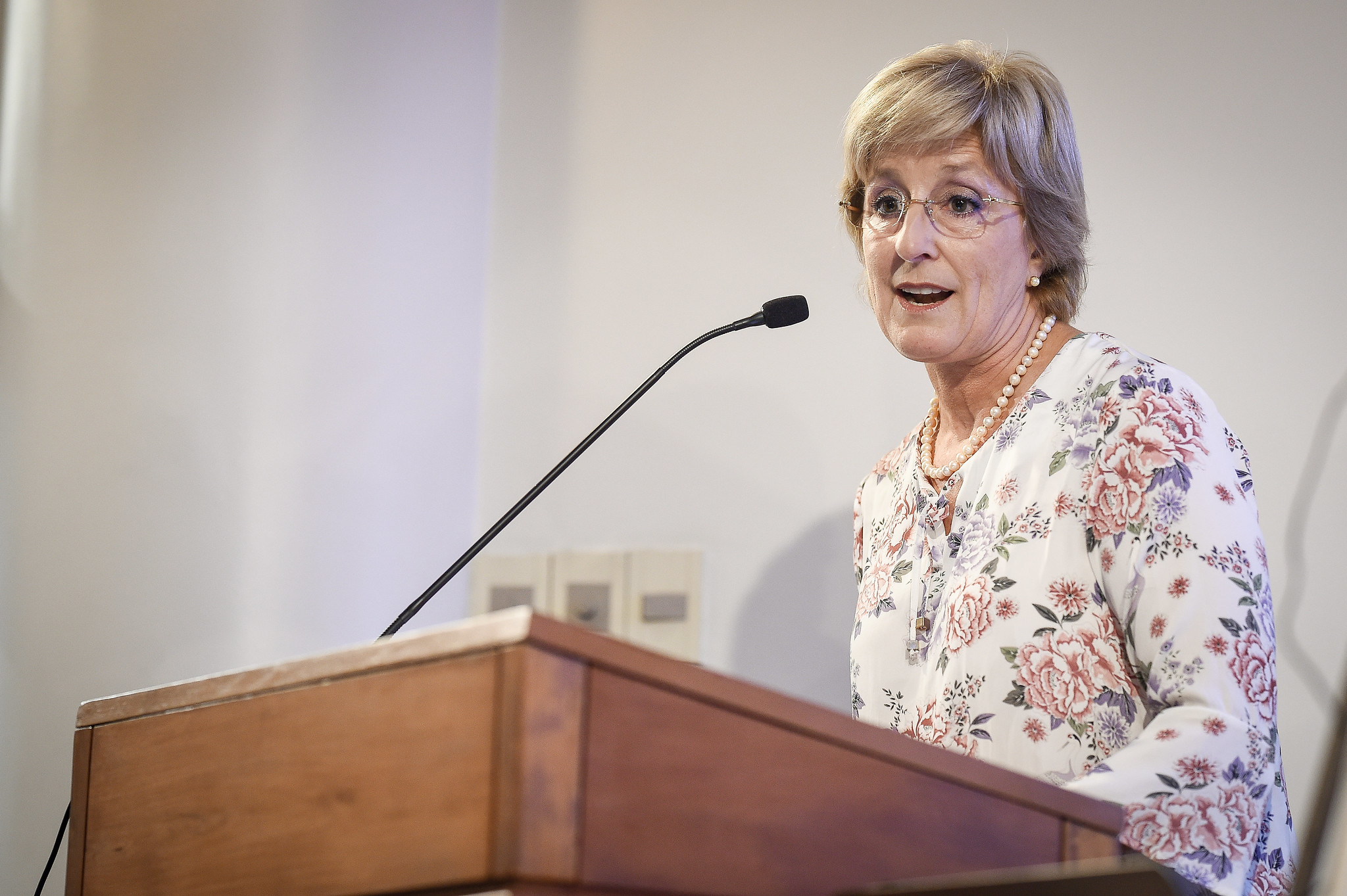
Margarita Romero earned her Doctorate in Education after defending her doctoral dissertation on Thursday, March 1, 2018, in the auditorium at the Downtown Campus.
Dr. Denise Vaillant—academic secretary of the Institute of Education—, Dr. Jesús Manso—visiting professor at the Institute of Education—, and Dr. Gustavo De Armas—social policy specialist at UNICEF—served as members of the examining committee. Dr. María Ester Mancebo served as thesis advisor.
https://youtu.be/ZvicR1us_CI?si=wppN3xRHBut8LMma