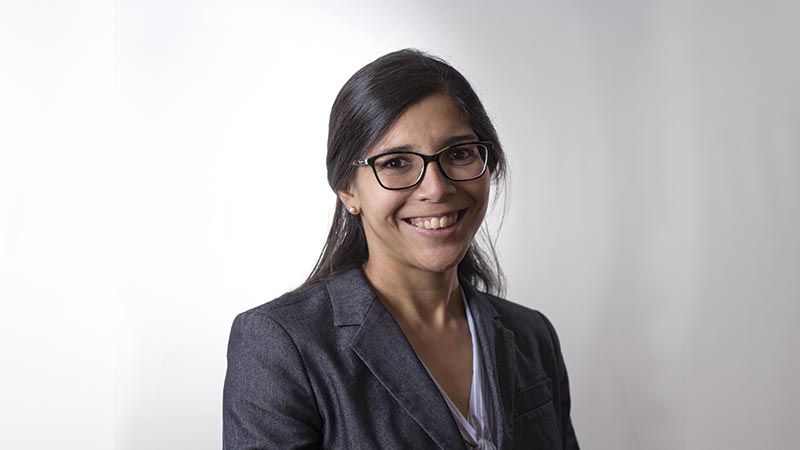
How did the opportunity to continue your professional career abroad—specifically in the United States—come about? What challenges and opportunities does practicing your profession outside of Uruguay present for you?
It all started with the question: “Where would I like to work?” From that point on, I began applying for jobs. I understand that, in addition to having the necessary academic and professional experience, it’s essential to write a strong cover letter explaining why you want to be part of the organization.
So, after completing psychometric tests and interviews, a position opened up on the Reporting and Corporate Accounting team, where I currently work at the Inter-American Development Bank (IDB).
Although I work in an environment that promotes excellence and is very demanding, I have found that I am well-prepared and have performed very well. In any case, I plan to pursue an international certification in the near future to further solidify this knowledge.
What is it like to be part of an international financial organization as renowned as the IDB?
I’m really excited about this new challenge. The IDB is an organization that places a high priority on continuous improvement, innovation, and personal growth—qualities I look for in a work environment.
On the other hand, there is a strong sense of camaraderie and collaboration, and great importance is placed on creating synergies both within and outside the team. Finally, knowing that my work, even if only in a small way, contributes to the Inter-American Development Bank’s mission—which is to improve the living conditions of people in Latin America—fills me with pride and joy. Often, when working in a back-office role, you can lose sight of the bigger picture of what you’re doing, but the IDB constantly makes us feel part of this mission.
What I like most about my profession is the opportunity to keep learning new things.
How do you remember deciding to pursue a degree in public accounting?
My first exposure to accounting was when I took the course in my senior year of high school. Since I was good with numbers, organized, had a good memory, and had always been very detail-oriented, it seemed like the best choice.
Once I started my degree program, not only did my passion for it grow stronger, but it also deepened. The field of public accounting is incredibly broad, and there are countless roles one can take on.
What were the main benefits of studying to become a Certified Public Accountant at ORT, and how did they impact your professional life?
I think the best way to answer this question is by looking at one of the most important assessment components we had, which was the “required” assignment. This was a final project we had to complete in practically every course, and it involved long, arduous hours of work. However, it was the best representation of what awaited us in our professional careers and equipped us with very valuable skills:
Teamwork: At first, I tended to stick with the classmates I got along with best; however, as we began taking elective courses and everyone went their separate ways, I had to team up with people I didn’t know. By practicing tolerance, being open to new ideas, engaging in respectful discussions, and collaborating, we achieved successful results and generated new ideas.
Time management and multitasking: Delivering each of these projects on time and to specification required proper organization, effective prioritization, and the ability to quickly switch gears to move from one task to another.
Close relationship with professors: Since this course involved both practical work and research, it allowed us to share and discuss ideas on an equal footing.
The ability to reason, adapt, think creatively to solve problems, and seek out information: These required assignments weren’t just a slightly longer version of the exercises we did in class, but were generally practical case studies in which we could apply the tools we had learned throughout the semester.
The career path for certified public accountants is incredibly broad, and there are a huge number of roles one can take on.
What do you like most about your job?
What I like most is the opportunity to constantly learn new things. I remember that when I first graduated, I would come home from work and ask myself, “What do I do now?” because, from one day to the next, I no longer had to go to class or study. However, that question didn’t last long, since not only are new regulations constantly emerging, but also new tools and ways of working that require quick adaptation. That’s why the work never gets boring—new challenges are always popping up.