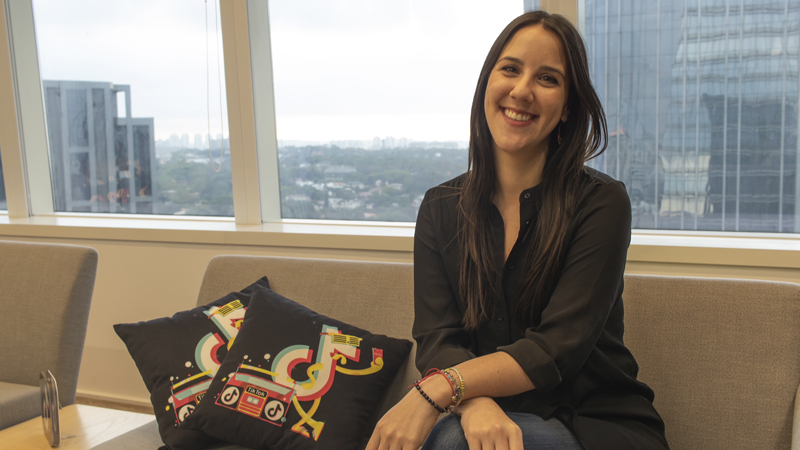
“Data analysis allows communicators to move beyond simply saying ‘I think’ or ‘I believe,’” says Victoria Rodríguez, Bachelor of Communication with a concentration in Advertising and Marketing from Universidad ORT Uruguay.
Since graduating in 2010, she has worked in digital media. She was part of TikTok—the social media platform that’s all the rage among young people—from 2018 to 2020, and today, based in Miami, she works as a Digital Account Manager at Warner Music Group, a music industry giant.
In this article, Rodríguez discusses the role of data and technology in communication, the need for continuous learning, and the keys to TikTok's success.
-
Since you graduated with a bachelor’s degree in Communication in 2010, how have you gone about building your career in digital media?
I started my career focusing on traditional media. I spent a lot of time working in media planning, and gradually began to branch out into digital planning, which was still a new field at the time.
I started by experimenting with clients who were already open to digital purchasing, and eventually moved on to developing digital strategies for major brands. I also worked in digital advertising sales as a Twitter representative in Uruguay, which gave me the opportunity to meet people in the Uruguayan and international advertising industries.
My experience in the app industry opened the door for me to join the TikTok Latin America team (based in Brazil). That’s how I discovered a whole new side of the digital world: the ecosystem of an app and everything involved in growing it and making it work for a global audience. Today I’m based in Miami and work in digital strategy within the Latin music industry—doors that opened thanks to my time at TikTok.
-
What was your role at TikTok?
At TikTok, I served as Content Operations Manager for Spanish-speaking Latin America. I developed strategies for Spanish-speaking markets with the goal of driving key growth metrics: active users, video consumption, retention rates, and time spent in the app.
This involves tasks such as identifying and creating trends—TikTok’s well-known“trends”—, identifying and developing strategies to attract content creators, and developing different content verticals, such as sports, beauty, tutorials, artists, and influencers.
I faced countless challenges while working at TikTok, from learning a new language used to measure results to understanding what makes this app unique and what people want to consume.
As for the opportunities TikTok has given me, I’ve been able to connect with people from all over the world and from different companies, and to work with new content genres, such as freestyle, comedy, parkour, DIY, and music.
-
There’s a widespread belief that TikTok’s algorithm works better than many others. Why is that?
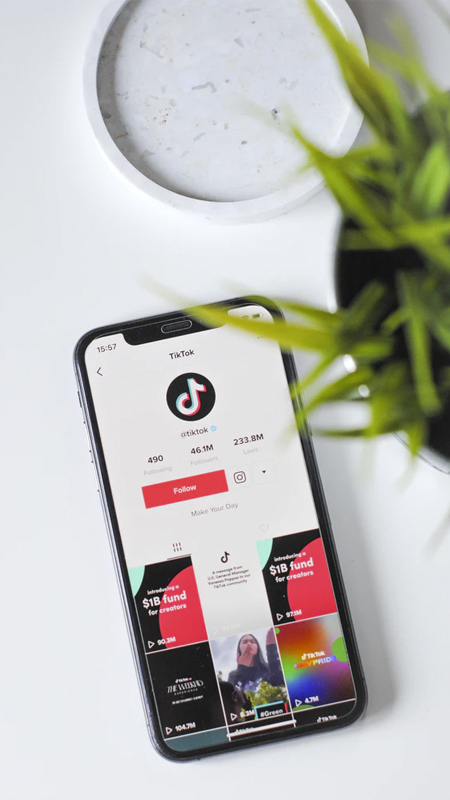 I wouldn't say it's better or worse. What I think is that TikTok's algorithm had a major impact, because it strayed a bit from the logic we were used to with other platforms.
The greatest value of this algorithm lies in the“For You” feed. Basically, it’s a feed that learns what you like based on the signals you give it: whether you watched the entire video, watched it more than once, liked it, or shared it, for example.
On the other hand, the“For You” pageis an endless stream of content that you access simply by opening the app, and the more users engage with the app, the better it gets to know them—which is why many people find TikTok addictive. That’s the magic of the algorithm: it’s highly personalized and designed to enhance the user experience.
TikTok rewards high-quality content and has successfully diversified its content. We've seen how accounts offering investment tips or language lessons have managed to build a strong community on the platform.
-
How does data influence content creation on a platform like TikTok?
I believe that data should be a key factor for content creators, companies, and brands looking to enter a platform like TikTok.
To that end, here’s my advice:
1. To create quality content on TikTok, you first need to understand where you stand. You need to watch videos on the app, understand how the ecosystem works, what’s going viral, what the trends are, and which songs are most popular. It’s important to explore the music and sticker libraries and pay attention to users’ storytelling. Only then can you prepare yourself to speak the same language and avoid coming across as an outsider.
2. Start with A/B testing—that is, upload different types of content and analyze the results.
3. Embrace trends from the perspective of the company or brand.
4. If you have a detailed understanding of the content, it’s easier to figure out what kind of videos to make.
While all of this is designed for organic content, it also applies to the creation of paid ads—a feature that TikTok already offers in some countries.
Content creators, companies, or brands should have a Pro account or Business account, which allows them to view all key metrics and analyze that data to make content decisions.
-
In the digital world, everything is measurable. So, to what extent do professionals working in digital media need to be trained in numbers and data analytics?
I believe that a digital professional must justify their work based on numerical results or the key metrics they set as goals for everything they do.
Today, in the digital world, every action has a measurable metric, whether it’s the results of an ad purchase, such as views and interactions with video content, or streams of audio content. This is very important, not only for demonstrating effectiveness but also for decision-making.
Even when something isn't effective or doesn't produce the desired results, there is valuable information that indicates adjustments need to be made. So, when the data shows unexpected results, we should view it as an opportunity to improve in the next steps.
-
What was your process like for building your knowledge related to data analysis?
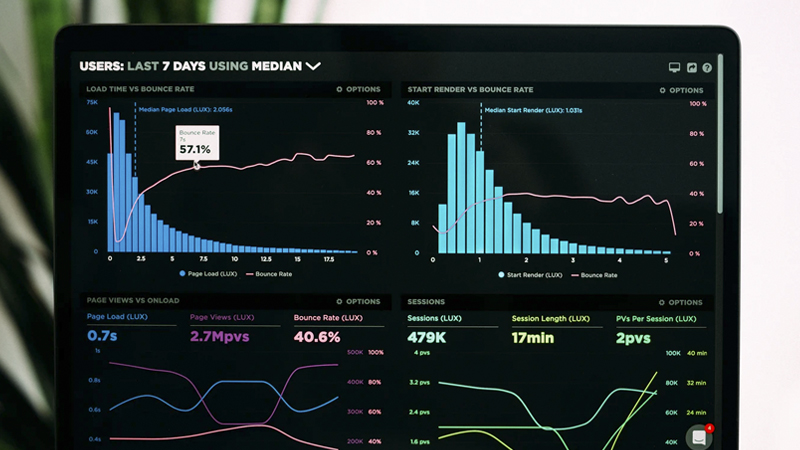 I don't consider myself an expert in data analysis, but I've made the effort to learn, mainly because I believe it's necessary if you want to work at these big tech companies.
I always have a clear understanding of my key metrics—the standards by which my work will be evaluated—and I need to know how to analyze them. It’s an active and ongoing learning process. Understanding data doesn’t mean you’ll be working solely with Excel spreadsheets; rather, it will enhance your decision-making skills, even when it comes to creativity or other areas of the business.
In my case, I've taken both online and in-person courses, and there are also plenty of free resources available on platforms like Facebook and Google. I think, like anything else, it comes down to trial and error, and dedicating time to learning.
-
Why are communication professionals with data skills increasingly in demand? What unique value do they bring to companies?
Because analyzing data is tedious and often complicated; in the digital world, data is everywhere, and that can be overwhelming.
Often, data comes from different sources and we have to combine it, but once we know how to analyze it, we start to find answers to key questions that help the business and we’re able to move beyond mere speculation.
Tech companies—and I think all large companies these days—are looking for professionals who can demonstrate the data analysis skills needed to measure the results of their work. So, having these skills gives you a competitive edge.
-
How do you see the relationship between data, communication, and technology in the future?
I believe that the relationship between data, communication, and technology is already at an advanced stage, where—at least in the digital realm—they are intertwined: technology is the medium that enables this form of communication, and data is the result of how effective that communication is.
If we take it a step further and consider these major tech companies—like Facebook, YouTube, or TikTok—where every variable is measurable, the volumes of data are staggering, and absolutely nothing is left to chance.
We must also keep in mind that there is always a qualitative aspect to communication, and sometimes the numbers may not fully explain why a strategy didn’t work as we had hoped. That’s where trial and error with content comes into play. But, in the end, the numbers will determine whether or not the goal was achieved.
-
How do you see your career developing over the next few years?
I think one of the defining characteristics of my professional career is my willingness to take risks and try new things, and this doesn’t necessarily mean moving to different countries, but also taking on new roles or challenges within the same company. I really enjoy the field of communications because it opens up a range of opportunities that aren’t necessarily conventional.
I don't know what the future holds for me, but for now I'm learning a lot about the music industry, which is really exciting, and I think I'll stick with it. If I had to choose something else, I might be drawn to the entertainment industry—companies like Netflix or Disney.