“We found a way to move forward despite the challenges”
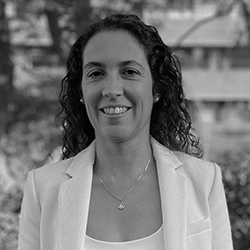 Laura Heguy, a student at the Master's Degree in Trainer Development and director of the Primary Division of Uruguayan Studies at the French Lycée Jules Supervielle, explained the positive aspects that were highlighted during the health crisis, while also outlining some key points to consider for the future.
“Educational changes are slow, but in this case, we had no choice but to try to adapt as quickly as possible to the situation we were facing. Amid the urgency, through trial and error, educational institutions learned, adapted, and built new approaches to address the various challenges posed by the COVID-19 pandemic,” he said.
“The health crisis highlighted the need for change”
 Eloísa Leguísamo, a student in the Master’s Program in Trainer Development, discussed the challenges and opportunities arising from the health crisis caused by COVID-19.
Leguísamo, who currently serves as principal of School No. 88 in Florida and as a computer science teacher at the Regional Teachers’ Center in the city center, noted that “it was an opportunity to reflect on our own practices, to identify training needs in emerging pedagogies, and to frame education within a framework of ongoing reflection and action.”
“We came to believe that technology should be our ally in enhancing and leveraging learning processes,” he added.
“The pandemic has broken some of the golden rules of education”
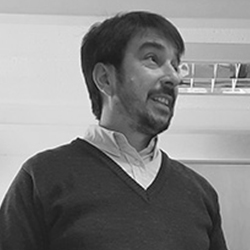 The impact of the health crisis on various stakeholders, new learning opportunities, and the changing roles of teachers and technology in a post-pandemic world were among the topics addressed by Alejandro Di Lorenzi, a student at the Master's Degree in Educational Management.
“It’s important to note that during 2020 and 2021, the school never stopped; perhaps at times it acted intuitively and reactively, but it never stopped. And we learned a great deal, both in terms of the curriculum and in quantitative terms,” said Di Lorenzi, who is currently the secondary school director at the Colegio y Liceo Latinoamericano.
“We face many challenges, but they’re not the same as before”
 Beatriz Guigou, a student in the Master’s program in Educational Management and acting principal of Liceo No. 71 in Montevideo, outlined the challenges posed by the return to in-person learning as a result of the health crisis.
“As teachers, we must keep in mind that we can’t teach the way we did decades ago,” he said.
“Today we face new challenges stemming from the fact that teenagers haven’t experienced socialization with their peers in the way we were used to. We have emotionally unstable young people who are fearful and have low self-esteem,” he added.
“There was a renewed appreciation for educational institutions and their teachers”
 After two years of the pandemic, the student from the Master's Degree in Education Nancy Borges shared her experience as an elementary school teacher at School No. 111 in the city of Rivera.
According to what he said, the lessons “are countless”: “From a personal perspective, in recognizing our own capabilities, to the tremendous opportunity for change and innovation that was there but that we were unable to effectively implement.”
“The positive aspect is the recognition of the value of educational institutions and their teachers, as well as the opportunity for peer exchange,” he concluded.