Karen Szwarcfiter, professor in the Bachelor’s Degree in Management and Administration and Marketing Analyst at Universidad ORT Uruguay, and director of KAS Marketing, helps answer these questions from the perspective of neuromarketing. Not only does she hold a Bachelor’s degree in Management and Administration from ORT, but has also has postgraduate has in Neuromarketing and Neuro-sales from the University of Salamanca (Spain).
Packaging that evokes memories
First and foremost, it is important to note that, contrary to popular belief, most decisions are made unconsciously, before reason comes into play.
 This highlights the significant role that emotions play in decision-making processes. In this regard, Szwarcfiter explains: “Often, the decision-making process is 90% emotional, and after a decision is made, it is rationalized to align with it; however, this analysis comes after—not before—the act of deciding.”
This often happens when choosing products at the point of purchase. When it comes to food, even though consumers know that some products are high in sugar, fat, sodium, or saturated fat, they often choose them anyway.
Why does that happen? According to the marketing professor at ORT, even if a person has necessary information, when they see a well-designed package with an appealing label that triggers childhood memories or certain emotions, they decide to buy it. This constitutes an emotional decision.
Traffic signs designed to catch the eye
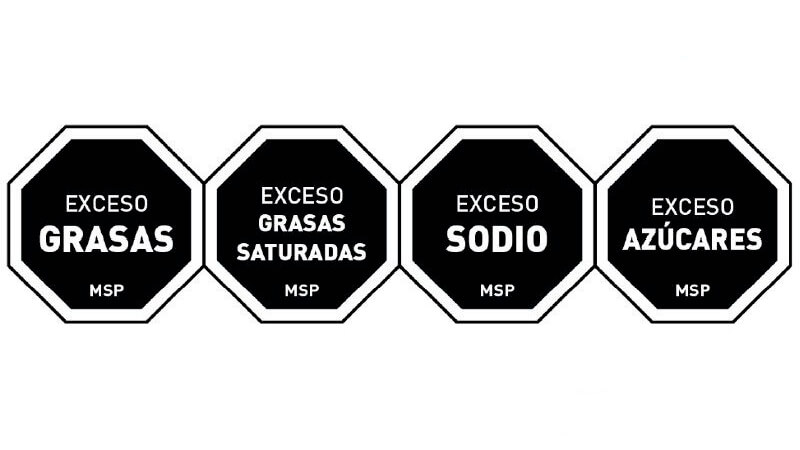
Now, what changes when consumers see that the product they are choosing has front-of-package nutrition labeling? In this case, the black octagons indicating excessive levels of certain ingredients could be described as “nudges,” according to Szwarcfiter. This is a concept popularized by Richard Thaler and Cass Sunstein in their book *Nudge: Improving Decisions About Health, Wealth, and Happiness*.
“An individual cannot escape such rational questioning and feels bad about their behavior if they ignore the warnings.”
Nudges are elements that alter the environment to increase the likelihood that an individual will make a particular decision. According to the professor, these “gentle nudges” trigger automatic cognitive processes that lead to a desired outcome.
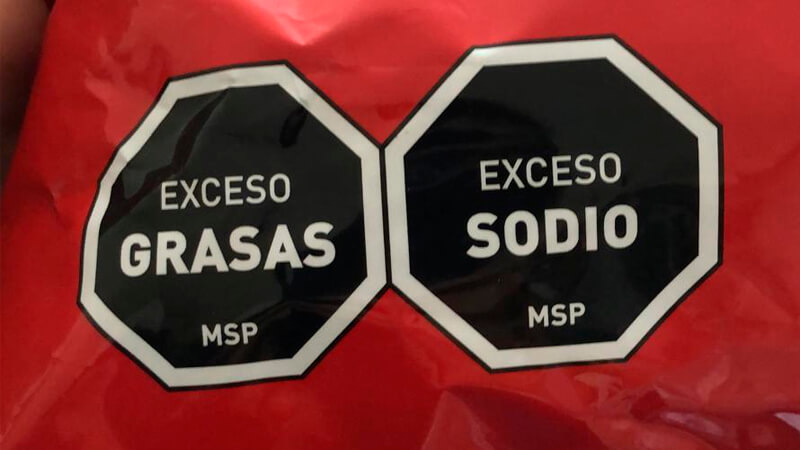
These stickers, which are placed on packaging, first and foremost catch the consumer’s eye and stand out because they look out of place. In other words, people aren’t used to seeing them on the products they usually buy; it’s something new and different. So it’s impossible to overlook them, says Szwarcfiter.
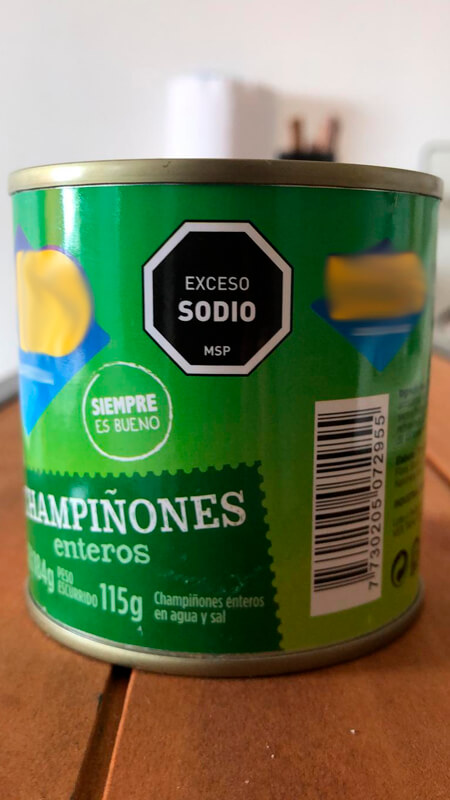
He also notes that the shape of these labels resembles traffic signs, which typically require drivers to stop. How does this work? Shoppers associate these octagons with the ones they commonly see on the road, and just like on the street, they stop and pay attention.
What Comes After the First Impression
Finally, according to the professor and ORT graduate, because they are faced with the octagons, consumers cannot avoid the rational process involved in taking in the information provided on the labels. It is this process that ultimately has a decisive impact on decision-making.
“In this case, rational arguments carry more weight because the warning is very clear: ‘The individual cannot escape such a rational line of questioning and feels bad about their behavior if they ignore the warnings,’” Szwarcfiter concludes.